
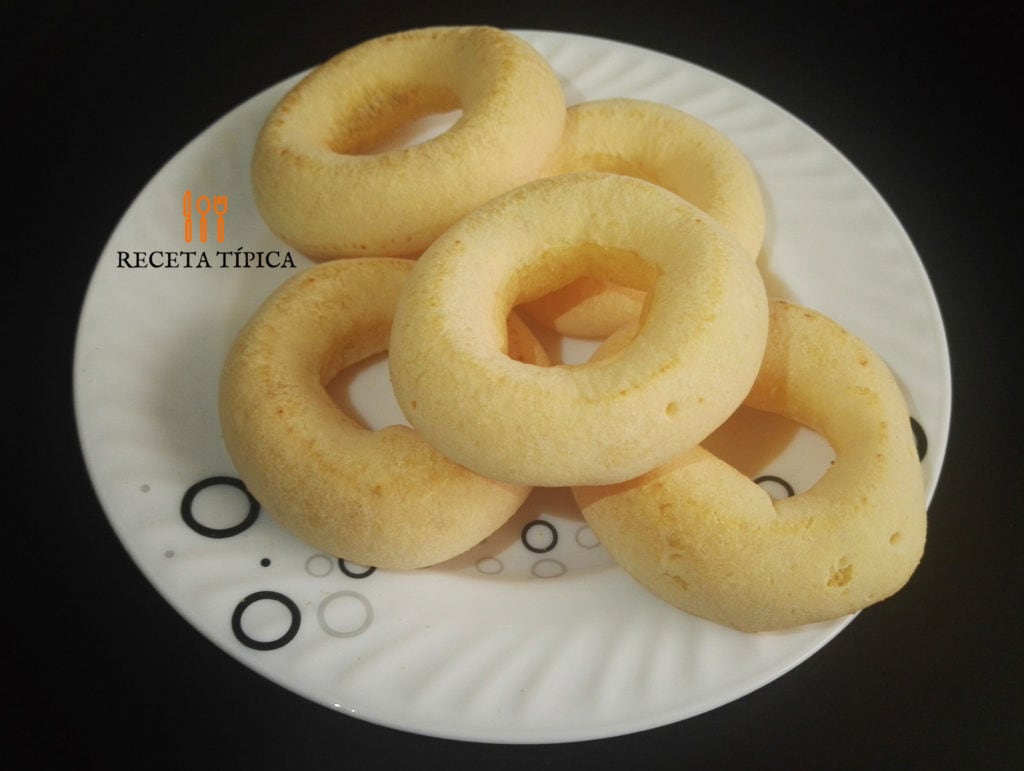
Pan de yuca is a cheese bread made without a grain of wheat: cassava starch, grated pressed cheese and water, kneaded together and baked into small rings. There is no yeast and no rising time, which is why the whole thing takes twenty-five minutes.
What comes out is chewy and elastic inside with a thin, crisp shell, closer to a Brazilian pão de queijo than to any wheat roll. It is bakery food in Colombia, eaten warm with coffee or a cold drink.
This is not casabe
Worth saying early, because in English "cassava bread" usually means something else entirely.
Casabe is the flat one: grated cassava, pressed to squeeze the liquid out, then cooked on a griddle into a dry, brittle disc. It is one of the oldest breads in the Americas, made by the Taíno long before Europeans arrived, and it is still eaten across the Caribbean and the Amazon. No cheese, no fat, and it keeps for weeks.
Pan de yuca is this one: soft, chewy, cheesy, and best within an hour of leaving the oven.
Same plant, opposite breads. If you came looking for the crisp flatbread, this is not the recipe.
Cassava starch is not cassava flour
Of the three ingredients, this is the one that decides whether the recipe works, and the labelling makes it genuinely confusing.
- Cassava starch — the pure starch washed out of the root. This is what you need. It is elastic when hydrated, and that elasticity is the entire structure of the bread.
- Tapioca starch or tapioca flour — the same thing as cassava starch, sold under different names. Either will work.
- Cassava flour — the whole root, dried and ground, fibre and all. Despite the similar name it behaves nothing like the starch, and using it gives a dense, dry bread that does not hold together.
There is also almidón agrio, sour cassava starch, which has been fermented before drying. It is what pandebono is traditionally made with, and it gives a faint tang and a better rise. This recipe calls for plain cassava starch, but the sour kind is worth trying if your Latin grocery has it.
The cheese does the seasoning
There is no salt in this recipe, and that is not an oversight, all of it comes from the cheese, which is why the cheese has to be the right kind.
Queso prensado or queso costeño is the original: firm, salty, fresh, and it grates into shreds rather than crumbling to dust. Queso blanco does the same job.
Outside Latin America the usual workaround is low-moisture mozzarella for the melt and the stretch, with a little feta or cotija worked in for salt, since mozzarella on its own leaves the bread tasting flat. Use the freshest cheese you can: a dry, aged cheese gives up less moisture and the dough will need more water to compensate.
How much water is the right amount
The recipe says 150 g, and then says you might need all, more or less of it. That is unusually honest for a recipe and it is worth taking seriously: cassava starch varies between brands in how much water it absorbs, and the cheese contributes moisture of its own.
So add it gradually and read the dough instead of the scale. You are looking for something that holds together in a smooth ball, does not stick to your hands, and does not crack at the edges when you press it. Cracking means dry, add a splash more. Sticky and slack means you have gone too far, and a little extra starch pulls it back.
Shaping and baking
Ten or twelve pieces, each rolled into a rope and joined into a ring. Rings are traditional, but balls and half-moons are all sold in Colombian bakeries and none of it changes the baking.
Fifteen minutes at 180°C (350°F), until golden. A brush of beaten egg before they go in gives a glossy finish, and is optional in every sense.
Eat them warm
This is the one real limitation of pan de yuca and it is worth planning around. Starch-based breads stale fast, and these go from chewy to firm within a couple of hours.
A few minutes in a hot oven brings them most of the way back, so they are not lost, but they are never as good as they are in the first hour, which is why Colombian bakeries sell them straight from the tray.
More cassava, and more cheese bread
- Pandebonos — the close relative, made with sour cassava starch and cheese, plus corn flour.
- Arepas de yuca — cassava again, on the griddle instead of in the oven.
- Cassava croquettes — for the fried version.
- Cheese bread — the wheat-based Colombian one, if gluten is not a concern.
Pan de Yuca FAQ
No, though both are called cassava bread. Casabe is a flat, dry, crisp disc made from grated cassava pressed and baked, eaten across the Caribbean and the Amazon, and it contains no cheese. Pan de yuca is a soft, chewy cheese roll made from cassava starch. Same plant, entirely different bread.
Starch, and the distinction matters more than any other in this recipe. Cassava starch is the pure starch extracted from the root, and it is what makes the dough stretchy and the crumb chewy. Cassava flour is the whole root dried and ground. Substituting it gives a dense, dry bread that will not hold together properly.
Yes. Tapioca starch, tapioca flour and cassava starch are all the same product under different labels, so any of them will work. Confusingly, tapioca flour is cassava starch, while cassava flour is not, the word "flour" is doing different jobs on different packets.
You want a firm, salty fresh cheese that grates rather than crumbles. Queso costeño is the original and queso blanco works well. A common stand-in is low-moisture mozzarella for the stretch with a little feta or cotija for the salt, since mozzarella alone is too mild for this bread.
Yes. There is no wheat in it at all, the structure comes entirely from cassava starch and cheese, which is why it needs no yeast and no rising time. If you are cooking for someone with coeliac disease, check that your starch is packed in a gluten-free facility, as with any starch.
Almost always too little water. Starch varies in how much it absorbs, which is why the recipe says to add the water gradually rather than all at once. Keep kneading and adding a splash at a time until it stops cracking when pressed. A drier cheese also means the dough needs more water.
📖 Recipe

Ingredients
- 300 g cassava starch (sold as tapioca starch too; NOT cassava flour, which is the whole ground root and will not work here)
- 250 g pressed cheese (queso prensado), grated (queso costeño or any firm, salty fresh cheese; low-moisture mozzarella with a little feta is a common stand-in)
- 150 g water (about ⅔ cup; add it gradually, you may not need it all)
Notas
Instructions
- Heat the oven to 180°C (350°F).
- On a work surface, mix the cassava starch with the grated cheese. Add the water a little at a time as you knead. How much you need varies with the starch, so go gradually: you may use all of the 150 g, or less, or need a splash more.
- Stop when the dough is soft and holds together without sticking to your hands. It should not be runny, and it should not crack apart when you press it.
- Divide it into 10 or 12 pieces, depending on the size you want. Roll each into a rope and join the ends to make a ring.
- Lightly grease a baking tray and lay the rings on it. If you want them glossy, brush them with beaten egg.
- Bake for about 15 minutes, until golden.
- Take them out and eat them warm: this is bread that is at its best in the first hour.
Comments
No Comments