
In Colombia a consomé is a good chicken broth. Half a chicken with its giblets goes into a pot with a carrot, an onion and a clove of garlic, and half an hour later you have breakfast.
It is not the French consommé, which is a different thing under the same word, and that is worth clearing up first because it changes what you should expect from the pot.
Colombian consomé is not French consommé
The French version is a technical exercise. A finished stock is clarified with egg whites and lean minced meat, which form a raft on the surface, trap every particle in the liquid and are then lifted off, leaving a broth so transparent you can read through it. It takes hours and it is served with nothing floating in it.
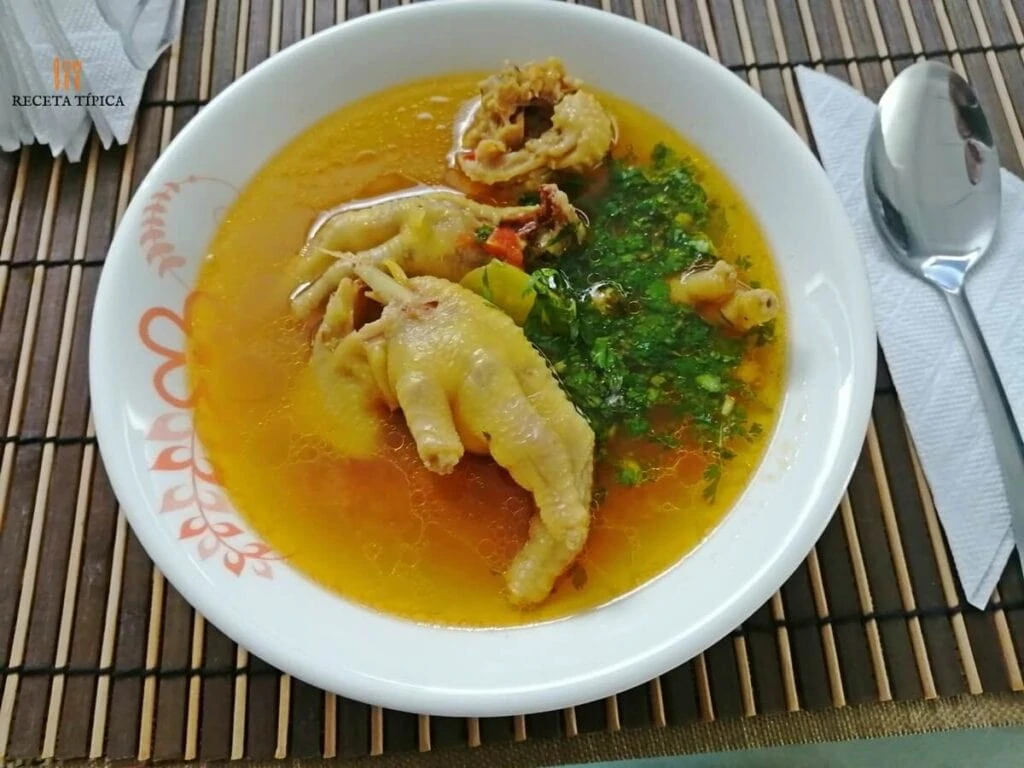
The Colombian one keeps the name and none of the procedure. The word travelled, the technique did not. What arrives at the table is a home broth with the chicken and the vegetables still in the bowl, cloudy at the edges and none the worse for it.
So if you came here for the clear, strained, egg-white-raft version, this is not that recipe. If you came for what Colombians actually eat for breakfast, it is.
Do not throw away the giblets
The recipe says half a chicken with giblets, and the second half of that phrase does more work than the first.
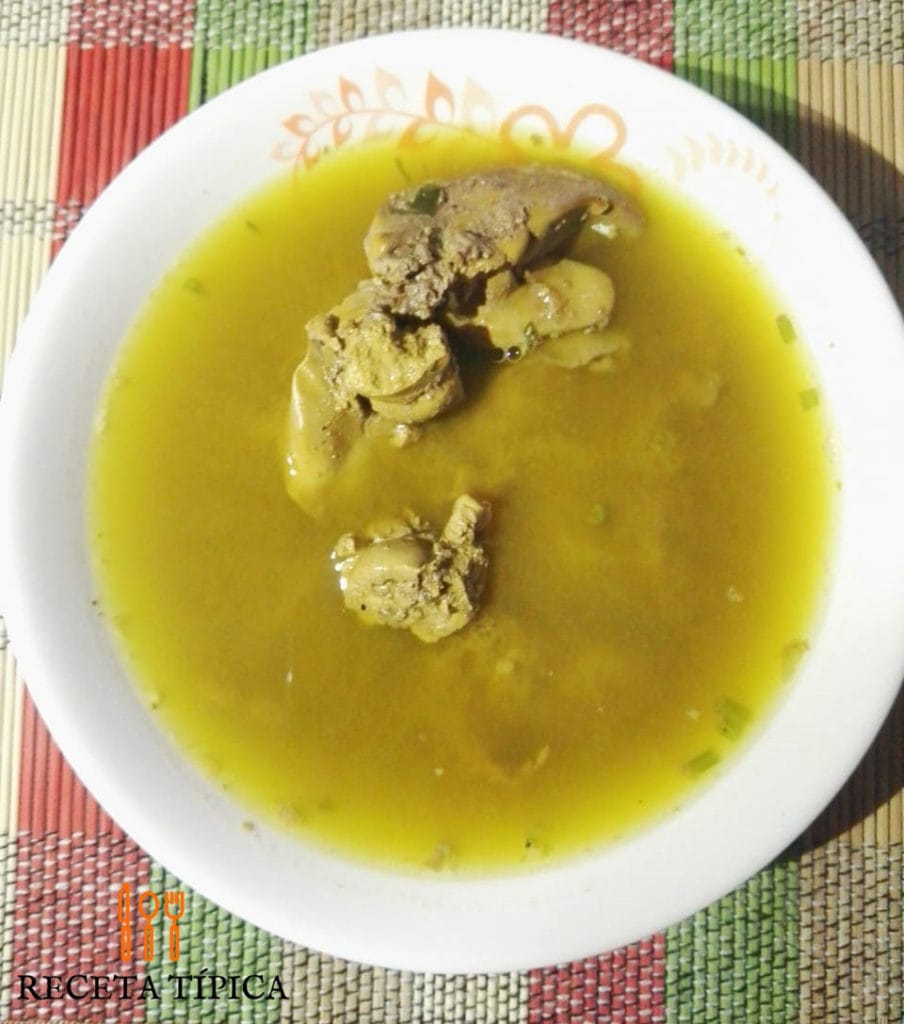
Giblets are the neck, gizzard and liver, usually in a bag inside the cavity of a supermarket chicken and usually thrown straight in the bin. The neck is the important one: it is mostly bone and connective tissue, and that connective tissue breaks down into gelatine, which is what gives a broth weight in the mouth instead of tasting like chicken-flavoured water.
If your chicken came without them, ask at the meat counter. Necks and backs are usually free or close to it, and they are the cheapest possible improvement to any broth.
Keeping it clean-tasting
Two habits do almost all the work, and neither takes any effort.
Skim the foam. In the first few minutes a grey scum rises to the surface. That is coagulated protein pushed out of the meat, and if you stir it back in it stays there and clouds the broth. A spoon and ten seconds is all it takes.
Keep it at a bare simmer. A hard rolling boil churns fat into the liquid and emulsifies it, which turns a broth cloudy and slightly greasy. You want the surface barely moving.
That will not give you a French consommé, and it is not supposed to. It gives you a Colombian broth that tastes clean.
Half an hour is the minimum, not the target
Thirty minutes cooks the chicken through and gives a light, pleasant broth. It is enough, and it is what makes this a weekday recipe.
But broth keeps getting better for a while. An hour is noticeably rounder; two is better still, as more gelatine comes out of the bones. If you have the time, give it the time. If you do not, a pressure cooker reaches the same place in about a third of it.
Potatoes, and what else can go in
Sliced potatoes are the common addition, and they go in fifteen minutes from the end so they cook without disintegrating. They also make the broth cloudier, which is the trade-off.
Celery and leek both add depth if you have them. A squeeze of lime at the table lifts the whole bowl, and slices of chilli suit it if you like heat.
When Colombians eat it
Breakfast, mostly, on a cold morning, with a cup of hot chocolate and an arepa, or with white rice spooned into the bowl.
It is also the standard remedy for a guayabo, which is what a hangover is called in Colombia, and it is sold in the same places that sell roast chicken. Whether it works is a matter of national consensus rather than evidence.
Keeping it
Three or four days in the fridge, three months or so in the freezer. Cool it before it goes in rather than putting a hot pot straight into the refrigerator.
Chilled, the fat sets into a firm layer on top. That is useful: lift it off for a leaner broth, or stir it back in for a richer one. Reheat gently, since boiling it again clouds what you were careful about the first time.
Other Colombian broths
- Beef rib broth — the same idea with ribs instead of chicken, and a heavier result.
- Chicken and rice soup — where this broth goes if you want a fuller meal.
- Chicken sancocho — the weekend version, with plantain, cassava and corn.
- Churrasco — if it was beef you were after.
Colombian Consomé FAQ
No, and it is worth knowing before you cook it. A French consommé is a stock clarified with egg whites until it is completely transparent, a technical exercise that takes hours. In Colombia the word just means a good chicken broth, served with the meat and vegetables in the bowl. This recipe is the Colombian one.
Not for this version. The onion comes out at the end and the carrot can too, but the broth is served as it is, with the chicken in it. If you want it clearer, skim the foam that rises in the first few minutes and keep the heat gentle, since a hard boil is what makes broth cloudy.
The neck, gizzard and liver that come with a whole chicken. They are not optional decoration here: the neck in particular has bone and connective tissue that give the broth its body, and a consomé made without them tastes thin. Most supermarket chickens include them in a bag inside the cavity.
Thirty minutes gets you a light, clean broth and cooked chicken. An hour gives noticeably more body, and it keeps improving up to around two. A pressure cooker gets you there in roughly a third of the time. The half hour in the recipe is the minimum, not the ideal.
At breakfast, with hot chocolate and an arepa, and on cold mornings generally. It is also the standard thing to be given for a hangover, which Colombians call guayabo, and it turns up in the places that sell roast chicken. Rice on the side is common.
Three or four days refrigerated, about three months frozen. The fat sets into a solid layer on top in the fridge, which is handy: lift it off and you have a leaner broth, or stir it back in for a richer one. Reheat it gently rather than boiling it hard.
📖 Recipe

Ingredients
- ½ chicken with giblets (the neck, gizzard and liver; they are where most of the flavour comes from)
- 1 carrot, sliced
- 1 garlic clove (whole, it goes in for flavour)
- 1 onion, peeled (whole; it comes out at the end)
- Salt, to taste
- 2 liters water (about 8 cups)
- 1 tablespoon parsley or cilantro, chopped (stirred in at the end, off the heat)
- 2 to 3 potatoes, sliced, optional (used in step 2; they were missing from the original list)
Notas
Instructions
- Put everything into a large pot and cook over medium heat for 30 minutes. Skim off the foam that rises in the first few minutes if you want a cleaner broth.
- If you want potatoes in it, add 2 or 3 sliced ones after the first 15 minutes.
- Take out the onion, and the carrot too if you prefer, and check the salt. Serve hot with the parsley or cilantro scattered over.
Comments
No Comments