
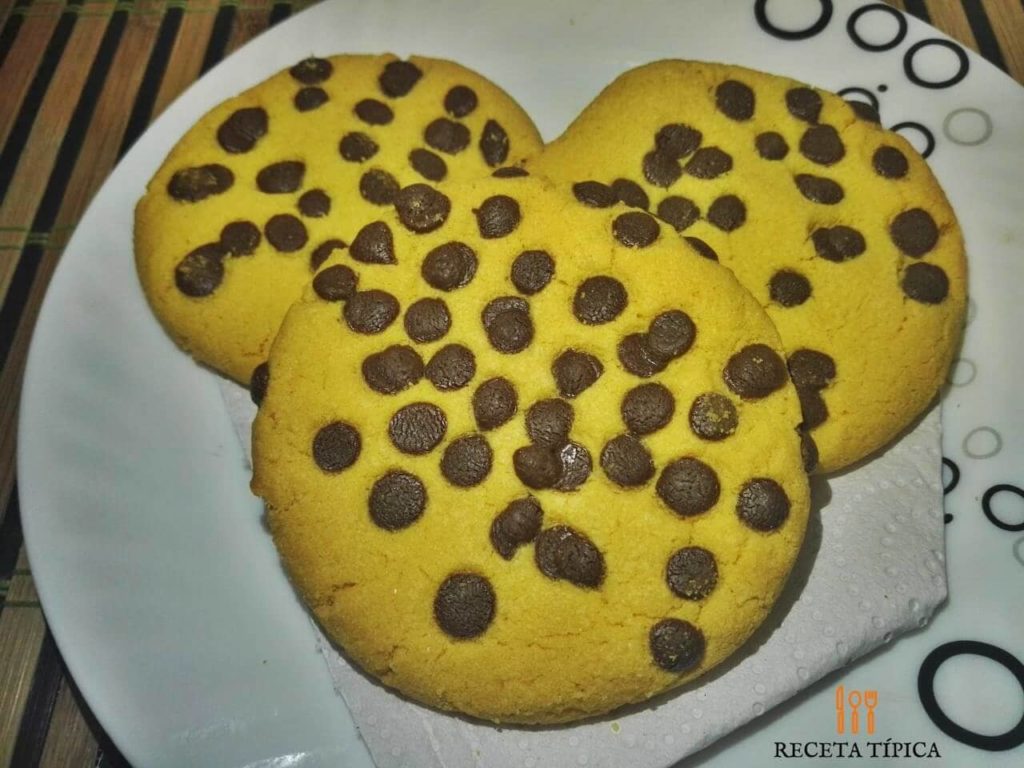
Butter creamed with two kinds of sugar, flour, and a generous two cups of chopped chocolate. Half an hour, and about twelve cookies.
Why two sugars
Because they do opposite things, and a good cookie needs both.
- White sugar encourages spreading and crisping. A cookie made only with white sugar is thin and crunchy all the way through.
- Brown sugar holds moisture, thanks to the molasses in it, and keeps the middle soft. A cookie made only with brown sugar is thick, cakey and pale.
Three quarters of a cup of each gives crisp edges and a chewy centre, which is what most people mean by a chocolate chip cookie.
The butter has to be soft
Creaming works by beating air into solid fat, and that only happens at room temperature. Butter straight from the fridge will not cream, it just breaks into lumps. Melted butter creams even less and gives flat, greasy cookies.
Soft means it gives when you press it but still holds its shape. If you have forgotten to take it out, cut it into small cubes and give it twenty minutes.
Chopped chocolate, not chips
Chocolate chips are formulated to hold their shape in the oven, which is useful for appearance and less good for eating. Chocolate chopped from a bar melts into irregular seams and pools through the dough.
The pieces will also be different sizes, which is an advantage: the dust distributes through the whole cookie and the chunks stay as chunks.
Take them out early
They carry on cooking on the hot tray after they leave the oven. A cookie that looks fully done in the oven will be dry by the time it cools.
Pull them when the edges are set and the centres still look slightly underdone, and let them cool on the tray before moving them, because straight out of the oven they are too soft to lift without breaking.
More baking
- Alfajores — with arequipe between them.
- Cucas — the Colombian panela cookie.
- Brownies — for the rest of the chocolate.
- Coffee cake — the same oven, twenty minutes.
Chocolate Chip Cookies FAQ
They do opposite jobs. White sugar makes cookies spread and crisp; brown sugar holds moisture and keeps the middle chewy. Using only one gives a cookie that is either thin and crunchy throughout or thick and cakey.
Yes. Creaming beats air into solid fat, which only works at room temperature. Cold butter breaks into lumps and melted butter gives flat, greasy cookies. Soft means it gives under a finger but holds its shape.
Chopped, from a bar. Chips are made to hold their shape in the oven; chopped chocolate melts into seams through the dough and the uneven sizes are an advantage.
When the edges are set and the centres still look slightly underdone. They keep cooking on the hot tray, so a cookie that looks finished in the oven will be dry once it cools.
Yes, and it improves them. An hour in the fridge, or overnight, gives less spread and a deeper flavour. It is not in the recipe but it is the easiest improvement available.
📖 Recipe

Ingredients
- 2 cups flour
- 1 teaspoon baking soda
- ½ teaspoon salt
- 1 cup butter, softened (room temperature: cold will not cream, melted gives flat cookies)
- ¾ cup white sugar (for the crisp edges)
- ¾ cup brown sugar (for the chewy middle)
- 1 teaspoon vanilla extract
- 2 eggs
- 2 cups chocolate, chopped (chopped bar rather than chips: it melts into seams instead of staying round)
Notas
Instructions
- Heat the oven to 180°C (355°F) before you start, so it is ready when the dough is.
- Cream the white and brown sugars with the butter and the vanilla until smooth and pale.
- Add the eggs one at a time, beating as you go.
- Sift in the flour, baking soda and salt, adding them gradually.
- Fold in the chopped chocolate.
- Put spoonfuls of dough onto a greased tray, spaced well apart because they spread.
- Bake for 10 to 15 minutes, then take them out and let them cool on the tray before moving them.
Comments
No Comments