
A coffee cake that uses coffee twice, in two forms, for two different reasons. Oil rather than butter, cinnamon in the dry mix, and twenty minutes in the oven.

Why two kinds of coffee
The ingredient list asks for a quarter cup of brewed coffee and two tablespoons of instant, which reads like a mistake and is not.
- Brewed coffee goes in with the milk and the vanilla. It is liquid first and flavour second, and on its own it would give only a faint background note.
- Instant coffee goes in dry with the flour, undissolved. It is many times more concentrated than anything you would drink, and it is what actually makes the cake taste of coffee.
Using only the brewed coffee gives a cake that hints at coffee. Using enough brewed coffee to taste properly would make the batter far too wet. The two together solve both problems.
Oil instead of butter
Butter is solid at room temperature and oil is not, which is why oil-based cakes stay soft on the second and third day while butter cakes firm up in the fridge.
The trade-off is flavour: butter tastes of something and oil does not. In a cake carrying this much coffee and cinnamon that hardly matters, which is why the recipe chooses oil.
Alternating wet and dry
Step six adds the dry mixture and the milk mixture alternately rather than all at once. This is not fussiness. Adding all the liquid to a batter full of fat and eggs at once makes it split, and a split batter bakes into a coarse, greasy crumb.
Three additions of dry and two of wet, beginning and ending with dry, is the usual pattern.
Twenty minutes is short
Heat the oven before you start, to 180°C or 350°F. The recipe never says to preheat, and a cake that goes into a cold oven rises poorly because the raising agents work before the structure sets.
Twenty minutes is a short bake, so it depends heavily on the tin. Test with a skewer in the centre and give it more time if it comes out wet.
More cakes
- Colombian carrot cake — with orange juice in it.
- Torticas de chocolo — made from sweetcorn.
- Coffee dessert — the same flavour, no oven.
- Torta negra — the Christmas one.
Coffee Cake FAQ
They do different jobs. Brewed coffee goes in with the milk and provides liquid and a faint background. Instant coffee goes in dry with the flour and is far more concentrated, which is what actually makes the cake taste of coffee. Using enough brewed coffee to taste properly would make the batter too wet.
Yes, melted and cooled, in the same quantity. The cake will taste slightly richer but will firm up faster over the following days, because butter is solid at room temperature and oil is not.
Adding all the liquid at once to a batter full of fat and eggs makes it split, and a split batter bakes into a coarse, greasy crumb. Three additions of dry alternating with two of wet, starting and ending with dry, is the usual pattern.
180°C, which is 350°F, for about twenty minutes. Heat the oven before you start mixing: a cake that goes into a cold oven rises badly because the raising agents act before the structure sets. Test with a skewer, since twenty minutes is short and depends on the tin.
A teaspoon in two cups of flour is noticeable but not dominant, and it works with the coffee rather than against it. Leave it out if you want a straight coffee cake.
📖 Recipe
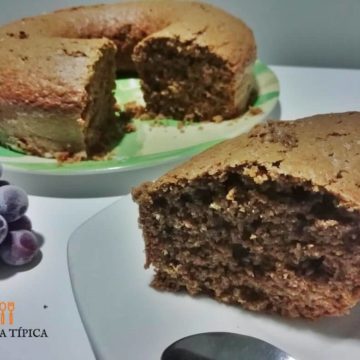
Ingredients
- 1 cup sugar
- 2 eggs
- ½ cup oil (oil rather than butter keeps the crumb moist for longer)
- 2 cups wheat flour
- ¾ cup milk
- ¼ cup brewed coffee (goes in with the liquids)
- 1 teaspoon baking powder
- ½ teaspoon baking soda
- ½ teaspoon salt
- 1 teaspoon cinnamon
- 2 tablespoons instant coffee (goes in with the dry ingredients, not dissolved)
- 1 teaspoon vanilla extract
Notas
Instructions
- Heat the oven to 180°C (350°F) before you start, so it is ready when the batter is.
- Beat the eggs one at a time with the sugar.
- Add the oil and beat for a few minutes more.
- In a separate bowl, mix the flour with the baking powder, baking soda, salt, cinnamon and the instant coffee.
- In another bowl, mix the milk with the vanilla extract and the brewed coffee.
- Add the dry mixture to the egg mixture a little at a time, alternating with the milk mixture.
- Beat gently until the batter is smooth.
- Pour it into a greased and floured tin and bake for about 20 minutes.
- Take it out, let it cool, and finish with icing sugar, grated chocolate or a dusting of coffee.
Carolyn
Will tell you taste later but as for ease? Easy peasy!