
Tomato and scallion cooked down in a little oil with garlic until the tomato collapses into a sauce. Twelve minutes, six ingredients, and it goes into or onto an enormous amount of Colombian cooking.
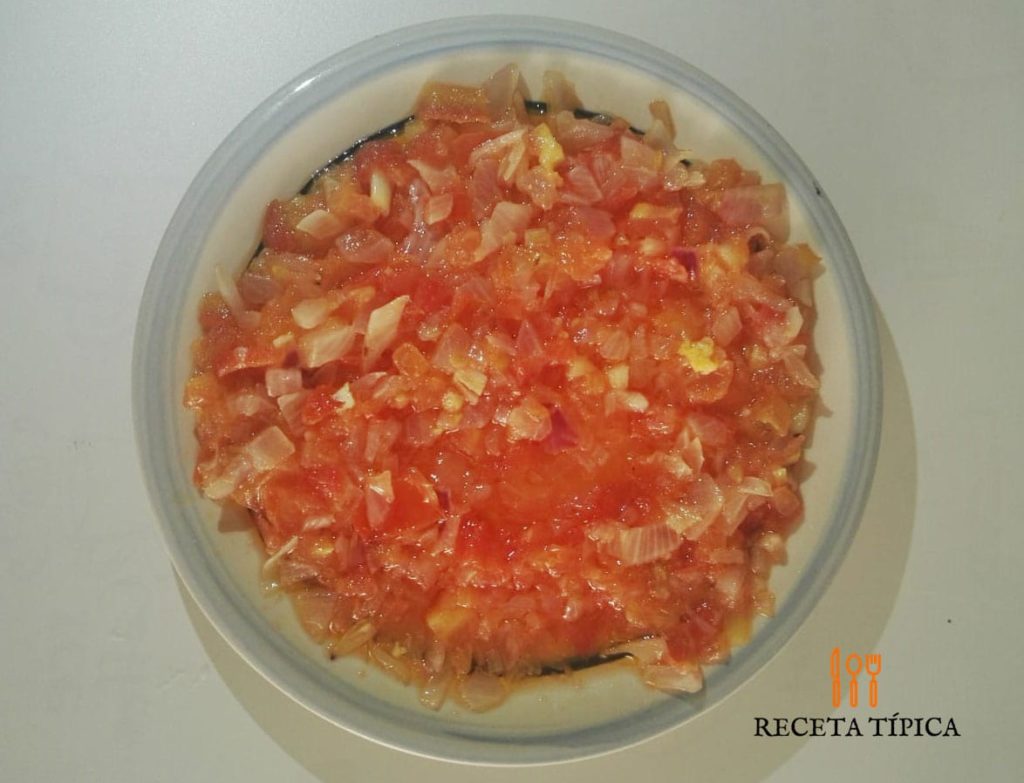
What hogao actually is
If you learn one thing from Colombian cooking before you learn any dish, this is it.
Hogao is tomato and cebolla larga, the long green scallion, chopped fine and cooked in a little oil with garlic until the tomato falls apart. That is the entire recipe: six ingredients, twelve minutes, one pan.
It is not a dish. It is what goes into and onto other things. Spooned over patacones and arepas, stirred through beans, poured over rice, ladled into soups, served beside grilled meat. A Colombian kitchen without hogao in the fridge is a kitchen that has run out.
Cook it until the tomato collapses
Seven minutes is the figure in the recipe and the signal matters more.
The tomato has to stop being pieces. It goes from chopped cubes sitting in oil to a loose, glossy sauce with the scallion suspended in it, and that transformation is the whole point of cooking it at all.
Stopped early, hogao tastes of raw tomato. That is not a subtle difference and it carries straight into whatever the hogao is added to, which is why a pot of beans can taste sharp and nobody can work out why.
Cebolla larga
The scallion in this recipe is cebolla larga: the long green onion with a white base and tall green leaves, sold in bunches. Both parts go in.
It behaves differently from a round onion. It is milder, it softens faster, and it brings a grassy note that a bulb onion does not. That taste is a large part of what makes hogao recognisably Colombian.
The recipe's note says you can use regular onion too, and that is true. It makes a sweeter, heavier hogao. Neither is wrong.
Make more than you need
The card says two servings, which is two tomatoes' worth, and that is a small amount for something this useful.
It keeps several days in a jar in the fridge and it improves overnight. Doubling or tripling it costs nothing but a bigger pan, and it turns a week of plain rice and arepas into something else.
Where hogao goes
- Patacones — the classic thing to put it on.
- Traditional arepas — the other one.
- Mashed pumpkin with hogao — stirred into a purée.
- Arroz con pollo — where a pan of it goes at the end.
- Colombian ají — the raw sauce, for heat.
Hogao FAQ
The Colombian sofrito: tomato and scallion cooked down in a little oil with garlic until the tomato collapses into a sauce. It is a base rather than a dish, and it goes into or onto an enormous amount of Colombian cooking.
Patacones and arepas above all. Also spooned over rice, stirred into beans and soups, and served beside grilled meat. In many households a jar lives in the fridge.
Scallion, cebolla larga, is what this recipe uses and what most hogao uses. Regular onion works and gives a sweeter, rounder result, which is what the recipe's note means. Plenty of cooks use both.
When the tomato has stopped being pieces and become a loose sauce, and the scallion is translucent. About seven minutes. Taken off early it tastes of raw tomato and that flavour carries into whatever you put it in.
Several days in the fridge in a covered jar, and it is better on the second day. It is worth making more than two servings' worth while the pan is out.
No. There is no chilli in it. A pinch of pepper is optional and that is the extent of the heat. Ají is the sauce that brings the heat to a Colombian table.
Same idea, different ingredients. A Spanish or Caribbean sofrito usually starts with onion and pepper; hogao is built on tomato and scallion. Both are aromatic bases cooked down slowly in oil.
📖 Recipe

Ingredients
- 2 tomatoes (finely chopped)
- 2 sprigs scallion (cebolla larga, finely chopped)
- ½ garlic clove (finely chopped)
- 1 pinch ground pepper (optional)
- 2 teaspoons oil
- Salt (to taste)
Notas
Instructions
- Heat the 2 teaspoons of oil in a pan over medium heat and add the tomato, the scallion, the garlic, the pepper if you are using it, and salt to taste.
- Cook for about 7 minutes, stirring constantly, until the scallion has gone soft and translucent and the tomato has collapsed into a sauce rather than staying in pieces.
- Serve with patacones or arepas.
Comments
No Comments