
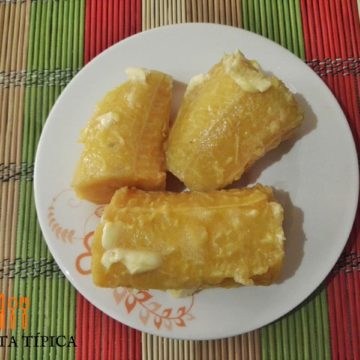
Ripe plantains boiled in their skins and served with butter. Twenty minutes, three ingredients, and it is what to do with plantains that have gone too soft to fry.

What to do with a plantain that has gone too far
Every household ends up here. You bought plantains to fry, they sat on the counter, and now they are black, soft and giving under a thumb.
Fried, one of those collapses. Ripe plantain is full of sugar and water, and in hot oil it goes limp and drinks the fat rather than crisping. What comes out is greasy and falls apart on the spatula.
Boiled, the same plantain is exactly right. The flesh firms rather than softening, the sweetness concentrates because nothing is competing with it, and it holds its shape on the plate. This is not a consolation prize, it is the better use for a very ripe plantain.
Skin on, always
The first step leaves the skin on and cuts the plantain into three pieces, and both halves of that matter.
The skin is a barrier. Boiling a peeled plantain lets water into the flesh, and what you get is pale, waterlogged and tastes of very little. With the skin on, the flesh steams in its own moisture and comes out dense and sweet.
Cutting it into pieces first means it fits the pot and cooks evenly. The skin comes away easily once it is soft; hold the piece in a cloth and push the flesh out.
Butter, and a little salt
The second step adds butter to taste and stops there. The butter should go on while the plantain is hot enough to melt it, so it soaks in rather than sitting on top.
Salt is worth adding alongside it, though the recipe does not say so. A ripe plantain is very sweet, and a pinch of salt does not make it savoury, it makes the sweetness read as flavour rather than as sugar.
Fresh cheese crumbled over is the other standard finish, and the salt in the cheese does the same job.
Three ingredients
Plantains, water, butter. There is nothing else on this page and nothing else is needed, which is worth saying because recipes this short tend to get padded.
It is a side dish, a breakfast, and a way of using up fruit that would otherwise be thrown out. Twenty minutes, almost all of it unattended.
More plantain
- Plantain canoes — baked and stuffed instead.
- Patacones — the green plantain, fried.
- Green plantain soup — the other end of the fruit.
- Ripe plantain arepas — the sweet arepa.
Boiled Ripe Plantains FAQ
Because a very ripe one is too soft to fry well. It drinks the oil and collapses in the pan. Boiled, it holds together and the sweetness concentrates instead of being masked by fat.
Yes. The skin keeps the water out and holds the flesh together, and it peels off in one piece afterwards. Peeled plantain boils waterlogged and bland.
The blacker the skin the better for this. A plantain that is mostly black is at its sweetest and is exactly the one that would not fry well.
About 20 minutes over medium heat, cut into three pieces each. A knife should go through without resistance.
Butter, while they are still hot enough to melt it. Salt alongside it is worth trying: the plantain is sweet enough that a little salt makes it taste of more.
On their own as a side, or with fresh cheese, or next to beans and rice. In Colombia they turn up at breakfast and at dinner without changing anything.
📖 Recipe
Ingredients
- 2 ripe plantains (the blacker the skin, the sweeter)
- Enough water to cover them
- Butter to taste
Notas
Instructions
- Cut the ripe plantains into large pieces, three or so per plantain, leaving the skin on, and put them in a pot of water over medium heat for about 20 minutes. The skin keeps the water out and holds the flesh together.
- Lift them out and peel off the skin. Put them on a plate and add as much butter as you want while they are still hot enough to melt it.
Comments
No Comments