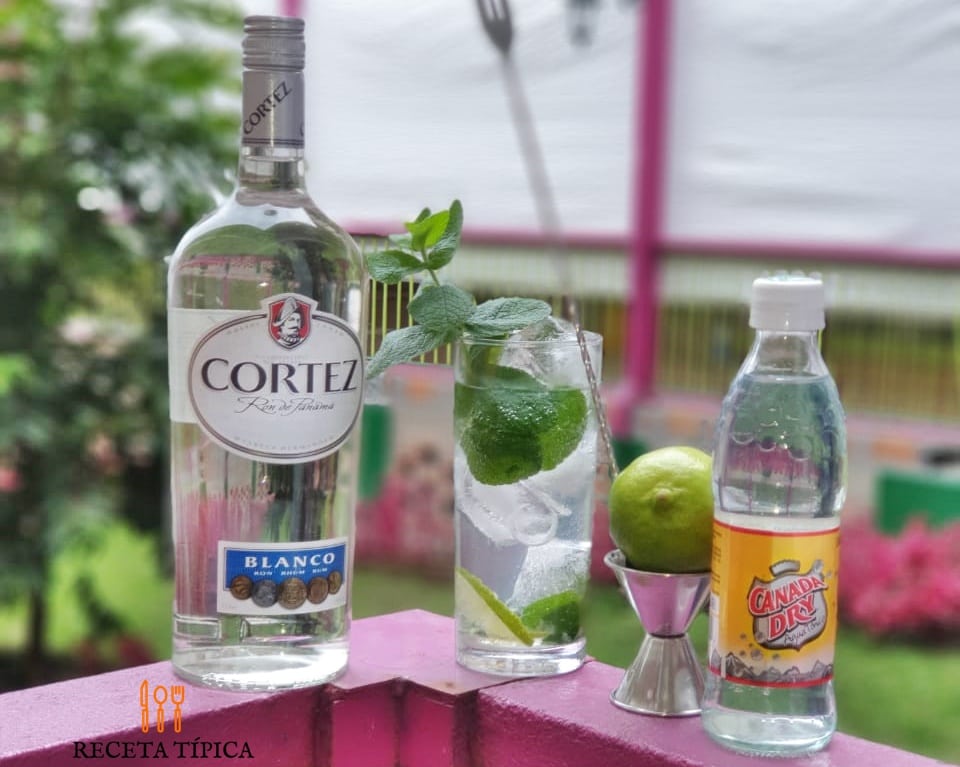
Lime and spearmint muddled with sugar in the glass, then ice, soda water and white rum. Two glasses in five minutes, and the muddling is what decides whether it tastes of mint or of grass.
Two hundred grams of mint
The ingredient list on this page asked for 200 grams of mint for two mojitos, and that is worth pausing on because it made the recipe impossible rather than merely wrong.
A supermarket packet of mint weighs 20 to 30 grams. Two hundred grams is seven or eight of them, roughly a carrier bag of leaves, going into two glasses that also have to hold ice, soda and rum.
A mojito takes eight to ten leaves per glass. A small bunch covers both, with some left for the garnish.
Press, do not grind
Muddling is the one technique in a mojito and it is almost always overdone.
The point is to bruise the leaves just enough to release their oils against the sugar and lime. A few firm presses with the end of a wooden spoon.
Grind them and you rupture the leaf tissue itself, which releases chlorophyll along with the oils. The drink turns bitter and tastes of cut grass, and there is no fixing it once it has happened.
Hierbabuena, not peppermint
Cuba uses hierbabuena, which is spearmint. The old ingredient list said peppermint, a different plant with a much higher menthol content.
Peppermint is aggressive. It flattens the rum and the lime and leaves the drink tasting medicinal. Spearmint is softer and sweeter and sits behind the other flavours rather than in front of them.
Most mint sold loosely as mint is spearmint, so this is easier to get right than it sounds.
Soda, not tonic
The list offered tonic water or soda as if they were interchangeable. They are not.
Tonic contains quinine, which is bitter, and a good deal of sugar. Put it in a mojito and you have a different drink. Soda in Spanish means plain carbonated water, and that is what the recipe meant.
Twelve ounces across two glasses, poured after the ice and before the rum.
More drinks
- Coconut cocktail — the Colombian one.
- Sangria at home — for a table rather than a glass.
- Coconut lemonade — no alcohol.
- Ron Viejo de Caldas — the Colombian rum.
Mojito FAQ
Eight to ten leaves per glass, so a small bunch covers two. The ingredient list on this page used to say 200 grams, which is seven or eight supermarket packets and would not physically fit in the glasses.
Spearmint, which is hierbabuena in Spanish and what Cuba uses. Peppermint has far more menthol in it and overwhelms the rum. If a packet just says mint, it is almost always spearmint.
Soda water, meaning plain carbonated water. The old ingredient list offered tonic, which contains quinine and sugar and makes a completely different drink. Spanish soda means fizzy water, and that is what was meant.
Lime. The Spanish limón in Colombia and Cuba means lime, and a mojito made with yellow lemon tastes wrong.
Gently. Press the leaves to bruise them and release their oils, and stop there. Grinding them breaks the leaf tissue, releases chlorophyll and turns the drink bitter and grassy.
Last in this version, after the soda water, which is a little unusual but keeps more of the fizz. Stir lightly rather than vigorously.
The muddling has to happen in each glass, so a jug is difficult. Muddle the lime, sugar and mint in the jug, add the rum, and top each glass with ice and soda as you pour.
📖 Recipe

Ingredients
- 4 ounces white rum
- 12 ounces soda water (plain carbonated water, not tonic)
- 2 tablespoons sugar (one per glass)
- 2 limes (sliced)
- A small bunch of spearmint (hierbabuena, about 20 leaves)
- 10 ice cubes
Notas
Instructions
- Put a tablespoon of sugar in each glass with three slices of lime and spearmint leaves to taste, and muddle them together. Press the mint rather than shredding it.
- Add the ice and stir with a spoon to chill everything through.
- Pour in the soda water and turn the ice over with the same spoon to bring the drink together.
- Add the rum and stir lightly.
- Garnish each glass with a sprig of spearmint and serve.
Comments
No Comments