
Cóctel de frutas is the fresh fruit cocktail of Latin America: mango, papaya, green apple and strawberry, chopped small and dressed with honey and the juice of three oranges. It is served cold, in a glass or a bowl, as an afternoon refreshment or a light dessert.
If you arrived looking for the canned fruit cocktail in syrup, this is a different thing entirely, same name, different dish. The difference is worth explaining, and it takes less time than the recipe does.
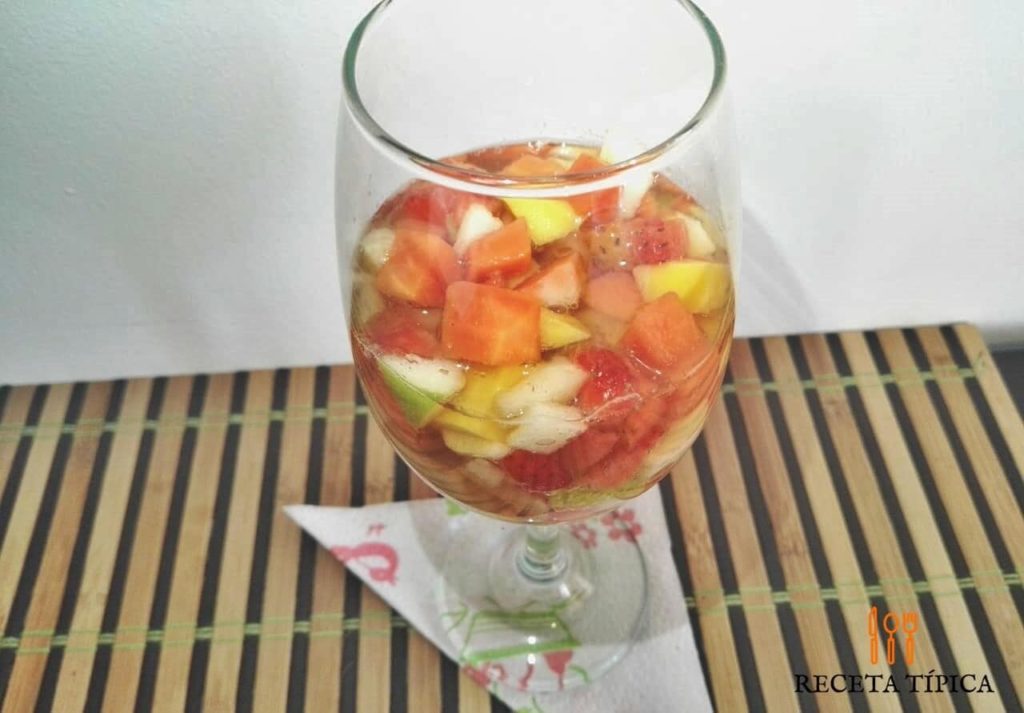
What goes into a cóctel de frutas
The fruit is not fixed. Mango, papaya, apple and strawberry are what this version uses, and they are chosen for contrast rather than tradition: mango for sweetness, papaya for softness, green apple for tartness and bite, strawberry for colour and acidity.
What holds it together is the dressing, and the dressing is only two things, honey and orange juice. That restraint is the point. The Colombian repertoire has richer versions of the same idea, with cream and condensed milk stirred through and a scoop of ice cream on top. This is not one of them. There is no dairy here at all.
This is not canned fruit cocktail
In the United States, fruit cocktail almost always means the canned product, and that product is defined by law. Under the federal standard of identity (21 CFR 145.135), anything sold as canned fruit cocktail has to contain diced peach at 30 to 50 percent of the drained weight, diced pear at 25 to 45 percent, pineapple at 6 to 16 percent, seedless grapes at 6 to 20 percent and cherries at 2 to 6 percent. Those five fruits, in those proportions, packed in syrup or juice.
Notice what is not on that list: mango, papaya, strawberry, apple. The fresh cóctel de frutas shares a name with the canned product and almost nothing else, not the fruit, not the sweetener, not the texture. One is a shelf-stable can of peach and pear; the other is cut fruit that has to be eaten the same day.
Choosing and cutting the fruit
Buy the mango slightly under-ripe. This is the instruction in the recipe that matters more than it sounds: a ripe mango is delicious and impossible to dice, collapsing into strings and purée as soon as the knife goes in. A firm one holds its cubes and keeps its edges in the glass.
The papaya wants the opposite, ripe, and small rather than large. Halve it, scoop out the black seeds with a spoon, peel it, and cut it into pieces about the size of the mango cubes.
Green apple, not red. The tartness is doing a job here, cutting against the honey, and a sweet apple leaves the whole thing flat. Cut it into thin half-moons: quarter the apple, core it, lay each quarter flat and slice across. Strawberries get sliced rather than halved, so they distribute instead of settling at the bottom of the glass.
Cut everything to roughly the same size. It sounds fussy, and it is the difference between a fruit cocktail and a bowl of separate fruits: when the pieces match, a single spoonful picks up three or four of them at once.
Honey and orange juice, and what they actually do
Three oranges give you somewhere between three quarters of a cup and a full cup of juice, depending on the oranges. That is enough to come partway up the fruit, not to cover it. Fruit floating in juice is a salpicón, which is a related but different drink; fruit dressed with juice is a cocktail.
The honey goes in to taste, but to taste is unhelpful if you have never made it. Start with about two tablespoons for this quantity of fruit and adjust from there. Ripe fruit needs less, and very ripe fruit sometimes needs none.
The juice is not only for flavour. Cut apple browns because an enzyme called polyphenol oxidase reacts with oxygen, and the ascorbic and citric acid in orange juice slows that reaction down. Honey adds to the effect, since it contains compounds that inhibit the same enzyme, though research measuring this puts honey well behind commercial anti-browning agents, and finds it works best alongside an acid rather than instead of one. In practice the juice does most of the work and the honey helps. Either way, this holds its colour far better than a dry fruit salad.

Putting it together
Everything into a large bowl: mango, papaya, apple, strawberries. Pour the honey and the orange juice over the top. Stir gently, papaya and strawberry are the two that break up, and once they do the juice goes cloudy and pink and the cocktail turns into something closer to a smoothie.
Serve it cold. If the fruit was at room temperature, give the bowl half an hour in the fridge first; the gap between a cool cocktail and a genuinely cold one is wider than it should be.
How far ahead can you make it?
A few hours in the fridge is comfortable, and it is best on the day. Beyond that the papaya softens and the fruit starts to weep, which thins the juice and takes the edge off it.
To get ahead, cut the fruit and keep it covered in the fridge, then dress it with the honey and juice shortly before serving. The one exception is the apple: if you are cutting it early, toss it in a little of the orange juice straight away rather than leaving it dry.
Fruit cocktail, fruit salad or salpicón?
Three Colombian ways of serving cut fruit, and they get confused constantly, including in English, where all three sometimes end up translated as “fruit salad”.
- Cóctel de frutas — this recipe. Fruit, honey, orange juice. No dairy, served in a glass or a bowl.
- Fruit salad — the Colombian ensalada de frutas, which is the rich one: cream and condensed milk stirred through, then ice cream and grated fresh cheese on top. The cheese is what surprises people, and it is what makes it Colombian.
- Salpicón — fruit in juice rather than dressed with it, enough that you drink it as much as you eat it, served cold in a tall glass with a spoon.
If you want the light one, you are in the right place. If you want the one with the cheese on top, follow the second link.
What to serve it with
On its own it is breakfast, or an afternoon refreshment in hot weather. To make more of a dessert of it, add granola or cereal for crunch, yogurt or milk, a spoonful of whipped cream, or a scoop of ice cream. Any of those change what it is, which is fine: the cocktail is a base as much as a recipe.
For something along the same lines with alcohol in it, sangria works from the same instinct: fruit, juice, cold glass.
Fresh Fruit Cocktail FAQ
No. Canned fruit cocktail is a legally defined product in the US: diced peach and pear make up most of it, plus pineapple, seedless grapes and a few cherries, packed in syrup or juice. This is fresh mango, papaya, green apple and strawberry dressed with honey and orange juice. They share a name and nothing else.
The Latin American fresh fruit cocktail: fruit chopped small, dressed with honey and citrus juice, and served cold in a glass or a bowl. It is eaten as breakfast, as an afternoon refreshment in hot weather, or as a light dessert. In Colombia it sits alongside two richer relatives, ensalada de frutas and salpicón.
By how wet it is and what is in the dressing. The cocktail is fruit dressed with honey and orange juice, no dairy at all. Colombian fruit salad adds cream, condensed milk, ice cream and grated fresh cheese. Salpicón puts the fruit in enough juice to drink, served in a tall glass. Same fruit, three different dishes.
They slow it down. Cut apple browns when an enzyme called polyphenol oxidase meets oxygen, and the ascorbic and citric acid in orange juice interferes with that reaction. Honey inhibits the same enzyme but more weakly, and works best alongside an acid rather than instead of one. Together they buy you a few hours, not a day.
Yes, and most Colombian households do. Keep the balance rather than the list: something sweet like mango or pineapple, something soft like papaya, something tart like green apple, and something with colour and acidity like strawberry. If you use banana, add it last, since it softens and browns faster than anything else in the bowl.
A few hours in the fridge, and it is best the day it is made. After that the papaya softens and the fruit begins to weep, which thins the juice. To get ahead, cut the fruit and refrigerate it covered, then add the honey and orange juice shortly before serving.
📖 Recipe

Ingredients
- 1 cup mango, not too ripe, cut into small cubes (firm mango dices cleanly; a ripe one turns to purée under the knife)
- 1 cup papaya, cut into small pieces
- Honey, to taste (about 2 tablespoons suits this much fruit; ripe fruit needs less)
- 1 cup green apple, cut into thin half-moons (green apple for the tartness against the honey)
- 1 cup strawberries, sliced
- 3 oranges, juiced (about ¾ to 1 cup of juice)
Notas
Instructions
- Put the mango, papaya, apple and strawberries in a large bowl. Cut everything to roughly the same size, so that one spoonful picks up more than one fruit.
- Add the honey and the orange juice. The juice should come partway up the fruit rather than cover it: this is fruit dressed with juice, not fruit floating in it.
- Stir gently, so the strawberries and papaya do not break up, and serve cold. The acid in the orange juice slows the apple from browning, which is why this holds better than a dry fruit salad.
Comments
No Comments