
Colombia has fruit that most of the world has never seen, and a few of the names on this page will mean nothing to you. Lulo, guanábana, mora de Castilla and maracuyá are worth the trouble of tracking down. The rest are fruits you already know, used in ways you probably do not.
First, the question every Colombian gets asked
¿En agua o en leche? In water or in milk. Order a juice anywhere in Colombia and this is the follow-up question, and it is not a small one: the same fruit makes two entirely different drinks.
In water it stays sharp and thin, closer to what you would call a juice. In milk it becomes something between a juice and a milkshake, rounder and much less acidic. The rule of thumb is that the sharper the fruit, the more it wants milk. Lulo and blackberry are almost always drunk in milk. Orange and pineapple are almost always in water. Mango goes either way and people have opinions.
Sugar goes in as a matter of course, because most of these fruits are far too acidic to drink otherwise.
The four you will not recognise
Lulo
Orange on the outside, green and pulpy inside, and one of the hardest flavours to describe: somewhere between rhubarb, lime and unripe pineapple, and much more acidic than any of them. It is sometimes sold abroad as naranjilla.

Nobody eats it out of hand. It goes into lulo juice, almost always in milk, and it is arguably the national drink. If you find frozen lulo pulp in a Latin grocery, buy it: fresh lulo is nearly impossible to get in the United States and the frozen pulp is what most Colombian households use anyway.
Soursop (guanábana)
A large green fruit with soft spines and white, fibrous, custardy flesh. It tastes like a cross between banana, pineapple and cream, and it is one of the few tropical fruits that is genuinely creamy without anything added.

Used for soursop juice, ice cream and desserts. Note that the seeds are not eaten, in this fruit or in any of its relatives: they are bitter and are always strained out.
Passion fruit (maracuyá)
Yellow, wrinkled when ripe, and filled with fibrous pulp and black seeds that go into the blender along with everything else and then get strained. Sharply acidic, which is exactly the point.
It makes juice, but it is more interesting in the kitchen than in a glass. Colombian cooking uses it in vinaigrettes for salads, in sauces for fish and chicken, and in mousse and desserts, where its acidity cuts through condensed milk in a way few other fruits manage.
Blackberry (mora de Castilla)
Not the same as the blackberry that grows in American hedgerows. The Colombian mora is larger, redder and considerably more acidic, closer to a loganberry.

It is drunk as blackberry juice, nearly always in milk and with plenty of sugar, and it is the standard flavour for sorbet and for the sauce that goes over cheesecake. If you use ordinary blackberries you will need less sugar.
The ones you know, used differently
Banana (banano) and the plantain trap
Worth being precise here, because the words do not line up. In Colombia banano is the sweet fruit you peel and eat, and plátano is the large starchy one you cook. English calls the first a banana and the second a plantain, and translated recipes swap them constantly. If a recipe fries it, it is plantain. If it goes into a cake or a milkshake, it is banana.
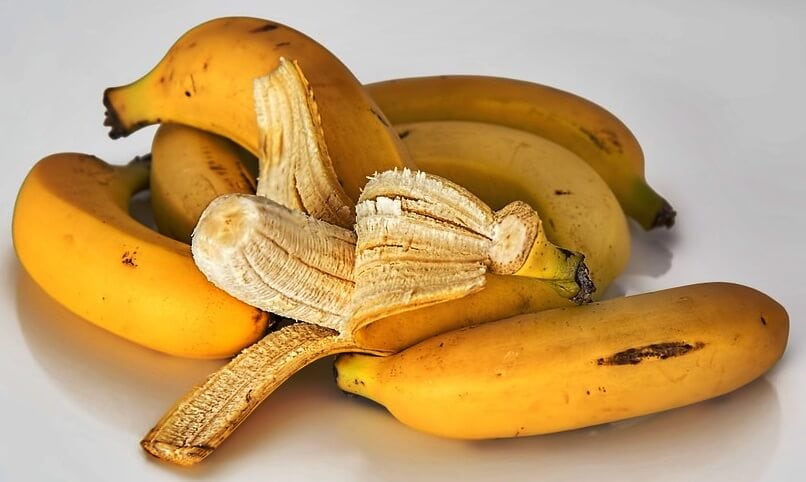
On this site: banana cake, banana mousse, oatmeal banana bread, banana split.
Avocado (aguacate)
This one surprises Americans more than any other. In Colombia avocado is not guacamole and it is not a dip. It arrives at the table in thick slices, with salt, next to a bowl of sancocho or on a bandeja paisa, and it is eaten as a vegetable alongside the meal.
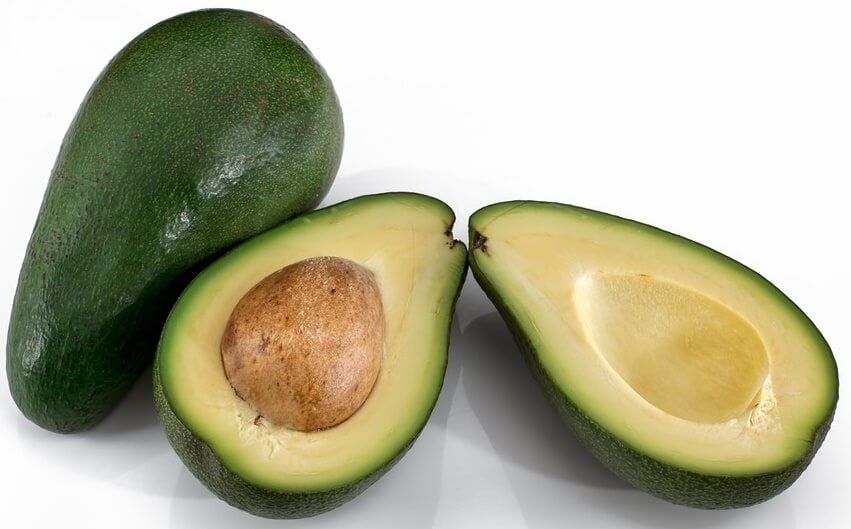
The Colombian varieties are also much larger than a Hass, sometimes the size of a small melon, with smoother green skin and milder flesh. A Hass works fine, you just need several.
On this site: stuffed avocados, avocado salad, avocado salsa.
Coconut (coco)
The signature of the Caribbean coast, and there it is a savoury ingredient before it is a sweet one.
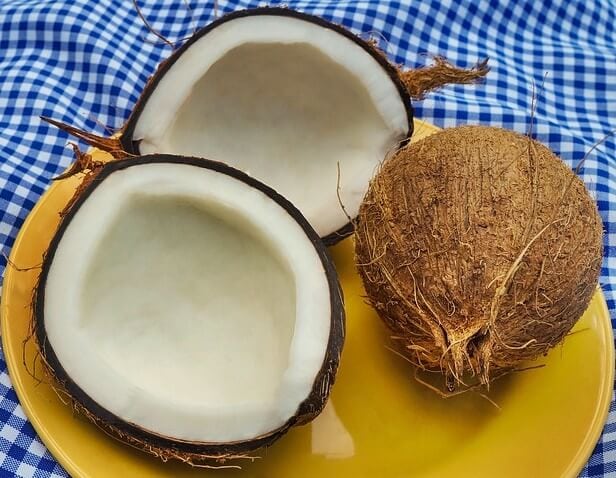
Coconut milk is the base of coconut rice, which is arguably the most famous dish of the Colombian coast, and of coconut fish soup. On the sweet side it turns into coconut lemonade and cakes and flan. Tinned coconut milk is standard and nobody grates their own unless they are on the coast with a fresh one.
Mango
Two mangoes, not one. Ripe mango goes into juice, salads and desserts, the way it does everywhere. Green mango is the interesting one: sliced hard and unripe, salted, and sold from carts on every street corner, sometimes with lime and a little chilli salt.
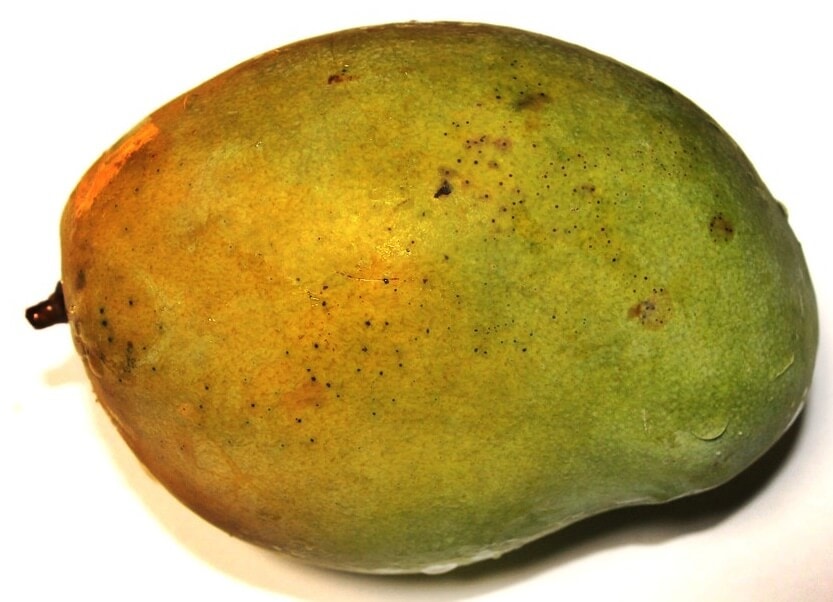
On this site: mango juice, mango salad, mango ceviche.
Pineapple (piña)
Eaten fresh and drunk as pineapple juice, usually in water. It also turns up cooked in savoury dishes on the coast.
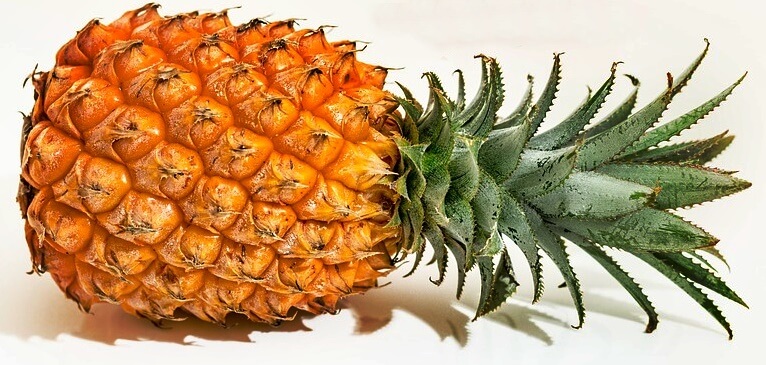
One practical note: fresh pineapple contains bromelain, an enzyme that breaks down protein, which is why fresh pineapple will not set in gelatine and why a fresh pineapple juice left standing with milk turns bitter. Cooked or tinned pineapple has no such problem, because heat destroys the enzyme.
Papaya
Eaten in slices at breakfast and blended into smoothies and desserts.
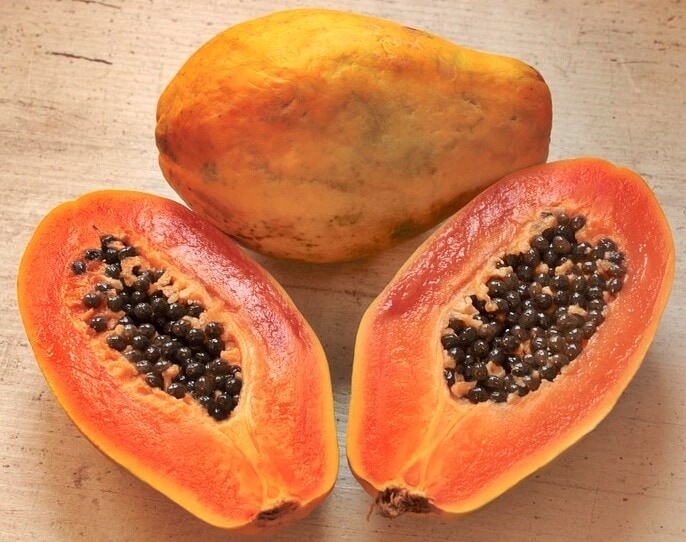
Papaya carries papain, the same sort of protein-splitting enzyme as pineapple, so a papaya smoothie made with milk turns bitter if it sits for an hour. Drink it fresh.
Orange (naranja)
Colombian oranges are often green-skinned even when perfectly ripe, which throws visitors completely. Skin colour has nothing to do with ripeness in the tropics.
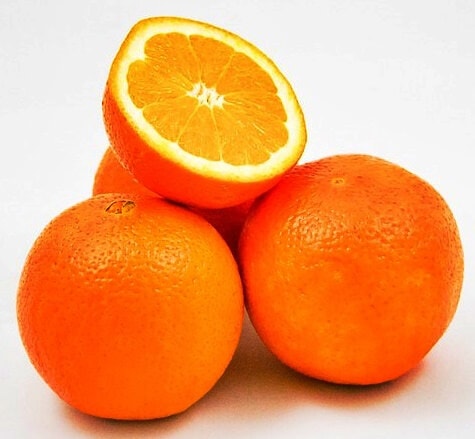
Mostly drunk as orange juice, freshly squeezed and never from a carton if there is any choice in the matter.
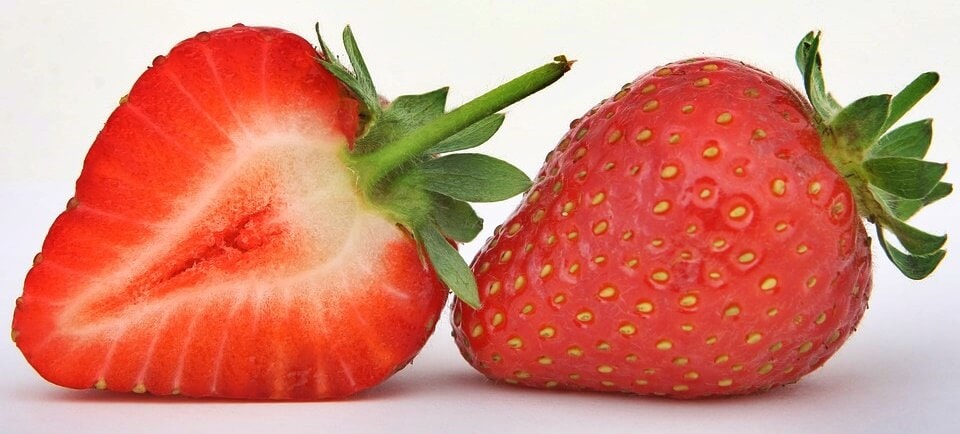
Strawberry (fresa)
Grown in the cold highlands around Bogotá rather than in the tropical lowlands, which is why they are a highland fruit in Colombia.
On this site: strawberry dessert, strawberry milkshake, homemade strawberry yoghurt.
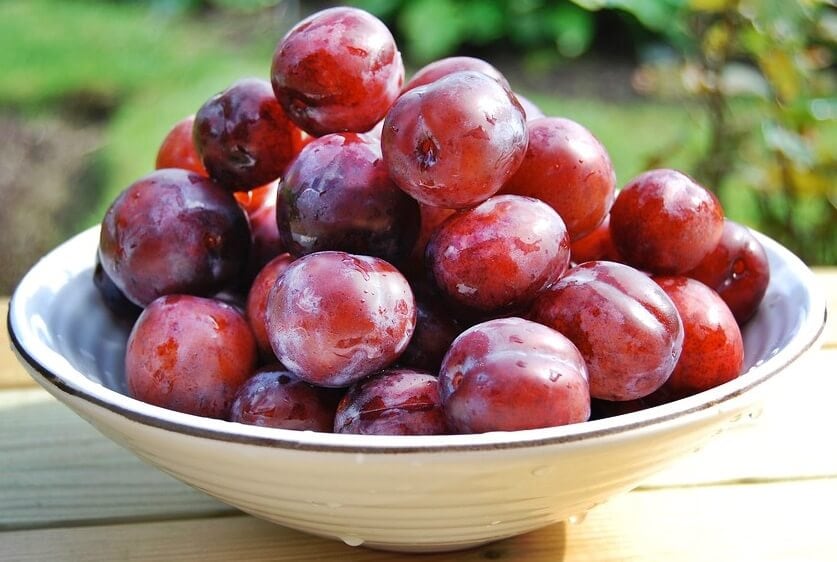
Apple (manzana) and plum (ciruela)
Both are imported or grown in the high cold country, and neither is traditional. They turn up in fruit salads and in juice, and that is about the extent of it. Included here because they are in every Colombian supermarket, not because Colombian cooking does anything particular with them.

Finding them in the United States
The answer for the tropical ones is nearly always frozen pulp, sold in plastic packets in the freezer of any Latin American grocery, and increasingly in ordinary supermarkets with a Latin section.
- Lulo, guanábana, maracuyá, mora, tomate de árbol: frozen pulp. Fresh is unrealistic and the pulp is what most Colombian households buy anyway.
- Coconut milk: tinned, in any supermarket. Full fat, not the light version, for rice and soups.
- Green mango: Indian and Asian groceries usually have it, since they use it too.
- Avocado: Hass is fine. Just buy three where a recipe assumes one.
One packet of pulp makes roughly a litre of juice, so a bag of four goes a long way. Blend it with water or milk and sugar, and that is the whole technique.
Related pages: Colombian vegetables, tubers, beans and pulses, herbs.
Colombian Fruit FAQ
Somewhere between rhubarb, lime and unripe pineapple, and considerably more acidic than any of them. It is not eaten raw: it goes into juice, almost always blended with milk and sugar, which softens the acidity. It is sometimes sold as naranjilla outside Colombia.
This is the question you get asked when you order juice in Colombia, and the same fruit makes two different drinks. In water it stays thin and sharp; in milk it becomes rounder and much less acidic, closer to a milkshake. Lulo and blackberry are usually drunk in milk, orange and pineapple in water.
Frozen pulp, in the freezer of any Latin American grocery. Lulo, guanábana, maracuyá, mora and tomate de árbol are all sold this way in plastic packets, and one packet makes about a litre of juice. Fresh versions of these are nearly impossible to find, and Colombian households mostly use the pulp too.
Banano is the sweet banana you peel and eat. Plátano is the large starchy plantain you cook, and it is never eaten raw. Translations mix them up constantly. If a recipe fries it, it means plantain.
In thick slices with salt, as a side dish, next to sancocho or on a bandeja paisa. Not mashed, not as a dip, and guacamole is Mexican rather than Colombian. Colombian avocados are also much larger than a Hass, so buy several if you are substituting.
Fresh pineapple contains bromelain, an enzyme that breaks down protein, and gelatine is protein. The same enzyme turns a fresh pineapple and milk drink bitter if it stands. Cooking or tinning destroys it, so tinned pineapple sets perfectly well.
Often, and they are perfectly ripe. Skin colour is a poor guide to ripeness in the tropics, because the green pigment only breaks down when nights are cold. A green Colombian orange can be sweeter than an orange one from a temperate country.
Comments
No Comments