
• Skip to primary navigation
  • Skip to main content
  • Skip to primary sidebar
▷ Authentic Colombian cuisine recipes with a homely touch
  • Home
  • Recipe Index
  • Contact us
  • Español
menu icon
go to homepage
  • Home
  • Recipe Index
  • Contact us
  • Español
search icon
Homepage link
  • Home
  • Recipe Index
  • Contact us
  • Español
×
Inicio » Recipes

Grape Juice (Jugo de Uva)

Publicado: Mar 19, 2020 · Modificado: Aug 4, 2026 Por Angela Giraldo · 775 Palabras · 4 minutos de lectura

Grapes halved, seeded and simmered in water with sugar, then cooled and strained. It is a cooked juice rather than a blended one, which is what makes it keep and what concentrates the flavour.
Total: 25 minutes minutes
JUMP TO RECIPE

Grapes halved, seeded and simmered in water with sugar, then cooled and strained. A cooked juice rather than a blended one, which is what concentrates the flavour.
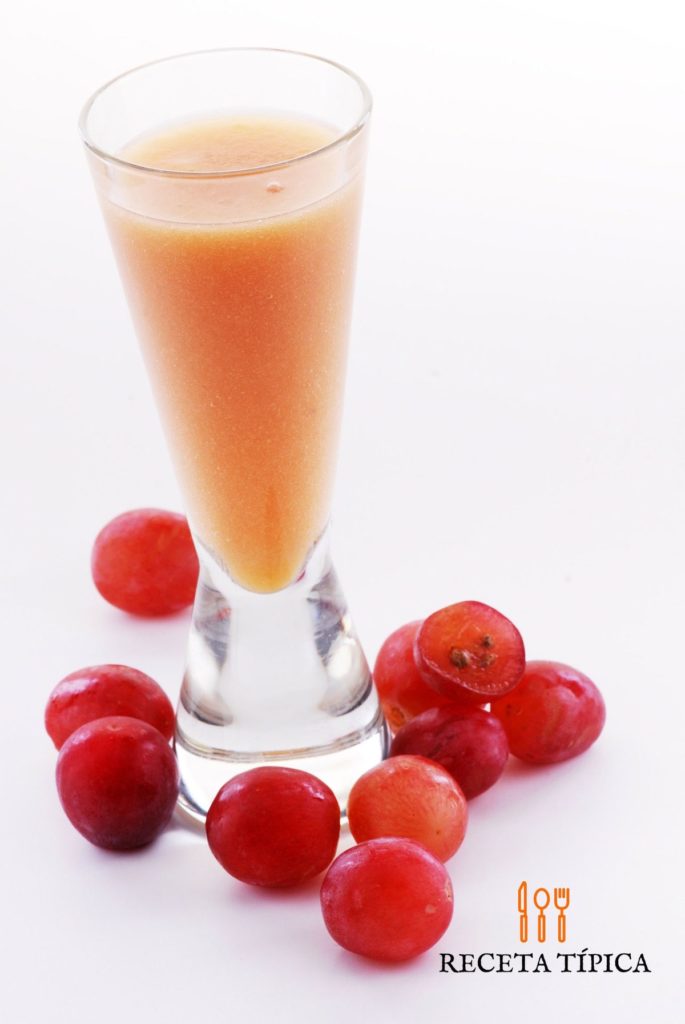
Jugo de uva, Colombian grape juice

A cooked juice, not a blended one

Almost every juice on this site goes into a blender. This one goes into a pot, and that is worth understanding before you decide it is more work than it needs to be.

Twenty minutes of simmering does three things a blender cannot. It breaks the fruit down completely, so nothing is left suspended. It pulls the colour and tannin out of the skins, which is where most of what tastes like grape juice lives. And it drives off some water, concentrating what is left.

It also means it keeps. A blended fruit juice separates into layers within an hour; this one holds for days in the fridge.

Take the seeds out first

The first step halves the grapes and removes the seeds, and it is the step people skip because there is a strainer at the end.

The strainer is too late. Grape seeds are bitter, and twenty minutes of simmering extracts that bitterness into the water where it stays. Taking them out afterwards removes the seeds and not the flavour they left behind.

Seedless grapes make this step disappear.

Cool it completely

The last step says to let it cool, strain and serve over ice, and each part depends on the one before.

Straining hot pushes soft pulp through the mesh and clouds the juice. Pouring hot juice over ice melts it on contact and dilutes everything you just spent twenty minutes concentrating.

The fridge is the easiest route. It also tastes noticeably better cold.

The sugar goes in late

Five tablespoons, added after the grapes have already cooked for fifteen or twenty minutes rather than at the start.

By then the fruit has released its own sweetness into the water, so you can judge how much is actually needed. Added at the beginning it would be a guess.

More juices

  • Limonada cerezada — blended with ice.
  • Tree tomato juice — tomate de árbol.
  • Pineapple juice — blended and strained.
  • Colombian limonada — with the whole lime.

Grape Juice FAQ

Why cook the grapes instead of blending them?

Twenty minutes of simmering breaks the fruit down, pulls the colour out of the skins and concentrates the flavour in a way a blender cannot. It also keeps for several days rather than separating within the hour.

Do I have to take the seeds out?

Yes. Grape seeds are bitter and twenty minutes of simmering pulls that bitterness straight into the liquid. Straining afterwards does not undo it.

Can I use seedless grapes?

Yes, and it saves the first step entirely. Halve them anyway so they break down faster.

Why let it cool before straining?

Hot juice poured over ice melts it immediately and leaves you with something watery, and straining while hot pushes pulp through the sieve and clouds the juice.

How long does it keep?

Several days in the fridge, which is the advantage of cooking it. A blended juice separates within an hour.

Red or green grapes?

Either. Red gives the colour people expect from grape juice; green gives something paler and slightly sharper.

📖 Recipe

Grape Juice (Jugo de Uva)

No ratings yet
Imprimir Pin Comentar
Prep Time: 5 minutes minutes
Cook Time: 20 minutes minutes
Total Time: 25 minutes minutes
Course: Drinks
Cuisine: Colombian
Keyword: grape juice
Servings: 3
Calories: 192kcal
Author: Angela Giraldo

Ingredients

  • 500 g grapes (halved and seeded)
  • 5 tablespoons sugar
  • 1200 ml water
  • Ice (to serve)

Notas

This is a cooked juice, not a blended one, and that is the difference between it and most of the juices on this site. Twenty minutes of simmering breaks the grapes down, pulls the colour out of the skins and concentrates the flavour in a way a blender cannot. It also means it keeps for several days in the fridge rather than separating within the hour. Let it cool completely before straining. Hot juice poured over ice melts it immediately and you end up with something watery, and straining while hot pushes pulp through the sieve and clouds it. Seeded grapes matter here. Grape seeds are bitter and twenty minutes of simmering pulls that bitterness straight into the liquid, which is why the first step takes them out rather than leaving it to the strainer.
Prevent your screen from going dark

Instructions

  • Wash the grapes, cut them in half and take the seeds out.
  • Heat the water in a pot and add the grapes.
  • Let it cook for 15 to 20 minutes, then add the sugar and stir until it dissolves.
  • Let it cool completely, strain it, and serve over ice.

Nutrition

Calories: 192kcal | Carbohydrates: 50g | Protein: 1g | Fat: 1g | Saturated Fat: 1g | Polyunsaturated Fat: 1g | Monounsaturated Fat: 1g | Sodium: 27mg | Potassium: 319mg | Fiber: 2g | Sugar: 46g | Vitamin A: 110IU | Vitamin C: 5mg | Calcium: 31mg | Iron: 1mg
Follow us on:@recetatipica
« Guava Juice (Jugo de Guayaba)
Colombian Empanadas (Beef or Chicken) »

About Angela Giraldo

Reader Interactions

Comments

No Comments

Leave a Reply Cancel reply

Your email address will not be published. Required fields are marked *

Recipe Rating


This site uses Akismet to reduce spam. Learn how your comment data is processed.

Primary Sidebar

Featured Recipes

Caldo de Costilla: the Colombian Breakfast Broth

Colombian White Rice, in a Pot or a Rice Cooker

Scrambled Eggs, and Why the Heat Decides Everything

Sancocho Cream Soup, Two Ways

Drinks

New Recipes

Coca-Cola Rice: why the soda, and what it actually does

Sudado de Albóndigas (Colombian Meatball Stew)

Colombian Mashed Pumpkin with Hogao (Poteca de Auyama)

Perro Caliente Colombiano: the Hot Dog with Crisps on Top

Lunch Ideas

Colombian Egg and Potato Soup

Colombian Pork Tamales: wrapped in plantain leaf, not corn husk

Chocolate Pudding Set with Cornstarch (Postre de Chocolate)

Sopa de Fideos (Colombian Noodle Soup)

Footer

↑ back to top

PRIVACY POLICY
ACCESSIBILITY STATEMENT

Copyright © 2026 Receta Típica - Web Design Marketing Nativo.

Rate This Recipe

Your vote:


A rating is required
A name is required
An email is required