Colombia's best known rum, made in Manizales by the Industria Licorera de Caldas, a distillery owned by the department of Caldas itself.
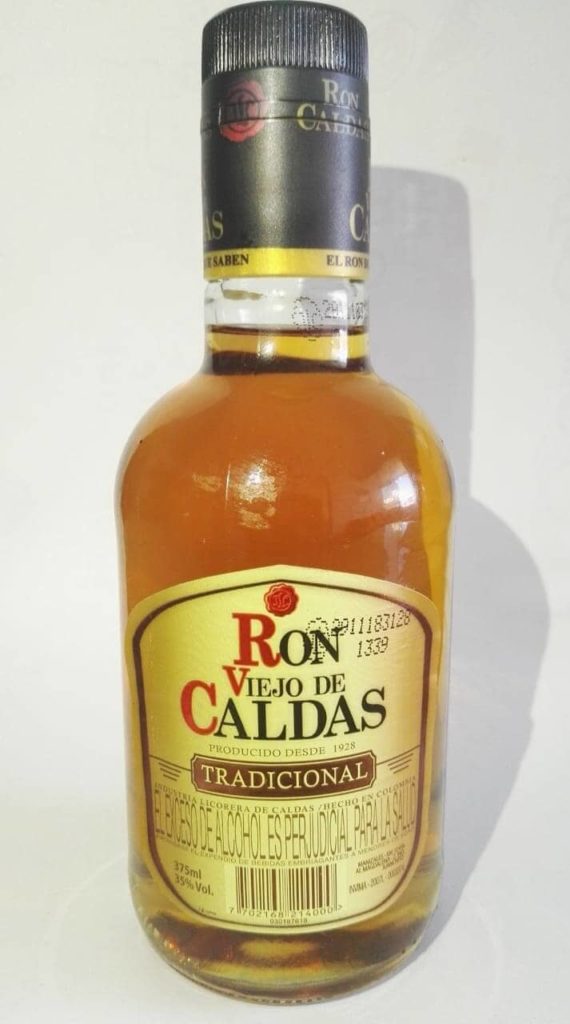
A rum owned by a regional government
This is unusual and worth knowing. In Colombia the production of spirits has historically been a state monopoly at departmental level, and several departments run their own distilleries.
The Industria Licorera de Caldas is one of them, and the profits go to the regional government rather than to shareholders. The same arrangement produces aguardiente across the country.
What the numbers mean
The bottles carry an age: 3, 5, 8, 12, 15 and 20 years, and the number refers to how long the rum spent in oak barrels.
- 3 and 5 years are the everyday bottles, lighter and mixed rather than sipped.
- 8 and 12 years sit in the middle, and 8 is the one most commonly poured at home.
- 15 and 20 years are the premium bottles, drunk neat.
Longer in the barrel means darker colour, more wood and vanilla, and a rounder finish. It does not automatically mean better, and mixing an expensive rum with Coke is generally considered a waste of both.
How it is drunk in Colombia
The younger bottles go into a Cuba Libre with lime, or simply with soda. The older ones are drunk neat or over one large piece of ice.
Rum in Colombia is a social drink rather than a solitary one: the bottle sits on the table with a bucket of ice and mixers, and people pour their own. That is worth knowing if you are ever handed one.
Rum against aguardiente
Colombia's other national spirit is aguardiente, which is anise-flavoured, clear and drunk in small glasses without mixing. Preference between the two divides largely by region: the coast and the coffee region lean toward rum, Antioquia and the interior toward aguardiente.
Both are made by departmental distilleries and both are cane spirits. The difference is the anise and the ageing.
What to make with it
- Cuba Libre — rum, Coke and lime.
- Piña colada — served in the pineapple.
- Coco loco — the coastal one.
- Carajillo — with hot espresso.
Ron Viejo de Caldas FAQ
The Industria Licorera de Caldas, a distillery owned by the departmental government of Caldas and based in Manizales. Spirit production in Colombia has historically been a departmental monopoly, so several regions run their own distilleries.
Years in oak barrels. The range runs from 3 to 20. Longer ageing gives a darker colour, more wood and vanilla character and a rounder finish, though it does not automatically make a bottle better for every purpose.
The 3 and 5 year bottles are made for mixing, in a Cuba Libre or with soda. From 12 years upward they are generally drunk neat or over a single large piece of ice.
Both are cane spirits made by departmental distilleries. Aguardiente is flavoured with anise, clear, unaged and drunk neat in small glasses. Rum is aged in oak and drunk neat or mixed. Regional preference divides between them.
It is exported and turns up in Latin American shops and some larger liquor stores, usually in the 3 or 8 year versions. The older bottles are harder to find abroad.
Comments
No Comments