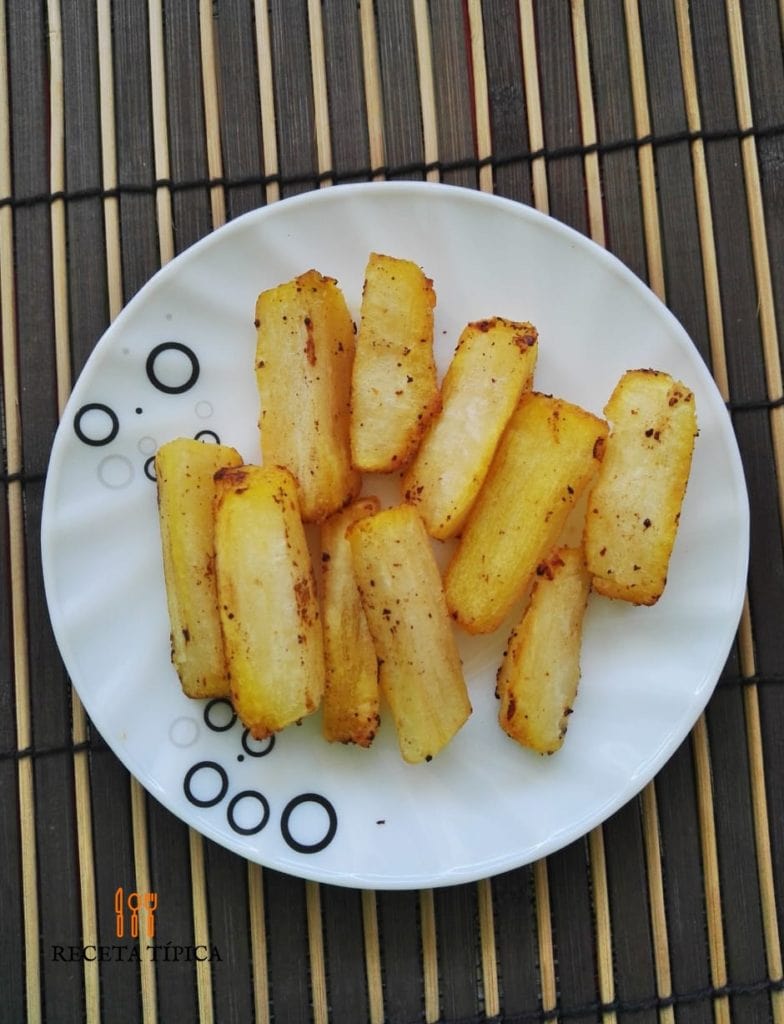
Cassava boiled first, then fried. That order is the whole recipe, and it is where most people go wrong: cassava fried from raw comes out hard in the middle no matter how long it sits in the oil.

In Colombia these are yuca frita, and they turn up next to grilled meat, next to fried fish on the coast, and on their own with a bowl of ají. They are denser and more filling than a potato chip, closer in texture to a roast potato.
Why the boiling is not optional
Cassava is much denser and starchier than potato. Dropped straight into oil, the outside browns and hardens long before any heat reaches the centre, so you end up with something burnt outside and raw inside.
Boiling cooks it through and softens the starch. The frying is only there for colour and crust, which is why it takes five minutes and not twenty. It is the same logic as patacones, fried, flattened and fried again for exactly the same reason.
There is a second reason. Raw cassava contains compounds that release cyanide, so it is never eaten raw anywhere in the world. Boiling removes them completely, and the sweet varieties sold for eating are low in them to start with. Cook it and there is nothing to think about.
The woody core
This is the detail that decides whether the batch works, and almost no recipe mentions it.
Running down the centre of every cassava root is a thin fibrous cord, tougher than the flesh around it. It does not soften. You can boil the root for an hour and that cord will still be there, and whoever gets it will assume the cassava was undercooked.
Split each piece lengthways after peeling and pull it out. It comes away easily once the root is halved, and it takes about ten seconds a piece.
Peeling, and the shortcut
Cassava has two layers to remove: the waxy brown skin and a pinkish layer underneath. Both come off. A peeler is not much use because the skin is too thick, so it is a knife job: score down the length of the root and lever the skin away in strips.
If that sounds like a chore, it is, and there is a legitimate shortcut. Frozen cassava is sold in chunks in any Latin American grocery and increasingly in ordinary supermarkets. It arrives peeled, cored and ready for the pot, and it behaves the same as fresh. Plenty of Colombian city kitchens use it without a second thought.
Getting them crisp
- Let them dry after draining. Wet cassava makes the oil spit and steams instead of frying.
- Let them cool if you have time. Boiled cassava left to go completely cold, even overnight in the fridge, fries up considerably crisper than warm cassava straight from the pot.
- Do not crowd the pan. Too many pieces at once drops the oil temperature and they soak it up instead of sealing.
- Salt them hot. Salt sticks to the surface oil while it is still hot and slides straight off once they cool.
They do not keep. Cassava goes from crisp to leathery within about twenty minutes, so this is something you make when people are already at the table.
What to serve them with
Ají is the standard, in a bowl for dipping rather than poured over. On the Caribbean coast they come with suero costeño, a soured cream somewhere between crème fraîche and buttermilk. Plain tomato sauce or a garlic mayonnaise both work if neither of those is to hand.
As a side they belong with anything grilled: grilled beef, pork skewers, fried mojarra.
More cassava
- Cassava croquettes — the same boiled cassava, mashed and stuffed with cheese.
- Pan de yuca — made from cassava starch rather than the root itself.
- Arepas de yuca — softer than corn arepas, with cheese kneaded in.
- Cassava and potato soup — where the rest of the root goes.
Yuca Fries FAQ
Because cassava is far denser and starchier than potato. Fried from raw, the outside browns and hardens long before any heat reaches the middle, so it comes out burnt outside and raw inside. Boiling cooks it through; the frying is only for colour and crust, which is why it takes five minutes.
Almost certainly the woody core. Every cassava root has a thin fibrous cord running down its centre that never softens, however long you boil it. Split each piece lengthways after peeling and pull it out before it goes in the pot.
Yes, and it is the sensible option. Frozen cassava comes peeled and cored, which removes the most tedious part of the job, and it behaves exactly like fresh. It is sold in chunks in Latin American groceries and in many ordinary supermarkets.
Raw cassava contains compounds that release cyanide, which is why it is never eaten raw anywhere in the world. Boiling removes them completely, and the sweet varieties sold for eating are low in them to begin with. Cook it and there is nothing to worry about.
It tells you. The pieces crack open along their length when they are done, usually after 20 to 25 minutes, and a knife should go in without resistance. If the pieces are still smooth and closed, give them longer.
Let the boiled cassava cool completely before it goes into the oil, ideally in the fridge overnight. Cold, dry cassava crisps far better than warm cassava straight from the pot. Fry in batches too, since crowding the pan drops the oil temperature.
Ají, served in a bowl for dipping rather than poured over. On the Caribbean coast they come with suero costeño, a soured cream between crème fraîche and buttermilk. They also go alongside grilled meat and fried fish.
📖 Recipe

Ingredients
- 1 ½ pounds cassava (fresh or frozen; frozen comes peeled and cored, which saves the hardest part)
- Water, enough to cover
- 2 cloves garlic, minced (they go into the boiling water, not the oil)
- Salt, to taste (some in the water, more at the end)
- Oil, for frying
Notas
Instructions
- Peel the cassava, removing both the waxy brown skin and the pink layer underneath, and cut it into pieces about three inches long. Split each piece lengthways and pull out the woody core running through the middle: it never softens, however long you boil it.
- Put the cassava in a medium saucepan, cover with water, and add the garlic and a little salt.
- Cover and bring to the boil over high heat. Once it boils, turn it down and cook for 20 to 25 minutes, until the pieces crack open and a knife goes through without resistance.
- Drain the cassava and let it dry off for a few minutes. The drier it is, the less the oil will spit.
- Heat the oil, and when it is hot fry the cassava for about five minutes, until golden.
- Lift them out onto kitchen paper.
- Salt them while they are still hot and serve straight away.
Comments
No Comments