
This delicious recipe for fried chorizo, one of the most popular foods in Colombian cuisine. With just a few ingredients and some simple steps, you can prepare a crispy and tasty chorizo that you can enjoy at any time of the day.
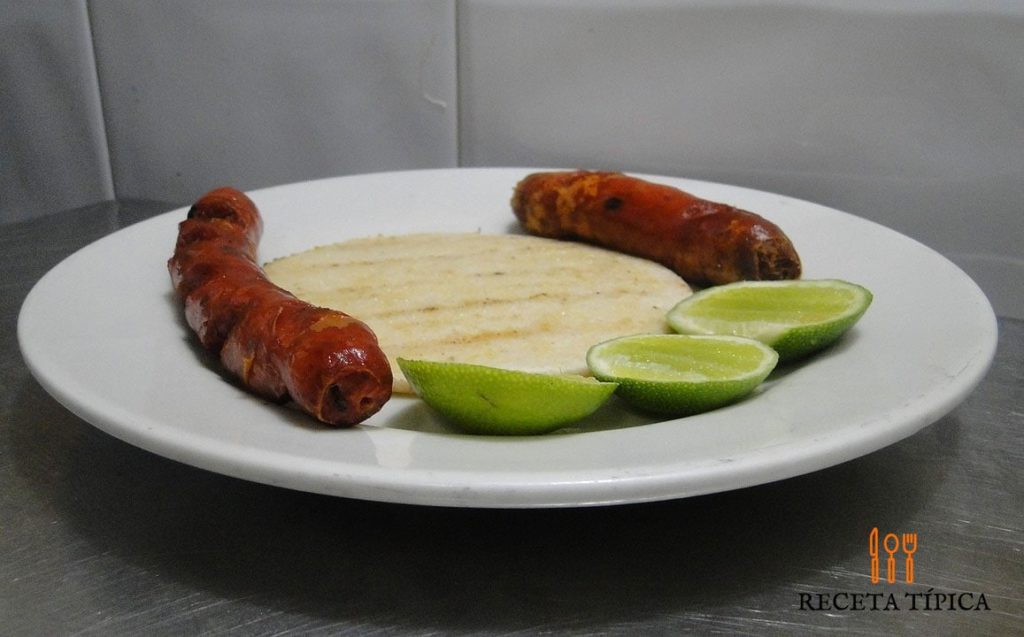
How to fry a chorizo in water?
To fry a chorizo in water, add a little water to a pan, add the chorizo, having previously made some cuts or pricked with a fork, leave it on medium heat for about five minutes, turning it on all sides, until it is completely golden and crispy.
Chorizo usually contains fat, which will be released as it is cooked, in this way it will be fried in its own fat at the same time.
Best accompaniments for fried chorizo?
Fried chorizo is a delicious option for any meal of the day, whether as an appetizer, breakfast or dinner. To accompany the fried chorizo, an excellent option is the arepa, which is a typical cornbread from Colombia. You can also add some lemon slices to give a fresh and acidic touch to the dish. Also, you can serve it with beans, french fries, or a fresh salad.
How can I prevent it from bursting when frying?
To prevent the chorizo from bursting when frying, it is important to prick it with a fork on all sides before placing it in the pan. In this way, the excess steam will be released and the chorizo will cook evenly. You can also make some cuts with a knife to help it cook evenly and prevent it from breaking.
How can I know when it's ready to serve?
When the chorizo is completely golden and crispy, it will be ready to serve. To ensure that it is well cooked, you can use a meat thermometer and verify that the internal temperature is at least 160 degrees Fahrenheit. Once cooked, remove it from the pan and place it on a plate to serve.
What type of oil is best for frying?
Vegetable or olive oil is a good option for frying chorizo. Make sure the oil is hot before adding the chorizo so it cooks evenly and gets crispy. Don't add too much oil, as the chorizo already contains enough fat and can become too greasy.
What mistakes should I avoid when frying chorizo?
It's important to avoid frying chorizo at high heat, as it can burn on the outside and remain raw on the inside. Don't add too much oil, as this can make the chorizo become too greasy. It's also important to prick the chorizo before placing it in the pan to prevent it from bursting. Lastly, be sure to cook the chorizo on medium-low heat so it cooks evenly.
What other recipes can I make with chorizo?
Chorizo is a versatile ingredient that can be used in many recipes. An excellent option is rice with chorizo, which is a traditional Colombian recipe that combines rice, chorizo, vegetables, and spices. You can also make arepas filled with chorizo, chorizo empanadas, or pasta with chorizo and tomato.
We recommend you to prepare: Burger or hot dog.
Colombian Chorizo FAQ
More sausage
- Botifarras — smaller, and boiled first.
Colombian chorizo is fresh and mild, seasoned with scallion, garlic and cilantro, and it is fried whole in its casing. Spanish chorizo is cured and dry and can be eaten as it is. Mexican chorizo is fresh but heavily spiced with chilli and is usually squeezed out of the casing and crumbled.
Yes. Colombian chorizo is raw pork, so it needs cooking through, unlike Spanish chorizo which is cured. Cook it until it is firm and there is no pink left at the centre if you cut one open. Six minutes over medium heat, turning, gets there for a standard-sized one.
The casing traps steam as the meat heats, and pressure builds until it bursts, which sprays fat and dries out the sausage. A few pricks with a fork, or a couple of shallow knife cuts, give the steam somewhere to go. It is the single step people skip.
Medium, not high. Chorizo needs long enough for the inside to cook before the outside is done, and high heat browns the casing while the centre is still raw. If it is colouring fast, turn it down: a slower fry gives a better result.
Yes, and many people do. Chorizo releases plenty of its own fat as it heats, so a little oil is only there to get it started in a dry pan. Starting it in a cold pan over medium heat renders the fat gradually and needs no oil at all.
Latin butchers and grocery stores, in the refrigerated section rather than with the cured meats. It is sold fresh, often in links tied with string. If you can only find Mexican chorizo, it is a different product and will not behave the same way in the pan.
An arepa and a wedge of lime, squeezed over the chorizo just before eating. That is the standard street version. It is also one of the components of a bandeja paisa, and a fixture of any fritanga.
📖 Recipe

Ingredients
- 1 Colombian chorizo (fresh, from the refrigerated section; not cured Spanish chorizo)
- 5 teaspoons oil (optional: the chorizo releases plenty of its own fat)
Instructions
- Put the oil in a pan over medium heat and let it warm up. Medium, not high: the chorizo needs time for the inside to cook before the outside is done.
- Prick the chorizo all over with a fork, or make a couple of shallow cuts with a knife. This lets the steam escape as it heats. Skip it and the casing bursts, spraying fat and drying out the sausage.
- Add the chorizo to the pan and turn it every minute or so, about 6 minutes in total, until the casing is golden all round. It is done when it feels firm and there is no pink left at the centre: this is raw pork, so cook it through.
- Serve with an arepa and a wedge of lime to squeeze over it.
Comments
No Comments