
Pumpkin boiled, mashed and finished with butter, milk, broth and a spoonful of hogao. It is a savoury side dish, not a dessert, and the hogao is what makes it Colombian.

The hogao is the difference
Strip this recipe back and it is boiled pumpkin mashed with butter and milk, which exists in every country that grows pumpkins. What makes it Colombian is the spoonful of hogao stirred in at the end.
Hogao is onion, scallion, garlic and tomato cooked in a little oil until the tomato has completely collapsed and the whole thing looks like a loose sauce rather than a pan of chopped vegetables. It goes into an enormous number of Colombian dishes and it is worth learning on its own.
It is also worth cooking properly. Hogao taken off too early tastes of raw tomato, and that flavour carries straight through the mash.
Add the liquid slowly
The recipe lists a quarter cup of milk and half a cup of broth. Treat those as an upper limit rather than an instruction.
How much liquid a mash needs depends on the pumpkin: how ripe it was, how much water it took on while boiling, how well it drained. Two pumpkins that look identical can need very different amounts.
Pour in a little, stir, look. Stop when the mash falls slowly off the spoon rather than running off it. If you overshoot, put the pan back over low heat and let some of the water steam away.
Auyama, ahuyama, and what to buy
The pumpkin in this recipe is auyama, also spelled ahuyama. It is the everyday Colombian squash: dense, dry-fleshed, deep orange, and nothing like the watery field pumpkins sold in the United States for carving.
Butternut squash is the closest substitute in an American supermarket and behaves almost identically. Kabocha works too and is a little sweeter. What you want to avoid is a large carving pumpkin, which is stringy and holds too much water to mash well.
It is not a dessert
This page used to be filed under desserts, which is worth correcting out loud because pumpkin gets treated as a sweet ingredient almost everywhere else.
There is no sugar in it. There is garlic, onion, scallion, tomato, broth and black pepper, and it is served hot next to meat. Colombia does have sweet pumpkin dishes, but this is not one of them.
Knowing when the pumpkin is done
Peel it, scrape out the seeds, cut it into chunks and boil it in salted water. It is ready when a knife goes into a chunk without resistance.
Drain it properly before mashing. Water clinging to the outside of the chunks goes straight into the mash and you spend the rest of the recipe trying to cook it back off.
More Colombian sides
- Colombian hogao — the sauce this recipe finishes with.
- Mashed potatoes — the same job, a different vegetable.
- Creamy pumpkin soup — for the rest of the auyama.
- Pumpkin dessert — the sweet treatment, for comparison.
- Stewed potatoes — another side that goes with meat.
Mashed Pumpkin FAQ
The Colombian sofrito: onion, scallion, garlic and tomato cooked slowly in a little oil until the tomato collapses into a sauce. It is stirred into the mash at the end, and it is what makes this a Colombian dish rather than a plain pumpkin purée.
Savoury. It has garlic, onion, scallion, tomato and broth in it and it is served hot alongside meat. There is no sugar and no cinnamon anywhere in the recipe.
The Colombian pumpkin, also spelled ahuyama. It is denser and less watery than the large orange pumpkins sold for carving. Butternut squash is the closest thing on most American shelves and behaves the same way.
As much as it takes and no more. Pumpkin holds very different amounts of water depending on how ripe it was and how long it boiled, so the quarter cup of milk and half cup of broth are a guide. Add them gradually and stop when the mash falls slowly off the spoon.
Put it back over low heat and stir. Some of the water steams off and it tightens up again. This is easier than the reverse, which is why the liquid goes in a little at a time.
Yes. The list allows chicken, beef or vegetable broth, or water. Broth gives more flavour; water lets the pumpkin and the hogao do the work.
It is a side dish. It goes next to meat the way mashed potato does, and it holds heat well, which makes it useful on a table with several things on it.
📖 Recipe
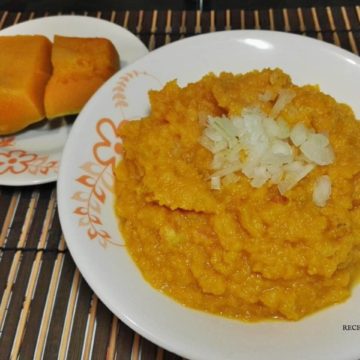
Colombian Mashed Pumpkin with Hogao (Poteca de Auyama)
Imprimir Pin ComentarIngredients
- 2 medium ahuyama (Colombian pumpkin, peeled and seeded)
- 3 tablespoons butter
- ½ cup chicken, beef or vegetable broth (or water)
- ¼ cup milk
- Salt and black pepper
For the hogao
- 2 tomatoes (diced)
- 1 onion (chopped)
- 2 scallions (chopped)
- 2 cloves garlic (finely chopped)
- A little oil (for the pan)
Notas
Instructions
- Peel the ahuyama, scrape out the seeds and cut the flesh into chunks.
- Put the chunks in a pot with water and a little salt and cook over medium-high heat until a knife slides into them without resistance.
- While the pumpkin cooks, make the hogao. Heat a little oil in a skillet and cook the chopped onion and scallions with the garlic until the onion turns translucent. Add the diced tomato and cook, stirring now and then, until it collapses and the whole thing looks like a loose sauce rather than chopped vegetables.
- When the pumpkin is soft, lift it out of the water, drain it well and mash it with a fork. Season with salt and pepper.
- Stir in the butter, the broth, the milk and the hogao, adding the liquid a little at a time until the mash loosens to the texture you want, and cook for 5 minutes, stirring often.
- Serve hot.
Comments
No Comments