Four eggs, two teaspoons of butter, salt and pepper. There is nothing to get wrong except the heat, and the heat is what everyone gets wrong.
Eggs set at around 70°C
That number is the whole recipe. Below it, egg protein stays liquid. Above it, the proteins bind tightly and squeeze out the water they were holding, which is what makes scrambled eggs rubbery and leaves a puddle on the plate.
A pan on high heat goes past 70°C in the eggs within seconds, and there is no way back. Low heat gives you room to see it happening and stop.
Take them off looking underdone
The pan holds heat, and eggs carry on cooking in it after the flame is out. If they look right in the pan, they will be dry on the plate.
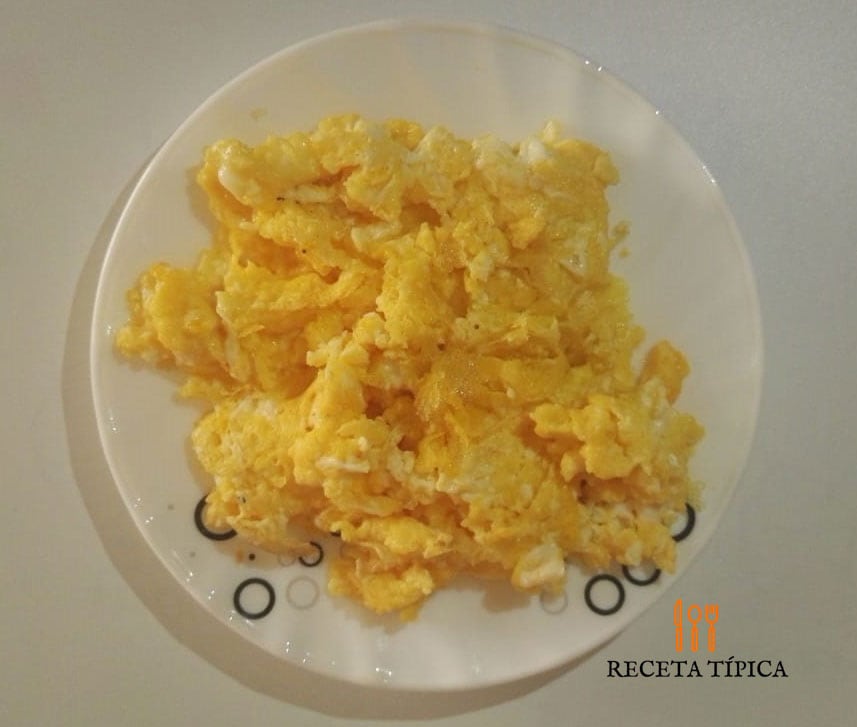
Stop when they are still glossy and barely wet, with soft curds that hold together loosely. Thirty seconds of residual heat finishes them on the way to the table.
More butter is not a mistake
Two teaspoons for four eggs is on the lean side. Fat coats the proteins and physically gets between them, which slows how tightly they bind, and that is most of what makes scrambled eggs creamy rather than firm.
Doubling the butter changes the result noticeably. So does a splash of cream or milk added at the end rather than at the start.
These are not huevos pericos
Worth clarifying because the two get confused constantly. Huevos pericos are the Colombian version: tomato and scallion cooked down in the pan first, then the eggs scrambled into them. They are yellow and red, and they are what a Colombian breakfast means by scrambled eggs.
These are plain scrambled eggs. Both are correct and they are different dishes.
More eggs
- Huevos pericos — with tomato and scallion.
- Fried eggs — three minutes.
- Egg and potato soup — poached in broth.
- Spinach and egg tortilla — the flat one.
Scrambled Eggs FAQ
Too much heat. Egg protein sets at around 70°C, and above that the proteins bind tightly and squeeze out the water they held, which gives you rubbery eggs sitting in a puddle. Keep the pan low and take them off early.
While they still look slightly underdone: glossy, barely wet, with soft curds. The pan holds enough heat to finish them in the thirty seconds it takes to reach the plate. Eggs that look right in the pan are dry on the plate.
It helps, added at the end rather than the beginning. A splash stirred in off the heat cools the eggs slightly and adds fat, both of which keep them creamy. Added at the start it mostly dilutes them.
It works, but it is lean. Fat coats the egg proteins and slows how tightly they bind, which is much of what makes scrambled eggs creamy. Doubling it makes a noticeable difference.
Huevos pericos are the Colombian version, with tomato and scallion cooked in the pan before the eggs go in. These are plain scrambled eggs. They are different dishes and both are standard.
📖 Recipe

Ingredients
- 4 eggs
- 2 teaspoons butter (more butter gives a creamier result)
- Salt and pepper, to taste
Notas
Instructions
- In a medium bowl, beat the eggs with the salt and pepper until the mixture is even and uniform.
- Melt the butter in a non-stick pan over low to medium heat.
- Pour the beaten eggs into the pan.
- As they begin to set, stir them carefully with a spatula or a wooden spoon, moving and folding them until the mixture thickens into soft curds and looks barely wet.
- At that point, stop stirring and take the pan off the heat. They carry on cooking in the residual heat.
- Serve immediately.
Comments
No Comments