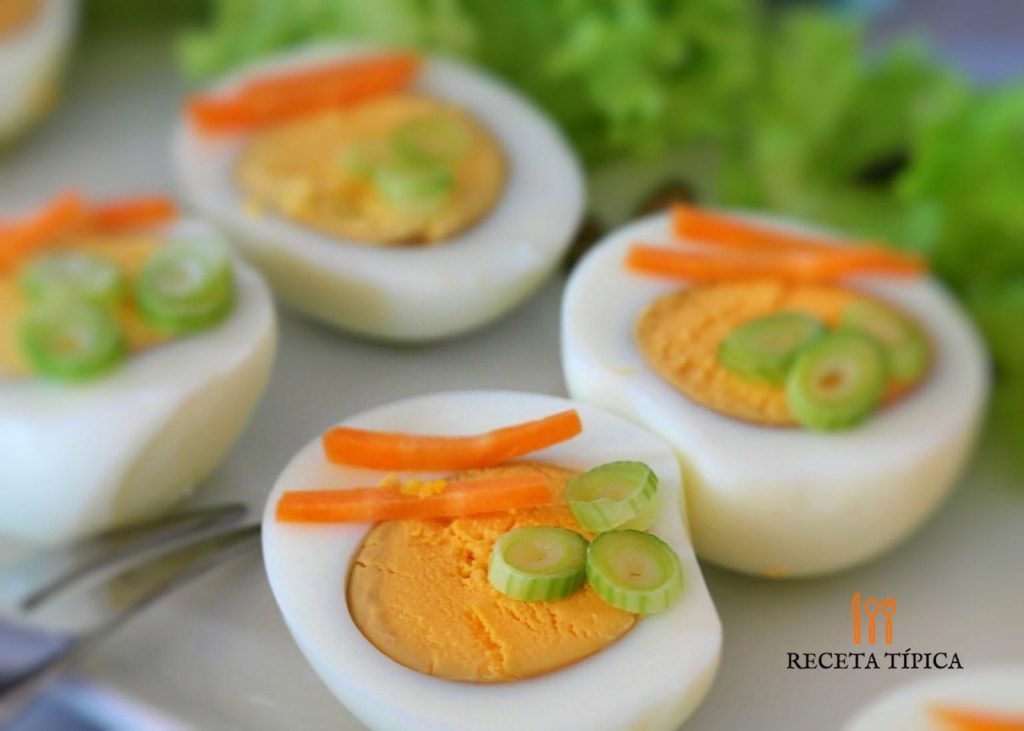
Eggs lowered into boiling salted water and cooked for 15 minutes, then cooled and peeled. The time is the whole recipe, and less of it gives a softer yolk.
Fifteen minutes, and everything shorter
The most common thing people search before boiling an egg is how many minutes, and this recipe gives one number: fifteen, for a fully hard yolk that crumbles.
That is the right number for what it makes, and it is not the only useful one. From the moment the egg goes into boiling water: six minutes leaves the yolk liquid and the white barely set, eight gives the jammy centre that goes on ramen and salads, ten sets the yolk soft all the way through, twelve gives it firm but still deep yellow, and fifteen takes it to pale and crumbly.
Nothing else in the method changes. Only the clock.
Lower them, do not drop them
The first instruction warns about this and it is worth following. An egg released above boiling water falls the height of the pot and hits the bottom hard enough to crack.
A cracked egg leaks white into the water in feathery strands and comes out with a flat side. A spoon, lowered to the surface and tipped, avoids it entirely.
Cool them immediately
Straight out of the pot and under running water, or into a bowl of cold water.
Two things happen. The cooking stops, which matters because an egg left in its own heat keeps going and develops the grey-green ring around the yolk that comes from overcooking. And the egg contracts slightly inside the shell, which is what makes the shell come away in large pieces.
Old eggs peel better
This is the one thing about boiled eggs that nobody expects. A very fresh egg is difficult to peel: its membrane clings tightly to the white, and the shell comes off in fragments taking the surface with it.
An egg that is a week or two old has lost a little moisture, the membrane has loosened, and it peels cleanly. If you are boiling eggs to slice or to fill, use the older ones in the box.
More eggs
- Fried eggs — three minutes.
- Deviled eggs with tuna — where hard-boiled eggs go.
- Egg and potato salad — the other place.
- Huevos pericos — the Colombian breakfast.
Boiled Eggs FAQ
Fifteen minutes for a fully hard yolk, which is what this recipe makes. Six minutes leaves it liquid, eight gives a jammy centre, ten sets it soft and twelve is firm but still bright yellow.
Because an egg dropped into boiling water cracks against the bottom of the pot and leaks white into the water. A spoon takes ten seconds and saves the egg.
To stop the cooking. It is what prevents the grey-green ring forming around the yolk, and it shrinks the egg slightly away from the shell so peeling is clean.
It is probably very fresh. The membrane clings to the white in a new-laid egg and comes away easily in one that is a week or two old. Cooling in cold water helps either way.
This recipe starts with boiling water and lowers the eggs in, which gives more predictable timings than starting cold, since the clock begins at a known temperature.
It seasons the water and, according to kitchen habit, makes a cracked egg seal faster. It does not change the cooking time.
📖 Recipe

Ingredients
- 4 eggs
- Water (enough to cover the eggs)
- Salt (to taste)
Notas
Instructions
- Bring salted water to the boil in a small pot over low heat. Lower the four eggs in carefully, with a spoon, so they do not crack against the bottom.
- Cook over medium heat for 15 minutes, then lift them out, drain off the water and either let them rest or cool them under running water.
- Peel them and eat them with salt to taste.
Comments
No Comments