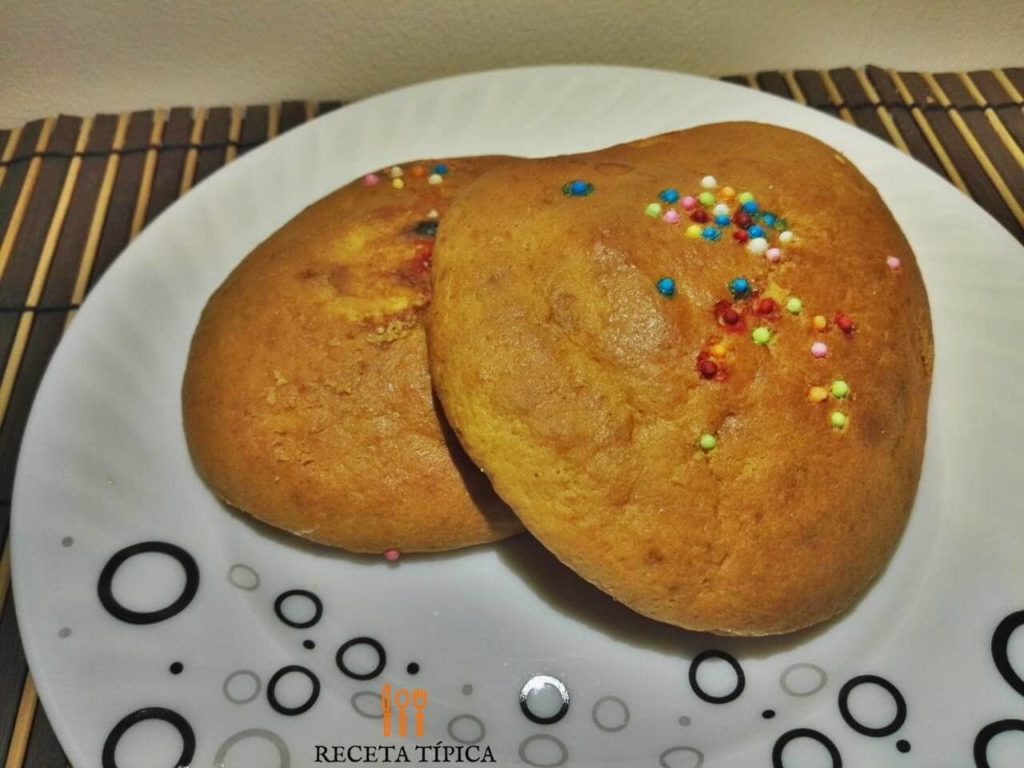
The mantecada of Bogotá is a corn cake: mostly corn flour rather than wheat, heavy with butter and six eggs, and given a small measure of aguardiente, the anise-flavoured Colombian spirit. It is bakery food, eaten warm, usually with blackberry or strawberry preserve or a glass of milk.
If you were looking for the Mexican mantecada, the little sponge muffin in a paper cup, this is not it. The two share a name and very little else.
Three cakes, one name
Worth getting straight, because the word travels badly.
- Colombian mantecada — this one. A dense corn cake from Bogotá, baked as a slab and cut into portions, or in large individual pieces.
- Mexican mantecada — a small wheat sponge muffin baked in a fluted paper cup, sold in packets and eaten with coffee.
- Spanish mantecado — a crumbly Christmas shortbread made with lard, closer to a polvorón than to either of the above.
All three take their name from manteca (fat, whether butter or lard) and all three are rich. That is where the resemblance stops.
The aguardiente
This is the ingredient that makes a mantecada taste like Bogotá. Aguardiente is Colombia's national spirit, distilled from sugar cane and flavoured with anise, so it carries a clear liquorice note.
Four tablespoons across a cake made with over half a kilo of corn flour is not much, and that is deliberate. What you get is a faint aromatic lift behind the butter and corn, not anything anyone would call boozy. Children eat mantecadas in Bogotá without anyone thinking about it.
It is marked optional, and it genuinely is. If you cannot find aguardiente, anisette gets you closest, since the anise is the point. Rum is the common fallback and makes a good cake, but a different one. Leaving it out altogether costs you the aroma and nothing else.

Getting the corn flour right
This is where the recipe goes wrong for most people cooking it outside Colombia, because at least four different products in a US supermarket have "corn" on the label and only one of them is right.
What you want is fine corn flour, harina de maíz. Not cornmeal, which is the coarse grind used for cornbread and will leave the crumb gritty. Not cornstarch, which is a pure starch and behaves nothing like a flour. And not masarepa, the precooked flour sold for making arepas: it has already been cooked and it takes up liquid differently, so it is not a straight substitution.
570 grams of it, against only 60 grams of wheat flour. The wheat is there in a supporting role, for a little structure; the cake is overwhelmingly corn, and that is what gives it its colour and its slightly sandy, close crumb.
Making them
Butter and sugar creamed together first, and properly. This is a heavy batter and the air you beat in now is most of the lift it will get.
Then six eggs, one at a time. Six is a lot to add to creamed butter, and adding them in a rush will curdle the mixture; each one needs to disappear before the next goes in.
The dry ingredients get combined separately and then added gradually, not in one go. The milk and the aguardiente go in last, and a short beat is enough to bring it together.
One cake or many, and how long to bake
The recipe lets you do either: spoon portions into a greased tin for individual mantecadas, or pour the whole batter in as a single cake and cut it into squares afterwards. The bakery version in Bogotá is usually the second.
The stated 50 minutes to an hour at 180°C (350°F) is the time for the whole cake. If you make individual ones, do not use that number: they are a fraction of the size and will be dry long before an hour is up. Start checking at about twenty minutes and go by a skewer coming out clean.
How they are eaten
Warm, and soon. A mantecada that has sat overnight is a lesser thing than one an hour out of the oven, which is why they are bought in the afternoon in Bogotá rather than kept.
The usual accompaniments are dulce de mora or dulce de fresa, blackberry or strawberry preserve, spread over the top, or a plain glass of cold milk, which is the classic pairing and better than it sounds against a cake this rich. Sweet sprinkles or a dusting of sugar on top are optional and traditional in equal measure.
More from the Colombian bakery
- Sweet chicharrones — the other thing worth buying warm.
- Chocolate dessert — for afterwards.
Original recipe in Spanish.
Colombian Mantecadas FAQ
No. The Mexican mantecada is a small sponge muffin baked in a paper cup, the kind sold in packets across the US. The Colombian one is a dense corn cake from Bogotá, made mostly with corn flour rather than wheat, enriched with butter and eggs, and baked as a slab or in large portions. Same name, different cake.
Colombia's national spirit: a sugar-cane distillate flavoured with anise, so it tastes faintly of liquorice. Four tablespoons across a cake this size gives a background note, not a boozy one. Anisette is the closest substitute; rum works but loses the anise. You can leave it out and the cake is still good.
Fine corn flour, harina de maíz, not coarse cornmeal, which makes the crumb gritty, and not cornstarch, which is a different product entirely. Masarepa, the precooked flour used for arepas, is also not a direct swap: it is cooked already and absorbs liquid differently.
Either, and the recipe allows both. The 50 to 60 minutes given is for the whole cake baked as a slab and cut afterwards. Individual mantecadas are much smaller and finish considerably sooner, so start checking them at around 20 minutes rather than trusting the clock.
Yes. It is marked optional in the recipe for a reason, and the quantity is small enough that the cake does not depend on it. What you lose is the faint anise note that makes a Bogotá mantecada taste the way it does. Everything else about the cake stays the same.
Warm, ideally within a few hours of baking, with dulce de mora or dulce de fresa, blackberry or strawberry preserve, spread on top, or simply with a glass of milk. In Bogotá they are bakery food, bought in the afternoon and eaten before they cool.
📖 Recipe

Ingredients
- 250 g sugar (about 1¼ cups)
- 570 g corn flour (harina de maíz) (about 4½ cups; the fine kind, not coarse cornmeal and not cornstarch)
- 250 g butter, at room temperature (about 2¼ sticks)
- 60 g all-purpose flour (about ½ cup)
- 250 ml milk (about 1 cup)
- 6 eggs
- 8 g baking powder (about 2 teaspoons)
- 4 tablespoons aguardiente, optional (the Colombian anise spirit; anisette or rum are the closest swaps)
- Sweet sprinkles, optional (for the top)
Notas
Instructions
- In a large bowl, beat the butter with the sugar on medium speed until light and creamy.
- Add the eggs one at a time, beating well after each one before adding the next.
- In a separate bowl, combine the corn flour, the all-purpose flour and the baking powder.
- Add the dry mixture to the bowl gradually, a little at a time, beating until it is smooth and free of lumps.
- Pour in the milk and the four tablespoons of aguardiente, and beat briefly to combine.
- Grease the tin well. Either spoon in portions of whatever size you want, to make individual mantecadas, or pour the whole mixture in as a single cake to be cut into pieces afterwards. Heat the oven to 180°C (350°F).
- Bake for 50 minutes to 1 hour. That is the time for the whole cake; individual mantecadas are done much sooner, so start checking them at around 20 minutes.
- Take them out, scatter over sweet sprinkles or a little sugar, and eat them warm.
Comments
No Comments