
Rice toasted in oil with onion, garlic and carrot, then cooked in broth. Two cups of rice to four of liquid, half an hour, and the toasting is what keeps the grains separate.
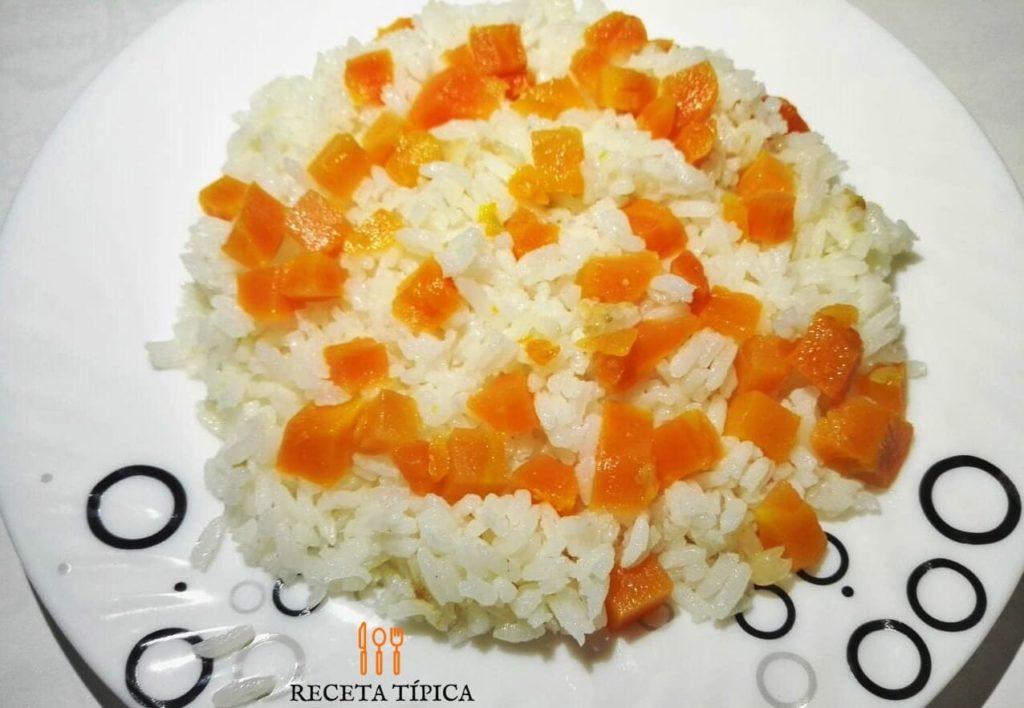
Two to one, and nothing else matters as much
Two cups of rice, four cups of broth. That ratio is the recipe, and every other decision in it is a matter of taste.
Anything else in the pot changes it. Grated carrot releases water, so a cup of grated carrot pushes the total liquid up slightly more than a cup of diced would. It is not enough to matter here, but it is why measuring the broth rather than eyeballing it is worth doing.
Toasting the grain
The second instruction says to pearl the rice, which is a literal translation of nacarar and means nothing in English.
Here is what it describes. Before any liquid arrives, the rice goes into the hot oil with the onion, garlic and carrot and gets stirred for three or four minutes. Each grain takes on a film of fat and changes appearance: chalky white becomes slightly see-through, with a pearly sheen.
That film is what stops the grains sticking to each other later, and the brief toasting gives a flavour you cannot get by adding anything.
When to put the lid on
The old instruction was to wait until the water had dried up, which read literally means a dry pot, and a dry pot means the bottom layer of rice is already cooking against bare metal.
What you are actually looking for is the liquid falling to the level of the rice, with small craters opening on the surface where steam is escaping. That is the moment: turn the heat low, put the lid on and leave it for fifteen minutes.
From then on the steam under the lid does the work, so lifting it to check sets the top layer back.
Resting and fluffing
Off the heat, lid on, a few minutes. The grains at the bottom are wetter than the ones at the top and resting evens that out.
Then a fork rather than a spoon. It lifts the grains apart instead of pressing them together.
More rice
- Colombian white rice — the plain one.
- Arroz primavera — with more vegetables.
- Arroz con fideos — with toasted pasta in it.
- Arroz rojo — the tomato one.
Rice with Carrots FAQ
To stir it through hot oil until every grain is coated and turns from chalky white to slightly translucent. The Spanish verb is nacarar, from mother of pearl, and English has no single word for it. It keeps the grains separate and adds a faint toasted flavour.
When the liquid has fallen to the level of the rice and craters appear on the surface. The old instruction said to wait until the water had dried up, and by that point the bottom layer has already begun to stick.
Two cups of rice to four of broth. That is the ratio the recipe is built on and the one thing not worth improvising with.
Either, and the recipe allows both. Grated disappears into the rice and colours it; diced stays as pieces you can see. A cup of it either way.
Not during the fifteen minutes. The steam trapped under it is what cooks the top layer, and every time it escapes those grains stop cooking.
A spoon compacts the grains against each other. A fork lifts them apart, which is the difference between rice that looks loose and rice that looks like a block.
📖 Recipe
Ingredients
- 2 cups white rice
- 4 cups vegetable or chicken broth (or water)
- 1 cup carrot (diced or grated)
- Oil
- 1 onion (finely chopped)
- 1 clove garlic (finely chopped)
- Salt and pepper (to taste)
Notas
Instructions
- Heat a little oil in a pot and fry the finely chopped garlic and onion, then add the carrot, diced or grated.
- Fry it briefly, then add the rice. Stir it through the oil until every grain is coated and turns from chalky white to slightly translucent.
- Carry on frying everything for 3 to 4 minutes, stirring now and then so nothing burns.
- Add the broth, salt and pepper, and a little more oil if you want it, and stir.
- Bring it to a boil over high heat. When the liquid has fallen to the level of the rice and craters appear on the surface, cover the pot, turn the heat low and let it cook for another 15 minutes.
- Take it off the heat, let it rest a few minutes, fluff the rice with a fork and serve immediately.
Comments
No Comments