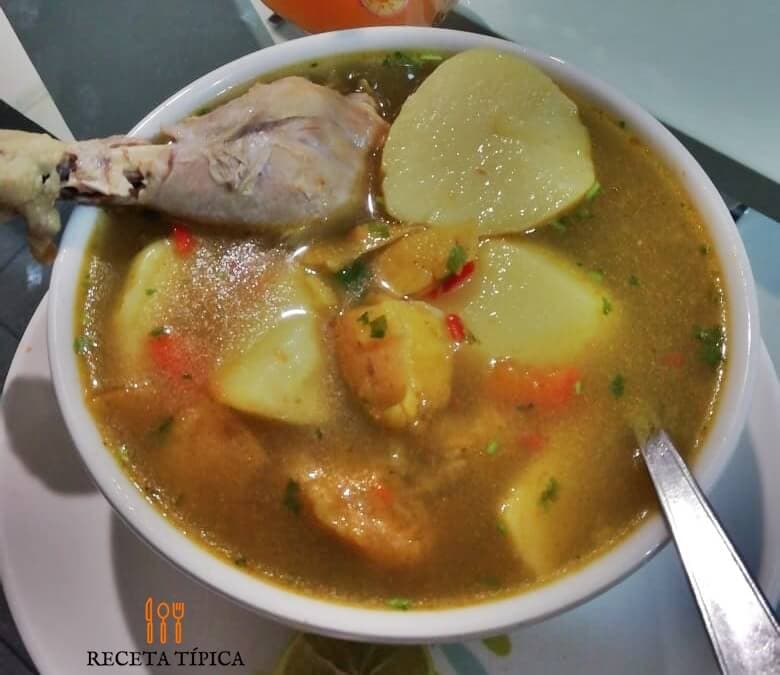
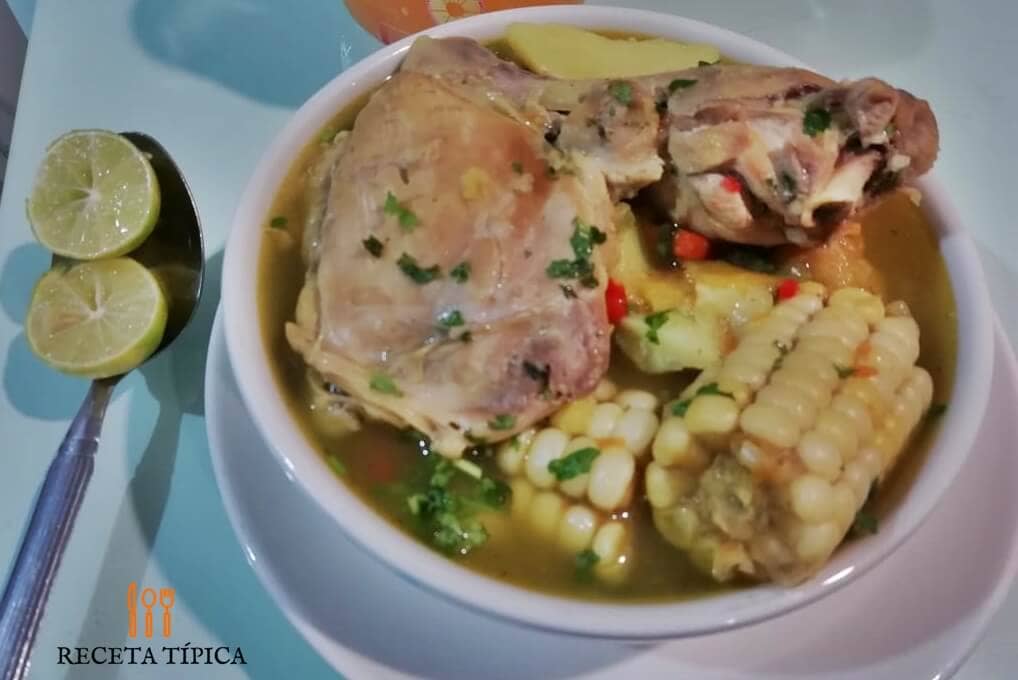
Sancocho de gallina is the Colombian one-pot soup: a bird simmered with green plantain, cassava, corn on the cob and two kinds of potato, until the roots begin to fray and thicken the broth around them. It is farmhouse cooking (everything in one pot, everything from the same ground) and it is still what gets made on a Sunday when there are people to feed.
Which sancocho is this?
Worth settling first, because the word covers a lot of ground. Sancocho is made across the Caribbean and northern South America, and the version most people in the United States have eaten is the Dominican one, several meats in the same pot, oregano, cilantro ancho.
This is not that. The Colombian sancocho de gallina is one bird, no beef and no pork, and no oregano anywhere in it. The seasoning is onion, tomato, garlic, carrot, cumin and cilantro, and the character comes from the roots rather than from the spicing. It is a gentler, sweeter soup than its Dominican cousin, and a plainer one.
Hen or chicken?
The name says hen, gallina, and that is not decoration. An older laying hen has more connective tissue and more fat than a young chicken, so it gives a broth with real body to it, one that sets slightly as it cools. It also takes a great deal longer to become tender: two hours or more, rather than the hour this recipe allows.
The times on the recipe card are written for chicken, because chicken is what most people will actually cook. If you do find a proper stewing hen, give it its two hours first and add the roots afterwards, otherwise the cassava and potato will have collapsed long before the meat gives way.
Failing a hen, a free-range or farm-raised chicken is the next best thing. A bird that has moved around has more flavour, and with a good one you can leave the bouillon cube out altogether.
Ingredients for chicken sancocho
Four starches go into this pot, and each one is doing a different job. It is worth knowing which is which before you start substituting.
- Green plantain — green, never ripe. A ripe plantain turns sweet and disintegrates; a green one stays firm and gives the broth a faint starchiness. Cut it into chunks about the width of your palm, or snap it in with your hands, which is how it is done at home.
- Cassava (yuca) — the thickener. It softens, frays at the edges and releases starch into the broth. Frozen yuca is easier than fresh and comes already peeled and cored, which saves the worst of the work.
- Papa criolla — small yellow Andean potatoes, sold frozen in Latin groceries in the US. They partly dissolve, and they are what turns the broth golden. Baby Yukon Gold is the nearest substitute, though it holds together more.
- Corn on the cob — cut across into rounds, cob and all. It stays whole, sweetens the broth slightly, and is eaten with the hands.
- Sancocho valluno — with pork ribs as well.
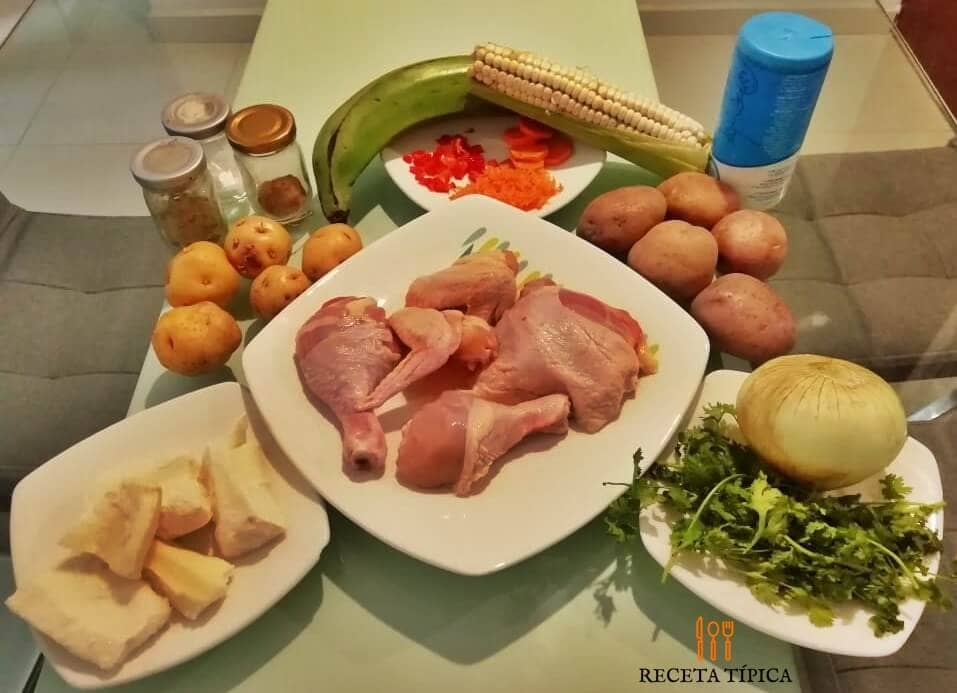
The seasoning is short: onion, tomato, garlic and grated carrot, with cumin, pepper and salt, and achiote for colour. Cilantro goes in at the end, off the heat. Some households add arracacha, an Andean root that tastes somewhere between celery root and parsnip, and it is a good addition if you can find it.
How to make chicken sancocho
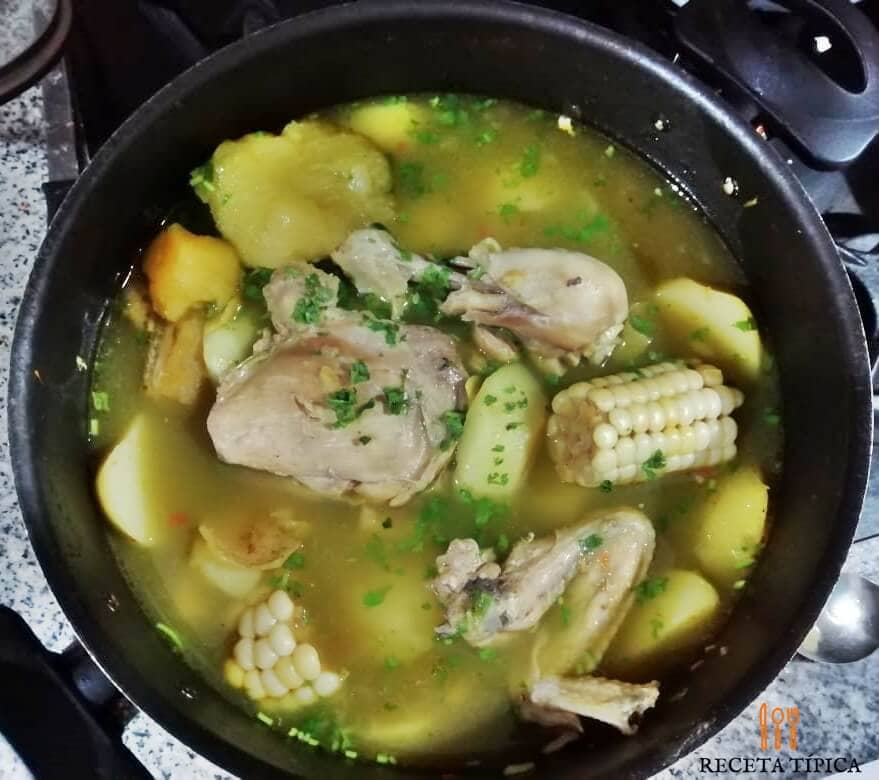
Everything that needs long cooking goes in cold water together: the bird, the corn, the plantain, and the seasonings. Bring it to a boil covered and leave it there for twenty to twenty-five minutes.
Skim the grey foam that rises in the first few minutes. This is the one step home cooks skip and it is the difference between a clear broth and a cloudy one: the foam is coagulated protein, and if you stir it back in it stays there.
The cassava and both potatoes go in second, along with the cumin, pepper and achiote, for another thirty to thirty-five minutes. They are staggered for a reason: put them in at the start and they turn to mush while the bird is still tough.
You will know it is done when a fork goes into the cassava with no resistance and the pieces have started to fray at the edges. That fraying is the thickening, the broth should have gone from watery to something with a little weight to it. The cilantro goes in last, off the heat, so it keeps its colour and its smell.

The hen my grandmother cooked
When I was small and went to visit my grandmother, a sancocho was what she thought of straight away. She would pick out the fattest hen, and after it was plucked I would start jointing it into pieces for the pot. That broth was something else. I do not think I have had one quite like it since.
On the farms almost everything in the pot was grown a few steps from the kitchen, the plantain, the cassava, the vegetables. The potatoes were about the only thing anyone had to buy, since even the hens were raised at home. Birds that live outdoors and are fed on corn and feed put on a different kind of fat, and you taste it in the broth.
I cannot get that hen now, so I buy the best farm-raised bird I can find. It costs more, and it is worth it: with a good one there is no need for a stock cube at all.
How it is served
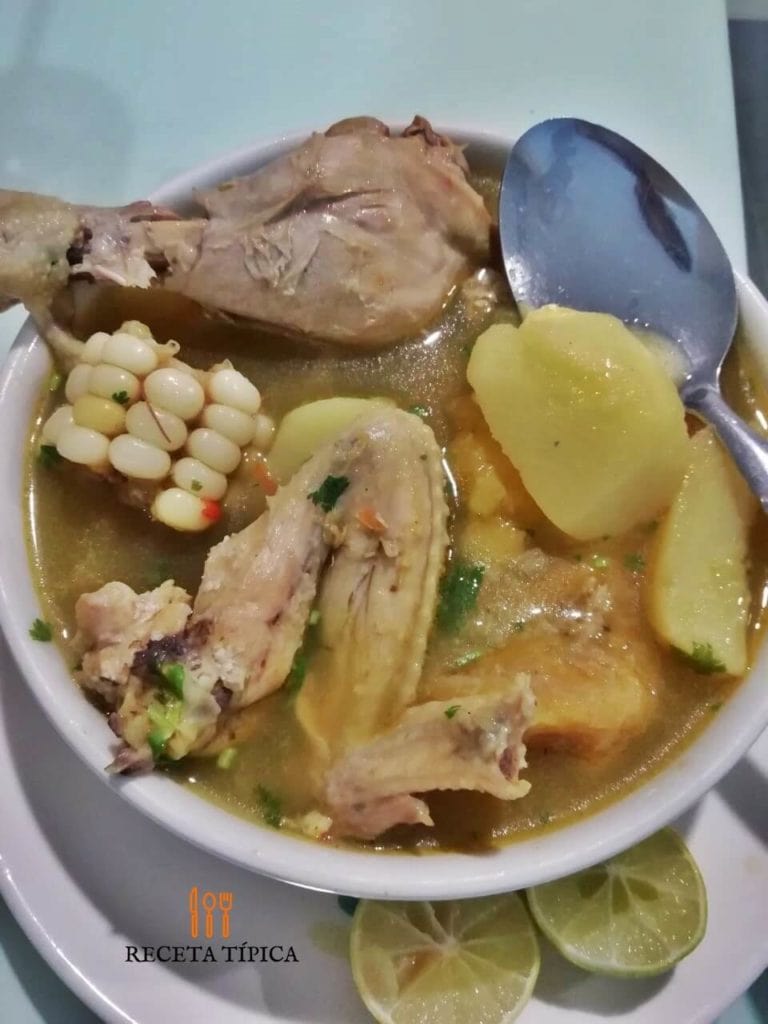
Serve it in a deep bowl, and make sure each one gets some of everything: a piece of the bird, a piece of each root, a round of corn. A sancocho where one person gets all the cassava and another gets none is a badly served sancocho.
Alongside it go slices of avocado, a wedge of lime, and a bowl of white rice, on the side, in its own bowl, not stirred into the soup. Many people drink the broth from a cup first and eat the meat and roots from the plate afterwards. Ají or hot sauce is passed around separately rather than added to the pot.
Other soups from the same table
If you want the version with beef instead, or something lighter for a weeknight, the site has both: cassava and potato soup is the quick everyday one, done in forty-five minutes, and what to do with leftover sancocho covers the morning after, which in Colombia is half the point of making it.
Original recipe in Spanish.
Chicken Sancocho FAQ
Both, and several other countries besides. Sancocho is a family of one-pot soups across the Caribbean and northern South America. The Dominican version is the one most people in the US know: several meats together, oregano, and often cilantro ancho. This Colombian one is a single bird with plantain, cassava, corn and potato, and no oregano at all.
The dish is named for the hen, and an older stewing hen does make a richer, more gelatinous broth. It also needs far longer to turn tender, often two hours or more, so give it that time before the roots go in. Chicken is what most people cook and what the times in the recipe are written for.
A small yellow Andean potato, waxy and thin-skinned, that partly dissolves into the broth and gives it colour. Latin groceries in the US sell it frozen, usually labelled papa criolla. Baby Yukon Gold is the nearest substitute, though it holds its shape more and colours the broth less.
Because they do different jobs. The larger potatoes and the cassava break down and thicken the broth. The papa criolla dissolves further still and colours it. The plantain and corn hold their shape, so there is something to eat with a fork. Take any one out and the soup changes texture.
Achiote, also sold as annatto: a seed used as a colouring, which gives Colombian soups and rices their orange tint. It contributes very little flavour, so leaving it out changes how the dish looks rather than how it tastes. Ground turmeric is a common stand-in for the colour.
White rice on the side, in its own bowl rather than in the soup, plus slices of avocado and a wedge of lime. In Colombia the broth is often drunk first from a cup, with the meat and roots eaten afterwards from the plate. Hot sauce or ají is passed separately.
📖 Recipe

Colombian Chicken Sancocho (Sancocho de Gallina)
Imprimir Pin ComentarIngredients
- 1 hen or chicken, cut into serving pieces (about 3 lb / 1.4 kg; bone-in, skin on)
- 12 cups water
- 6 potatoes, peeled and halved (a floury potato such as russet; they help thicken the broth)
- 4 papa criolla (small Andean yellow potatoes), quartered (sold frozen in Latin groceries; baby Yukon Gold is the nearest substitute)
- 4 pieces corn on the cob (cut across into rounds, cob and all)
- 6 pieces of cassava (yuca), peeled (frozen yuca works and comes peeled and cored)
- 2 green plantains, cut into large chunks (green, not ripe: a ripe plantain turns sweet and falls apart)
- 1 clove garlic, finely chopped
- ½ onion, finely chopped
- ½ tomato, finely chopped
- 1 carrot, grated
- 1 bouillon cube, optional (a good bird makes this unnecessary)
- Salt, cumin, pepper and achiote colouring, to taste (the achiote is for colour, not flavour)
- Fresh cilantro, finely chopped, to serve (the leaf, not the seed)
Notas
Instructions
- Put the water, the chicken, the corn, the plantain, the onion, the tomato, the carrot, the garlic, the bouillon cube if you are using one, and salt into a large pot.
- Cover and bring to a boil over high heat, then keep it going for 20 to 25 minutes. Skim off the grey foam that rises in the first few minutes: it is what makes a broth cloudy.
- Add the cassava, both kinds of potato, the achiote colouring, the cumin and the pepper. Carry on cooking for 30 to 35 minutes, until everything gives easily to a fork and the cassava has started to fray at the edges. That fraying is what thickens the broth. Stir the cilantro in at the very end, off the heat, so it keeps its colour.
- Serve hot in a deep bowl, making sure every portion gets some of each thing: a piece of the bird, a piece of each root, a round of corn. Avocado on the side and a bowl of white rice alongside are how it is eaten in Colombia.
Comments
No Comments