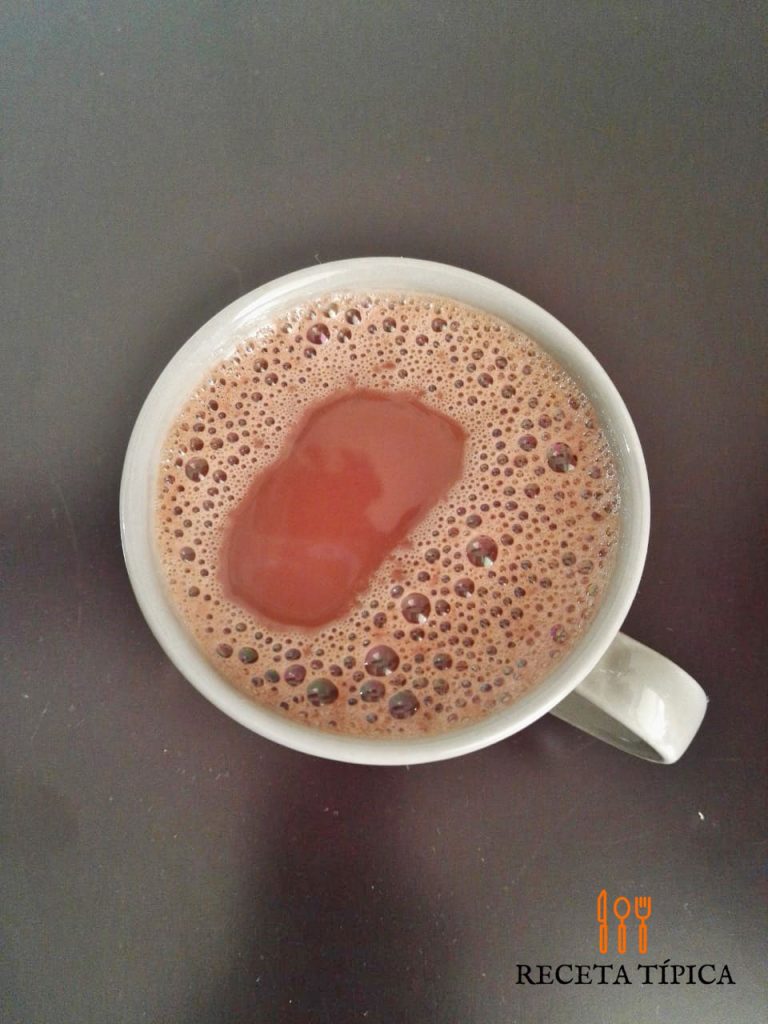
Hot chocolate made on aguapanela rather than milk or water, brought to the boil, taken off and whisked hard until foam covers the surface.
Aguapanela is the base
This is the difference between Colombian hot chocolate and everyone else's. Aguapanela is panela, unrefined whole cane sugar, dissolved in hot water.
It brings a faint smokiness and a molasses depth that plain water cannot, and it sweetens the cup without any sugar being added separately. Milk is used in some households and on the coast, but panela water is the traditional base.
The foam is the point
Once the chocolate has dissolved and risen up the sides of the pot, it comes off the heat and gets whisked hard. That whisking emulsifies the cocoa fat into the liquid and builds a layer of foam on top.
A cup with no foam is considered badly made. The traditional tool is the molinillo, a carved wooden whisk rolled between the palms, and an ordinary hand whisk does the same job with less ceremony.
And the cheese
In much of Colombia a chunk of fresh cheese goes into the bottom of the cup. The hot chocolate softens it without melting it completely, and it is eaten with a spoon once the drink is finished.
Salty fresh cheese against sweet chocolate is the same idea as salted caramel, and it is entirely standard rather than a curiosity. Queso campesino or quesito are the usual choices, and queso fresco works abroad.
Tablet or instant
Chocolate tablets are blocks of ground cocoa, sometimes with cinnamon or cloves already in them, and they are what a traditional cup uses. Instant chocolate powder is the weekday shortcut and it is in every Colombian cupboard too.
The recipe covers both, and they are alternatives rather than steps in sequence.
More drinks
- Aguapanela — the base on its own.
- Cappuccino — the coffee side.
- Avena — cold, with cinnamon.
- Colombian cheese — which one goes in the cup.
- Caspiroleta — the other hot milk drink.
Colombian Hot Chocolate FAQ
Panela, unrefined whole cane sugar, dissolved in hot water. It is drunk on its own across Colombia and it is the base for this hot chocolate, giving it a faint smokiness and sweetening it without any added sugar.
Because it is how it is drunk in much of Colombia. A chunk of fresh cheese goes in the cup, softens in the heat and is eaten with a spoon at the end. Salty cheese against sweet chocolate works on the same principle as salted caramel.
A carved wooden whisk rolled between the palms to froth the chocolate. The foam is not decoration: whisking emulsifies the cocoa fat into the liquid, and a Colombian cup is judged partly on it. A hand whisk works fine.
Tablets are blocks of ground cocoa, sometimes with cinnamon or cloves, and give the traditional cup. Instant powder is the everyday shortcut. The recipe gives both as alternatives, not as consecutive steps.
Yes, and some Colombian households do, particularly on the coast. It gives a richer, rounder cup. Aguapanela is the traditional base and the one that makes it taste distinctly Colombian.
📖 Recipe

Ingredients
- 2 cups aguapanela (panela dissolved in hot water; this is what makes it Colombian)
- 2 chocolate tablets, or 2 teaspoons instant chocolate (tablets give the traditional result, instant is the weekday one)
Notas
Instructions
With chocolate tablets
- Put the 2 cups of aguapanela in a chocolatera, or any tall narrow pot, over medium heat and bring it to the boil.
- Add the two chocolate tablets and wait for them to dissolve. The chocolate will rise up the sides of the pot as it comes back to the boil, so watch it.
- Take the pot off the heat straight away and whisk hard with a molinillo, rolling the handle between your palms, until the surface is covered in foam. A hand whisk does the same job.
- Serve, with marshmallows on top if you want them.
With instant chocolate
- Pour two cups of hot aguapanela and stir a spoonful of instant chocolate into each.
- Stir well and serve, with marshmallows if you like.
Comments
No Comments