
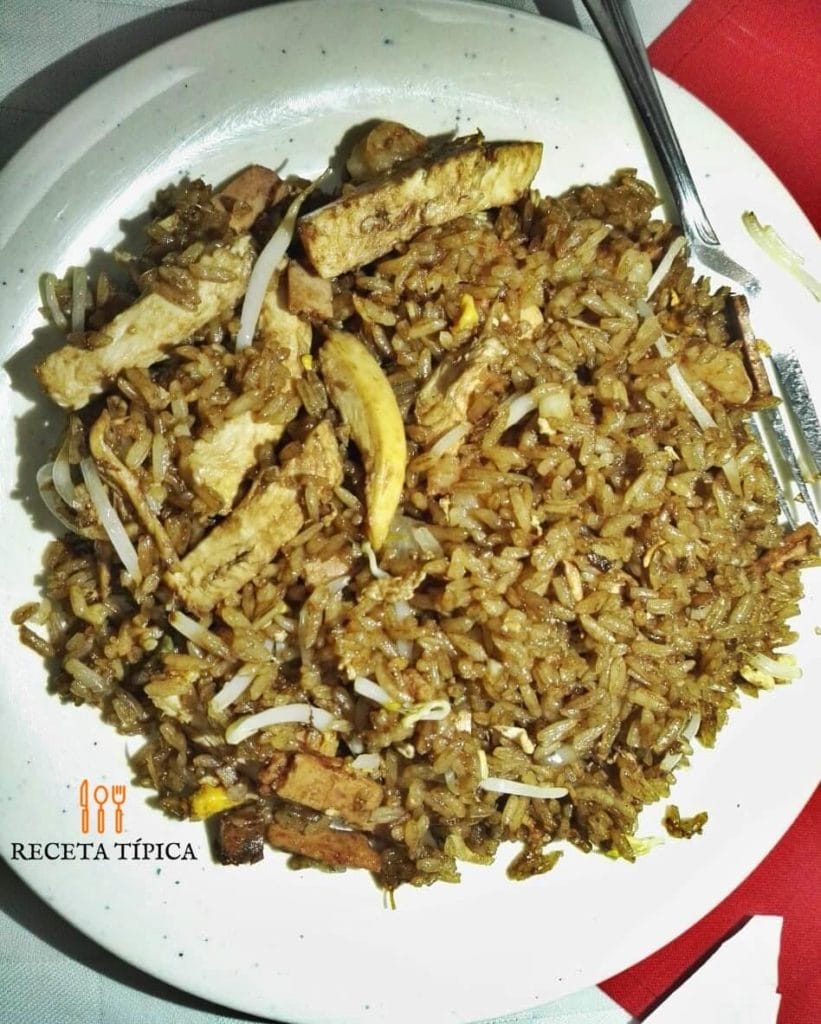
Arroz chino is Colombia's own version of Chinese fried rice, and it is different enough from the takeout kind to be worth describing properly: pork, chicken and shrimp all in the same wok, peas and carrots as a matter of course, bean sprouts thrown in at the end, and a sauce of soy, salsa negra and sugar that makes it darker and sweeter than anything you would be served in a Chinese restaurant in the US.
It is one of the most ordered dishes in Colombia, sold everywhere from proper Chinese restaurants to corner shops, usually as a main course rather than a side.

Is it actually Chinese?
Fried rice is Chinese, and has been for a very long time. It began, as it did nearly everywhere, as a way of using up yesterday's rice rather than throwing it out.
But arroz chino as Colombians eat it is a Colombian dish. It came out of Chinese migration to Latin America and then went its own way, the way these things do. Three proteins at once, peas and carrots as the fixed vegetables, a sweetness from the sugar and the salsa negra, and a colour much deeper than a Cantonese fried rice would ever be. A cook in Guangzhou would recognise the technique and not the plate.
That is not a criticism of it. It is simply a different dish with a confusing name, and worth knowing before you make it and wonder why it does not taste like your local takeout.
The two sauces
Half a cup of soy sauce and a quarter cup of salsa negra, mixed with a tablespoon of sugar until it dissolves. This is what colours the rice and what makes it taste Colombian rather than generic.
Salsa negra is the harder one to explain, and Colombian recipes tend not to bother explaining it at all. It is the dark, faintly sweet sauce used alongside soy sauce for colour and body rather than for salt. If you are shopping in the US, dark soy sauce is the nearest equivalent on the shelf, thicker, darker and less salty than the light soy sauce most people have.
If you only have one of the two, use it. The recipe survives having one sauce; it does not survive having none.
Add the mixture gradually rather than tipping it all in, stirring as you go. Three quarters of a cup of sauce is a lot, and pouring it in at once is how you end up with rice that is too dark and too salty to fix.
Why the rice should be cold
This is the single thing that separates good fried rice from a sticky mass, and it applies just as much to the Colombian version.
Freshly cooked rice is full of moisture, and its surface starch is still soft. Put it in a hot wok and it steams, clumps and smears. Rice that has been refrigerated overnight has dried on the outside and the grains have firmed up, so they separate and fry instead of stewing.
Leftover rice is therefore not a compromise here. It is the better option, and it is where the dish came from in the first place. If you are cooking it the same day, spread it out on a tray in a thin layer so it cools fast and loses some surface moisture.
Cooking the three proteins
Chicken first, on its own, until golden, then out of the wok. Pork next, until golden, then the chicken goes back in. They are done separately for a reason: a wok crowded with two raw meats drops in temperature and everything steams grey instead of browning.
The peas and carrots go in already cooked. They are there for colour and sweetness, not to be cooked from raw in five minutes. Frozen mixed peas and carrots are blanched already and only need thawing.
Shrimp last of the proteins, and only three minutes. They are small, they cook almost instantly, and shrimp that have been in the wok since the beginning turn to rubber.
Bean sprouts go in at the very end, after the rice, and barely cook at all. Their whole contribution is crunch against everything else being soft, and two minutes too long takes it away.
How it is served
In Colombia it is most often a main course in its own right, and very commonly comes with roast chicken and a glass of fresh fruit juice, a combination that makes more sense on the plate than it does written down.
It also works as a side with a soup or a salad, and it reheats better than most fried rice, since the sauce keeps it from drying out.
More rice from the site
- Paisa rice — the Medellín version of using up what is in the fridge.
- Coca-Cola rice — the festive sweet one, if the sugar in this recipe intrigued you.
- Colombian white rice — the plain everyday base, and the thing to cook the day before.
Colombian Chinese Rice FAQ
No. Fried rice is Chinese in origin, but arroz chino as it is eaten in Colombia is its own dish, shaped by Chinese migration to Latin America. It puts pork, chicken and shrimp in the same wok, uses peas and carrots as the standard vegetables, and is darker and sweeter than most takeout fried rice.
The dark, slightly sweet sauce Colombians use alongside soy sauce in this dish, for colour and depth rather than saltiness. Dark soy sauce is the closest thing sold in US supermarkets. The recipe itself notes that if you only have one of the two sauces, using just that one still works.
Bean sprouts. The Colombian name translates literally as "Bean sprouts", which is why they sometimes appear in translated recipes as though they were a separate ingredient from soybean sprouts. They are the same thing, and they go in at the very end so they keep their crunch.
It is much better. Cold, dry rice separates into grains in the wok; fresh warm rice releases steam and starch and turns the whole thing sticky. If you are cooking the rice the same day, spread it out on a tray to cool quickly and dry off before it goes anywhere near the wok.
That is simply how it is served in Colombia, pork, chicken and shrimp together in one dish, rather than choosing between them. Each is cooked separately and returned to the wok, so the chicken and pork brown properly instead of steaming, and the shrimp go in late enough not to overcook.
Often as a main course on its own, and frequently alongside roast chicken with a fresh fruit juice, which is how it is sold in many Colombian restaurants. It also works as a side with a soup or a salad, and it reheats better than most fried rice because of the sauce.
📖 Recipe

Ingredients
- 2 cups rice (long-grain; day-old rice fries better than fresh)
- 2 cups peas and carrots, pre-cooked (frozen mixed peas and carrots are fine)
- 8 green onions (scallions), chopped
- 150 g bean sprouts (called raíces chinas in Colombia; the same thing)
- 150 g pork, thinly sliced (loin or shoulder)
- 150 g chicken breast, thinly sliced
- 200 g small shrimp, peeled
- ½ cup soy sauce
- ¼ cup salsa negra (dark soy sauce is the closest thing sold in the US)
- Oil, for the wok
- Salt and pepper, to taste (taste before salting: the sauces are already salty)
- 1 tablespoon sugar
Notas
Instructions
- Cook the rice: bring it to the boil with 4 cups of water and a splash of oil. Once the water on the surface has gone, lower the heat, cover, and cook for 15 minutes more. Take it off the heat and let it cool.
- Mix the soy sauce and the salsa negra with the sugar, stir until the sugar dissolves, and set aside.
- In a wok with a little oil, stir-fry the sliced chicken until golden, then lift it out and set aside.
- Fry the sliced pork until golden, then return the chicken to the wok.
- Add the pre-cooked carrots and peas and cook for 5 minutes more.
- Add the shrimp and cook for 3 minutes. Add the chopped green onions, stir, and pour in the sauce mixture, pour it in gradually rather than all at once, stirring as you go, so you can judge the colour and the saltiness.
- Stir in the rice and mix well, breaking up any clumps, and cook for 3 to 5 minutes. Add the bean sprouts last so they stay crisp, season with salt and pepper, mix once more and serve.
Comments
No Comments