
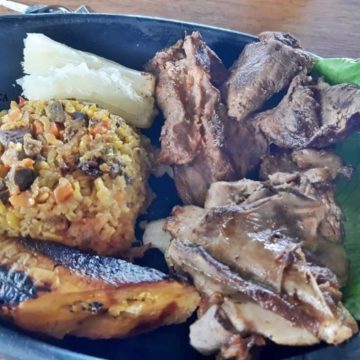
A quarter of a young goat seasoned with fines herbes, roasted at 200°C and basted with water and white wine every fifteen minutes. Just over an hour, and it feeds eight.

Cabrito, not goat
The English title on this page said goat and the Spanish behind it said cabrito, which is a milk-fed kid, and the difference decides whether the recipe works at all.
A whole kid weighs between five and eight kilos, so the quarter this recipe asks for is around a kilo and a half to two. That roasts through at 200°C in about an hour, which is exactly what the recipe claims.
A quarter of an adult goat is four or five kilos of far tougher meat and would need three hours at a lower temperature. Anyone who bought that and followed this recipe would have served something inedible.
The basting is the technique
Kid is very lean. There is almost no fat to keep it moist and 200°C is a hot oven, so the water and wine in the tray are there to be spooned back over the meat every fifteen minutes.
Keep more of both in reserve. The tray dries out before the meat is done, and a dry tray means nothing to baste with and a burnt bottom.
The instruction that had been on this page said to bathe the goat, which is what happens when the Spanish bañar is translated word for word. It means to baste.
Turn it halfway
The two instructions about timing used to contradict each other: one said to leave it for 50 minutes and the next said to take it out after 30 and turn it over.
What it means in practice is straightforward. Roast for about 25 minutes, basting twice, then turn it over, add more liquid, and give it another 25 to 35 minutes. The side facing the heat browns faster and it has to be swapped.
Judging it by the meat
The recipe gives times and no signal, which is the one thing missing from it. Ovens differ and so does the size of the piece.
It is done when the meat comes away from the bone with no resistance and the juices run clear. Around 70°C at the thickest point, if you have a thermometer. Then ten minutes of resting before carving.
More roasts
- Pork leg roast — the slower one.
- Roasted pork ribs — the same oven.
- Muchacho relleno — simmered rather than roasted.
- Roast beef in tomato sauce — for a big table.
Roasted Kid Goat FAQ
Kid, cabrito, which is milk-fed and much smaller. A whole one weighs five to eight kilos, so a quarter is around a kilo and a half to two. That is what roasts through in about an hour.
It needs a completely different approach: three hours or more at a lower temperature, or braising rather than roasting. Adult goat at 200°C for an hour comes out tough.
Every fifteen minutes, with the water and wine from the tray. Kid is very lean and it dries out fast at 200°C, so the basting is not optional.
When the meat pulls away from the bone without resistance and the juices run clear rather than pink. Around 70°C at the thickest part on a thermometer says the same thing.
Yes, about ten minutes before carving. The juices redistribute and it carves far more cleanly.
The classic French mix of parsley, chives, tarragon and chervil. The Spanish hierbas finas means the same thing. Any soft herb mix works here.
Cassava, potatoes or rice, which is what the last step suggests. Something plain to take the juices from the tray.
📖 Recipe
Ingredients
- ¼ kid goat (cabrito) (about 1.5 to 2 kg: see the notes)
- 1 glass water (plus more for basting)
- 1 glass white wine (plus more for basting)
- Fines herbes (the classic mix of parsley, chives, tarragon and chervil)
- Salt and pepper
Notas
Instructions
- Season the goat all over with salt and pepper and rub the fines herbes into it.
- Put it on a roasting tray, pour over a glass of water and a glass of white wine, and put it into an oven preheated to 200°C (390°F).
- Roast for about 25 minutes, basting it with the liquid in the tray every 15 minutes.
- Take it out, turn it over, add another splash of water and wine, and put it back for a further 25 to 35 minutes, basting again as it goes. It is done when the meat pulls away easily from the bone and the juices run clear.
- Serve it with cassava, potatoes or rice.
Comments
No Comments