
Arepas made from pre-cooked cornmeal, griddled and then split open and filled. Twenty minutes for six, and the filling is whatever is in the fridge, which is the whole idea.
Ten things to put in an arepa
An arepa is a pocket, and what goes in it is the least fixed thing about Colombian cooking. These are the fillings that turn up most often, and any of them works with the arepa on this page.
- Carne desmechada — Shredded beef stewed with tomato and onion. The most common filling in Colombia and the one most arepa stands lead with.
- Pollo desmechado — Poached chicken breast pulled apart and mixed with a little mayonnaise or hogao.
- Queso — Mozzarella, or the fresh white quesito that melts to a stretch rather than a pool. On its own it is a whole filling.
- Hogao — Tomato and scallion cooked down slowly in oil. It goes in on its own or alongside anything else.
- Huevos pericos — Scrambled eggs with tomato and scallion, which makes it a breakfast arepa.
- Chicharrón — Chopped crisp pork belly, usually with avocado to cut it.
- Aguacate — Sliced or mashed avocado with salt and a squeeze of lime, on its own or under the meat.
- Frijoles — Leftover beans, mashed slightly so they stay in the pocket.
- Atún — Tinned tuna with mayonnaise and onion, which is the quick weekday version.
- Carne molida — Ground beef cooked with the same blended sofrito used for empanadas.
Pre-cooked cornmeal, and nothing else
This is the one substitution that cannot be made, and it catches people constantly.
Masarepa, sold as areparina or harina de maíz precocida, is corn that has been cooked, dried and ground. That precooking is why warm water alone turns it into a workable dough in two minutes.
Ordinary cornmeal, corn flour, polenta and masa harina for tortillas are all different products. Masa harina is nixtamalised, which is a different process, and it gives a dough that tastes of tortilla and behaves differently. None of them will make an arepa.
Two cups of masarepa to two cups of warm water is the ratio here, and the two minutes of resting is not optional: it is the meal drinking the water.
Thick enough to have an inside
The whole point of these is the pocket, and the commonest failure is making them too thin.
Five inches across and about half an inch thick. That sounds chunky next to the thin arepas sold as a side dish, and it should: those are meant to sit under something, and these are meant to be opened.
Cook them four minutes a side over medium heat, not high. High heat browns the outside before the middle has set, and an arepa with a raw centre tears when the knife goes in.
Fill them hot
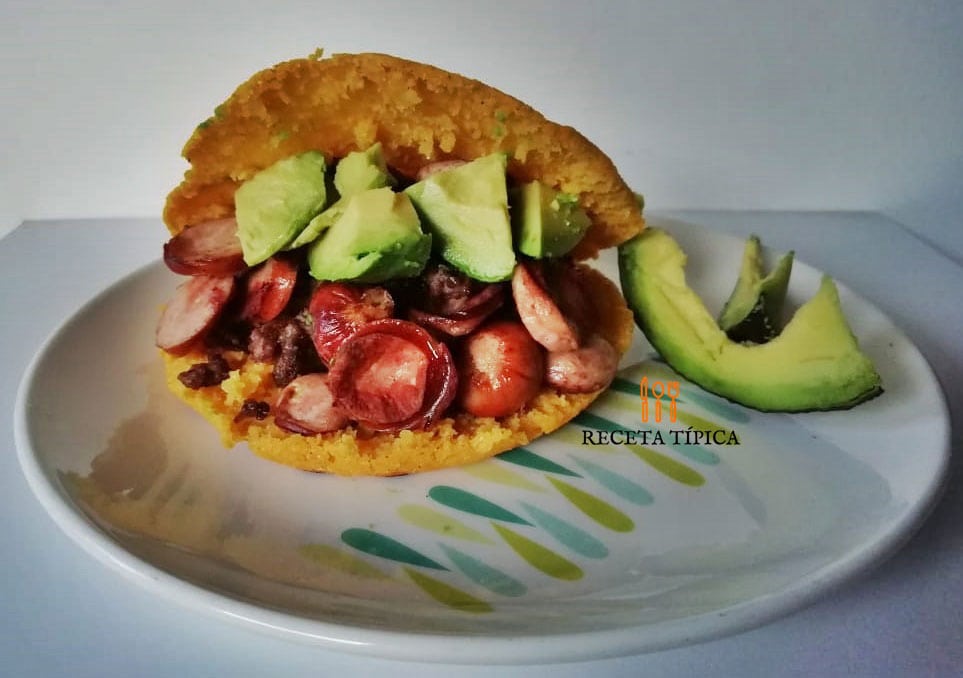
Straight off the griddle, split with a knife around the edge like a pitta, and filled while they are still too hot to hold comfortably.
That heat is what melts the cheese, and it is why the cheese goes in first and the meat on top of it. An arepa filled cold needs the whole thing put back on the heat, and by then the outside is dry.
Hogao or guacamole on the side rather than inside, so the arepa does not go soggy before it reaches the table.
More arepas
- Traditional arepas — from scratch, not from masarepa.
- Cheese arepas — the cheese in the dough.
- Arepa de huevo — fried with an egg inside.
- Hogao — the filling that goes with everything.
Stuffed Arepas FAQ
Most often shredded beef or chicken with melting cheese, but the honest answer is whatever is in the fridge. Hogao, scrambled eggs with tomato and onion, chicharrón, avocado, beans and tinned tuna are all standard. There is a full list on this page.
Pre-cooked cornmeal, sold as masarepa, areparina or harina de maíz precocida. It has already been cooked and dried, so warm water alone turns it into dough. Ordinary cornmeal, corn flour and polenta will not work.
It is too thin. Roll them about 5 inches across and keep them thick enough to have an inside, or the knife goes straight through and you have two discs instead of a pocket.
Around half an inch. Thinner than that and there is no pocket; much thicker and the middle stays raw while the outside browns.
Yes, a few hours in the fridge covered with plastic. It stiffens as it sits, so work a spoonful of warm water back in before shaping.
Not enough water, or not enough resting. Let it stand the two minutes so the meal absorbs the water, and if it still cracks when you press it, wet your hands and knead a little more in.
After. Cook the arepa through on the griddle, then split it open and fill it while it is hot enough to melt the cheese. Filling before cooking gives you a different dish, and one that leaks.
📖 Recipe

Ingredients
- 2 cups pre-cooked cornmeal (masarepa or areparina, not ordinary cornmeal)
- 2 cups warm water
- 3 tablespoons butter (two into the dough, one for the griddle)
- ¼ teaspoon salt
- Shredded meat or chicken (for the filling)
- Mozzarella cheese (for the filling)
Notas
Instructions
- In a medium bowl, put the cornmeal, two tablespoons of the butter, salt to taste and the warm water. Stir and let it stand for about 2 minutes so the meal drinks the water.
- Knead until the dough is compact and easy to shape. This is what decides the texture of the arepa, so give it a minute rather than ten seconds.

- Shape the arepas by hand or in a mould. A plastic bag works: put a ball of dough in the middle and press it flat with something with a flat bottom. They should be about 5 inches across and not too thin, or they will not open for filling.
- Melt the remaining tablespoon of butter on a griddle or non-stick pan over medium heat. Lay the arepas on and cook for about 4 minutes a side, until golden.
- Split them open with a knife and fill with mozzarella, chicken or shredded beef. Serve with hogao or guacamole.
Comments
No Comments