
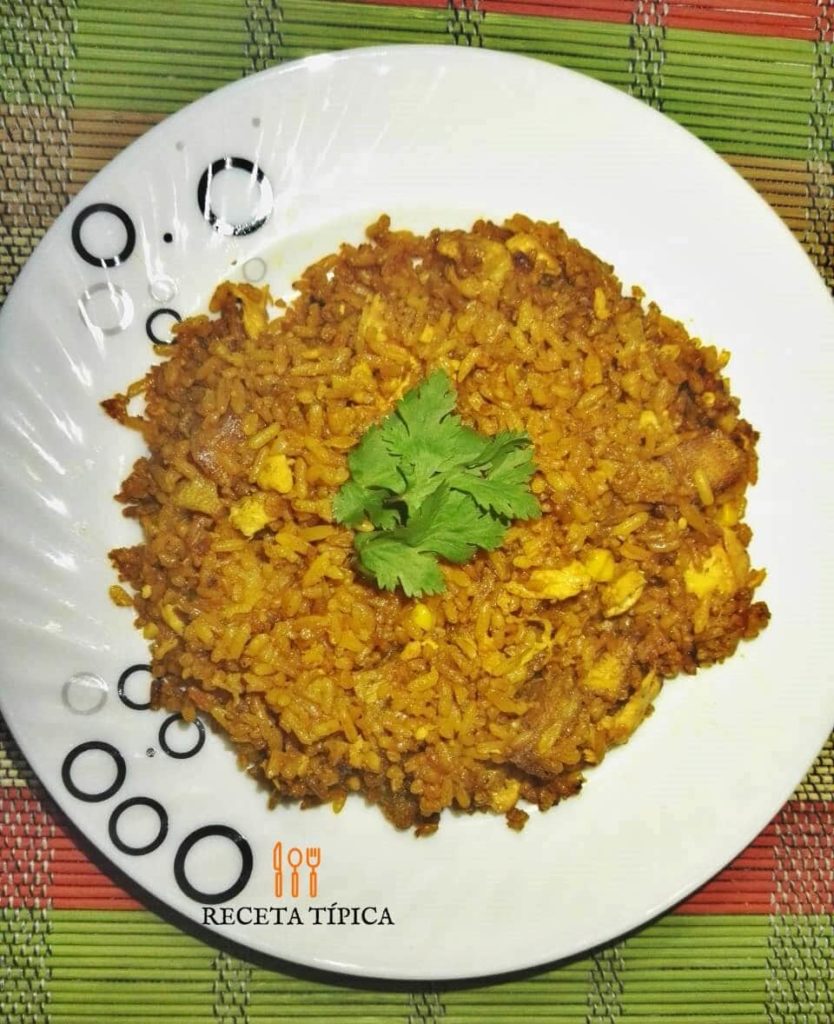
Arroz a la valenciana is the Latin American cousin of Spanish rice cookery: chicken browned on its own, a sofrito of onion, garlic, carrot and mushrooms cooked down with white wine, and saffron-coloured rice stirred through at the end. It is a special-occasion dish, the sort that appears at birthdays, first communions and weddings.
It is not a paella, though the name points that way, and the difference is worth understanding before you start.

Valencian rice and paella are not the same dish
The method is what separates them, and it separates them completely.
In a paella, raw rice goes into the wide shallow pan and cooks in the broth, absorbing it, and it is not stirred at all. That stillness is what lets the socarrat, the toasted layer, form on the bottom. In arroz a la valenciana, the rice is boiled separately and folded into the other ingredients at the end. Different technique, different texture, different dish.
It is also worth clearing up a common mix-up: authentic paella valenciana contains no seafood. It is a country dish of chicken, rabbit, flat green beans and garrofó beans, sometimes with snails. The seafood one is paella de marisco, which is a different preparation with a different name.
None of which makes this recipe less good. It just means you should expect a rice dish with chicken and vegetables in a wine-scented sauce, rather than something out of a Valencian rice field.
Getting the rice right
Cook it to al dente and no further. The rice gets another five minutes in the pan with everything else at the end, and rice that was already soft turns to porridge in that time.
The test is a grain crushed between finger and thumb. It should give under pressure but keep a firm core, a faint white centre is exactly right. A grain that flattens into paste with no resistance is already overcooked, and no amount of care afterwards brings it back.
About the saffron
The recipe calls for two small spoonfuls, and that quantity needs explaining, because it depends entirely on which "saffron" you have in the cupboard.
In Colombia, azafrán is commonly a yellow colouring powder, usually turmeric- or annatto-based, turmeric is sold in several countries as azafrán de raíz, "root saffron". It is cheap, it is used for colour rather than flavour, and two teaspoons of it is perfectly normal.
Real Spanish saffron is a completely different proposition: the dried stigmas of a crocus, the most expensive spice in the world, and powerfully aromatic. Two teaspoons of saffron threads would cost more than everything else in this recipe put together and would make the dish bitter and medicinal. If that is what you have, use a good pinch, crumbled into a little warm water first.
The wine has to disappear
Two cups of white wine go into the vegetables, and the ten minutes that follow are there to cook every drop of it away. This is the step people cut short, and it is the one that ruins the dish.
Wine that has not fully reduced leaves a sharp, slightly bitter note running through everything, and once the rice is in there is no way to cook it out without turning the rice to mush. Wait until the pan looks like a thick sofrito rather than a wet one.
Browning the chicken
In its own pan, cut into pieces before it goes anywhere near the heat, and left alone once it is in. The urge to stir is strong and it is the wrong instinct: chicken that is pushed around the pan releases liquid and steams itself grey, while chicken left in contact with hot metal browns.
That browning is not just colour. It is the deepest flavour in the finished dish, and it is the reason the chicken is cooked separately rather than thrown in with the vegetables.
Making it into a feast
The ingredient list here is deliberately modest, so the dish stays affordable enough to cook on an ordinary weekday. For an occasion, it takes additions readily: shrimp, olives, sliced sausage, squid, artichokes.
Serve it as a main course, with bread or a green salad alongside, and a guava juice if you want the Colombian version of the meal.
Related recipes
- Colombian chicken rice — the everyday version of the same idea, without the wine.
- Chicken stew — if it is the chicken rather than the rice you came for.
- Homemade meatballs — another special-occasion main.
- Guava juice — what to drink with it.
Valencian Rice FAQ
A Latin American rice dish, arroz a la valenciana, of chicken and vegetables in a white wine sofrito, coloured with saffron and mixed with cooked rice. It takes its name from Valencia in Spain, where rice dishes of this family began, but it is made across Latin America and has gone its own way.
No, and the difference is in the method. In a paella the rice cooks in the broth in a wide shallow pan and is never stirred. Here the rice is boiled separately and folded in at the end. Authentic paella valenciana also uses chicken, rabbit and beans, not seafood, which belongs to paella de marisco.
It depends what you have. Two teaspoons only makes sense for the yellow colouring powder sold as azafrán in Colombia, which is used for colour rather than flavour. Real Spanish saffron threads are enormously stronger and more expensive: a good pinch is plenty, and two teaspoons would taste bitter and medicinal.
Firm. Aim for al dente, since the rice gets five more minutes in the pan with everything else at the end and will soften further. Crush a grain between your fingers: it should give but still have a firm centre. If it collapses completely, it is already overcooked.
It is the flavour that separates this from an ordinary chicken rice, so it is worth including. What matters more is cooking it off completely during those ten minutes, wine that has not evaporated leaves a sharp, faintly bitter edge that nothing added later will cover.
It takes additions well, which is part of the point. Shrimp, olives, sliced sausage, squid and artichokes are all common. The base recipe is deliberately inexpensive; the additions are what turn it into the version served at weddings and first communions.
📖 Recipe

Ingredients
- 500 g chicken, cut into pieces (about 1 lb; boneless thigh or breast, cut before you start)
- 300 g rice (about 1½ cups)
- 2 cups water (for cooking the rice)
- 2 onions, finely chopped
- garlic, finely chopped (used in step 2; it was missing from the original list)
- 3 carrots, peeled and diced
- 250 g mushrooms, sliced
- 2 cups white wine (the quantity comes from step 2; it cooks off completely)
- 1 beef bouillon cube
- Oil, for frying
- Saffron or yellow colouring (2 teaspoons if using Colombian azafrán colouring; a good pinch of threads if using real saffron)
- Salt and pepper, to taste
Notas
Instructions
- Bring the water to the boil with the rice. Once the water on the surface has gone, lower the heat, cover, and let it finish cooking. Aim for al dente: a grain crushed between your fingers should still have a firm centre, not collapse completely.
- In a pan with oil, gently fry the finely chopped onion and garlic until soft. Add the peeled and diced carrots, and when they have softened, the sliced mushrooms. Once those are done, pour in the two cups of white wine, add the bouillon cube, the saffron, salt and pepper, and cook for 10 minutes more, until the wine has cooked away completely.
- In another pan, brown the cut-up chicken until golden. Leave it alone while it colours rather than stirring it constantly. Then add it to the pan with the vegetables, along with the cooked rice.
- Stir everything together well, let it cook for another 5 minutes so the flavours meet, and serve straight away.
Comments
No Comments