
In an arepa de queso the cheese goes into the dough, not inside it. Two cups of grated cheese are kneaded straight into the masarepa, so it melts all the way through as the arepa cooks and pulls into threads when you tear one open. That is the difference between this and an arepa stuffed with cheese, and it is a bigger difference than it sounds.
They are street food in Colombia. The stalls sell nothing else: the vendor arrives with the dough already made, heats the griddle, and cooks them in front of you to be eaten standing up, while the cheese is still soft.
Colombian arepas and Venezuelan arepas
Both countries claim the arepa, both have eaten it for centuries, and the argument is not going to be settled here. The practical difference is easier to describe.
Venezuelan arepas are thick. They are cooked, split open like a pitta, and packed with a filling, shredded chicken and avocado for a reina pepiada, beef and cheese for a pelúa. The arepa is the container.
Colombian arepas are thinner and generally not a container at all. They sit next to the food the way bread does, or they carry the cheese in the dough, or take it melted on top. Colombia also has far more regional versions: the sweet arepa de choclo made with fresh corn, the thick arepa boyacense, the plain white arepa paisa that comes with everything in Medellín, the arepa de huevo of the coast with an egg fried inside it.
This one is the cheese version, and it is the one sold on street corners.
Buying the right flour
This is where arepas go wrong outside Latin America, because three different corn products sit near each other on the shelf and only one of them makes an arepa.
- Masarepa — precooked corn flour, sold as P.A.N., Areparina or Goya, often labelled harina de maíz precocida. This is the one. It has already been cooked and dried, which is why it forms a workable dough with nothing but water.
- Masa harina — for tortillas and tamales. It is nixtamalised, treated with lime, and both the flavour and the texture are different. It is the substitution people most often make and it does not give you an arepa.
- Cornmeal — raw ground corn, for cornbread and polenta. It has not been precooked, so it will not come together into a dough at all.
Which cheese
What matters is that it grates easily, tastes mild and melts. The original is queso costeño, a firm salty white cheese from the Caribbean coast, and it is worth looking for in a Latin grocery, bearing in mind that it is salty enough that you should go very lightly on the salt in the dough.
Low-moisture mozzarella is the easiest everyday answer and gives the best stretch. Queso fresco and queso blanco both work. What does not work is anything aged or strongly flavoured: the point is a mild, milky, salty background, not a cheese that announces itself.
Getting the dough right
Everything goes into one bowl and gets kneaded by hand. There is no resting, proving or rolling: it is about as simple as bread gets.
The test is what happens at the edges when you flatten a ball. Smooth edges mean the dough is right. Cracked, splitting edges mean it is too dry: wet your hands and work in a little more water, and keep going until it stops cracking.
Letting the dough sit for five minutes before shaping is worth the wait. Masarepa carries on taking up liquid after it is mixed, so dough that felt right immediately can be dry by the time you shape it, and rested dough is much less likely to crack.
Keep the thickness even across the whole arepa. An arepa that is thick in the middle and thin at the edges burns at the rim before the centre is cooked.
On the griddle
Medium heat, a little butter on the pan, and about five to eight minutes a side. Turn them once, not repeatedly.
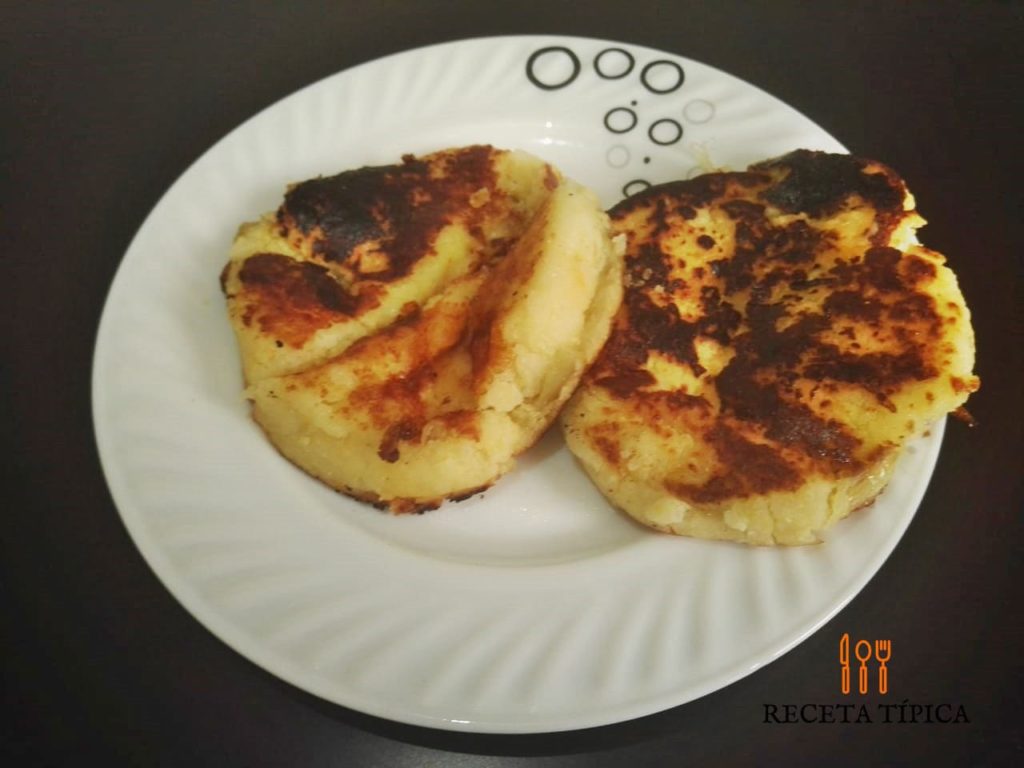
The crust is the thing to watch, not the clock: you want it golden with a few darker blistered patches, and firm enough that the arepa sounds hollow if you tap it. Thickness changes the timing more than anything else, so a thick arepa may want longer and a thin one will be done sooner.
Resist turning the heat up. High heat colours the outside long before the inside has cooked, and an arepa that looks perfect and is raw in the middle is the usual result of impatience.
Eat them hot. Reheated arepas are perfectly edible, but the cheese sets as it cools and the stretch, which is the whole reason for making these, does not come back.

Other arepas on the site
- Stuffed arepas — the other approach, where the arepa is opened and filled with shredded beef, chicken, egg or avocado.
- Arepas de choclo — the sweet ones, made with fresh corn instead of masarepa.
- Arepas de yuca — cassava instead of corn, for a softer, chewier version.
Cheese Arepas FAQ
Mostly thickness and what you do with them. Venezuelan arepas are thick and split open to be stuffed like a sandwich, with fillings such as reina pepiada. Colombian arepas are thinner and eaten as bread is eaten, alongside the meal, or with cheese worked into the dough or melted on top, as here.
In the dough. Two cups of grated cheese are kneaded in with the masarepa, so it melts throughout as the arepa cooks rather than sitting in a pocket. That is what makes it an arepa de queso rather than a stuffed arepa, and it is why it stretches when you tear one apart.
Masarepa is precooked corn flour, sold as P.A.N., Areparina or Goya. Masa harina is not a substitute: it is nixtamalised, treated with lime for tortillas and tamales, and it tastes and behaves differently. Plain cornmeal will not work at all, since it has not been precooked and never forms a dough.
Low-moisture mozzarella is the easiest answer: mild, grates cleanly and melts well. Queso costeño is the Colombian original and worth seeking out in Latin groceries, though it is saltier, so use less salt in the dough. Queso fresco or queso blanco also work. Avoid aged, strongly flavoured cheeses.
About five to eight minutes a side over medium heat for a normal thickness, turning once. Judge by the crust, golden with a few blistered spots, rather than by the clock, since thickness changes everything. Cooking them fast over high heat browns the outside before the middle is done.
The dough is too dry. Wet your hands and work in a little more water until it stops splitting when you press it. Letting the dough rest for five minutes after kneading helps too: masarepa carries on absorbing liquid after mixing, so dough that has sat is more forgiving.
📖 Recipe

Ingredients
- 2 cups precooked corn flour (masarepa) (P.A.N., Areparina or Goya; not masa harina and not cornmeal)
- 1 cup warm water
- 1 cup milk
- 2 cups grated mozzarella (or queso costeño, or any mild fresh cheese that grates and melts)
- 2 teaspoons butter (plus a little more for the griddle)
- Salt, to taste (go easy: the cheese is already salty)
Notas
Instructions
- In a large bowl, combine the masarepa, the warm water, the milk, the grated cheese, the butter and a little salt.
- Knead with your hands until everything is completely worked together and the dough is smooth. If it cracks when you press it, it needs a little more liquid.
- Roll the dough into balls (about the size of your fist, which should give you six) and flatten each one with your hands or between two plates.
- Heat a skillet or griddle and grease it with a little butter.
- Lay the arepas on the griddle and cook over medium heat until each side is golden and lightly blistered, about 5 to 8 minutes a side depending on how thick you made them. Go by the crust rather than the clock, and turn them once.
- Serve them hot, while the cheese inside is still soft.
Comments
No Comments