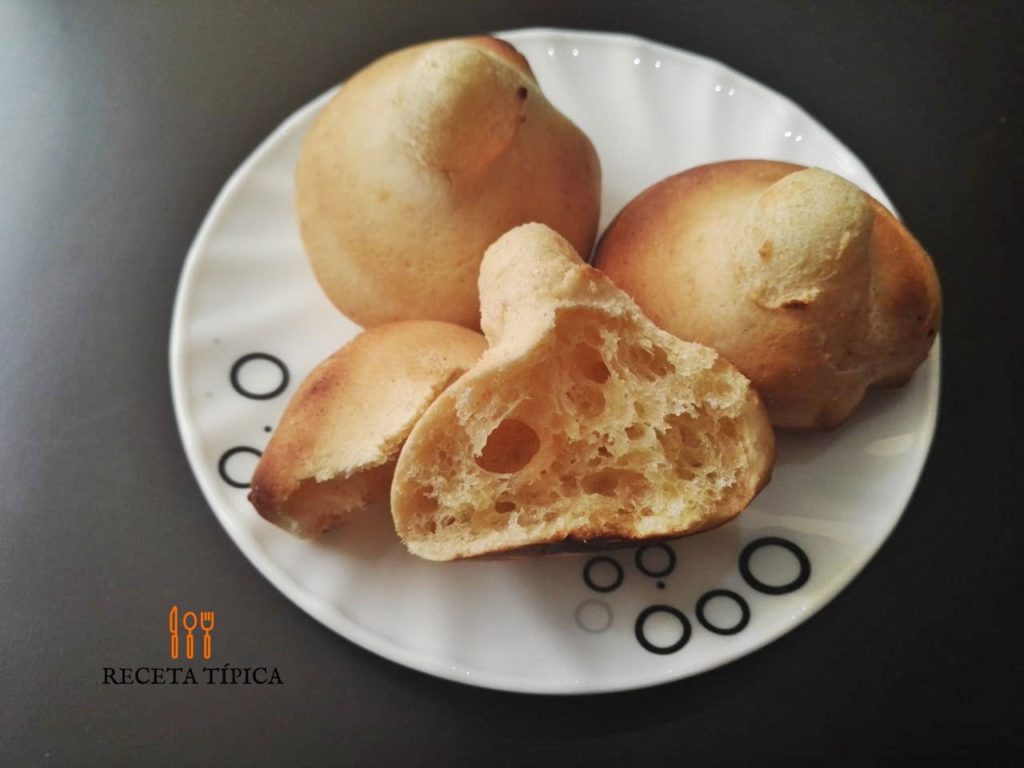
Cassava starch, two cheeses, an egg and a very hot oven. No wheat flour, no yeast, and no rising time. Twelve rolls in forty minutes.
Cassava starch is not cassava flour
The packet matters more here than anything else in the recipe, and the two products sit next to each other on the shelf.
- Cassava starch, also sold as tapioca starch or almidón de yuca, is a fine white powder extracted from the root. This is what you need.
- Cassava flour is the whole root dried and ground. It is coarser, beige, and behaves completely differently.
Only the starch gives pandebono its distinctive chew. Made with cassava flour you get something dense and crumbly that is not the same bread.
Some recipes call for almidón agrio, sour cassava starch, which is fermented before drying and gives more rise and a slight tang. Either works.
Why the oven is so hot
220°C looks like a mistake and it is not. There is no yeast in this dough, so all the lift has to come from a fast burst of heat: the outside sets quickly while steam expands inside, pushing the roll up.
A moderate oven gives flat, dense pandebonos. The high heat is doing structural work.
The milk in the ingredient list
It appears without a quantity and is never mentioned in the steps, which is confusing. It is there to adjust the dough.
Cassava starch absorbs unpredictably depending on brand and humidity, and the moisture in the cheese varies too. If the dough will not hold together into a ball, add milk a spoonful at a time until it does.
Eat them the same day
Pandebonos are exceptional warm and turn hard and rubbery within hours. Colombian bakeries bake them in small batches through the day for exactly this reason.
They freeze well unbaked: shape the balls, freeze them on a tray, and bake from frozen with a few extra minutes.
More cheese breads
- Pan de queso — with corn flour instead.
- Almojábanas — softer, with curd.
- Pan de yuca — the closest relative.
- Colombian hot chocolate — what they are eaten with.
- Hojaldras — from the same bakery counter.
Pandebono FAQ
Starch is the fine white powder extracted from the root; flour is the whole root dried and ground. Only the starch gives pandebono its chew. Made with flour you get something dense and crumbly that is not the same bread.
Because there is no yeast. All the lift comes from a fast burst of heat that sets the outside while steam expands inside. A moderate oven gives flat, dense pandebonos.
Adjusting the dough. Cassava starch absorbs different amounts depending on brand and humidity, and cheese varies in moisture. If the dough will not come together into a ball, add milk a spoonful at a time.
Naturally, if you use cassava starch and skip the two tablespoons of wheat flour, using masarepa instead. Both the starch and the corn flour are gluten free.
Better unbaked. Shape the balls, freeze them on a tray, then bake from frozen with a few extra minutes. Baked pandebonos go hard within hours and reheating only partly recovers them.
📖 Recipe

Ingredients
- 240 g cassava starch (almidón de yuca or tapioca starch: not cassava flour)
- 2 tablespoons masarepa or wheat flour (pre-cooked corn flour, for structure)
- 1 teaspoon baking powder
- 2 tablespoons sugar
- 1 teaspoon salt
- 50 g queso costeño, or feta, grated (the salty one; feta is the substitute abroad)
- 200 g fresh cheese, grated (queso campesino or queso fresco)
- 3 tablespoons butter, softened
- 1 large egg
- Milk (a splash if the dough is too dry to hold together)
Notas
Instructions
- Heat the oven to 220°C (425°F). It needs to be this hot: pandebonos rise from the burst of heat rather than from yeast.
- Mix the cassava starch, the masarepa, the baking powder, the sugar and the salt thoroughly. A food processor makes this easier.
- Add the fresh cheese, the salty cheese, the butter and the egg, and work them into the dry mixture until you have a smooth dough. If it is too dry to hold together, add a splash of milk.
- Shape balls about the size of a golf ball and put them on a lined baking tray.
- Bake for 20 to 25 minutes, until golden. Serve immediately, with a cup of hot chocolate or coffee.
Comments
No Comments