
• Skip to primary navigation
  • Skip to main content
  • Skip to primary sidebar
▷ Authentic Colombian cuisine recipes with a homely touch
  • Home
  • Recipe Index
  • Contact us
  • Español
menu icon
go to homepage
  • Home
  • Recipe Index
  • Contact us
  • Español
search icon
Homepage link
  • Home
  • Recipe Index
  • Contact us
  • Español
×
Inicio » Recipes

Tajadas de Plátano Maduro (Fried Ripe Plantain Slices)

Publicado: Mar 21, 2020 · Modificado: Aug 4, 2026 Por Angela Giraldo · 831 Palabras · 5 minutos de lectura

Ripe plantain cut into long diagonal slices and fried two minutes a side. Two ingredients, ten minutes, and the ripeness of the plantain decides everything.
Total: 10 minutes minutes
JUMP TO RECIPE

Ripe plantain cut into long diagonal slices and fried two minutes a side. Two ingredients, ten minutes, and the ripeness of the plantain decides everything.

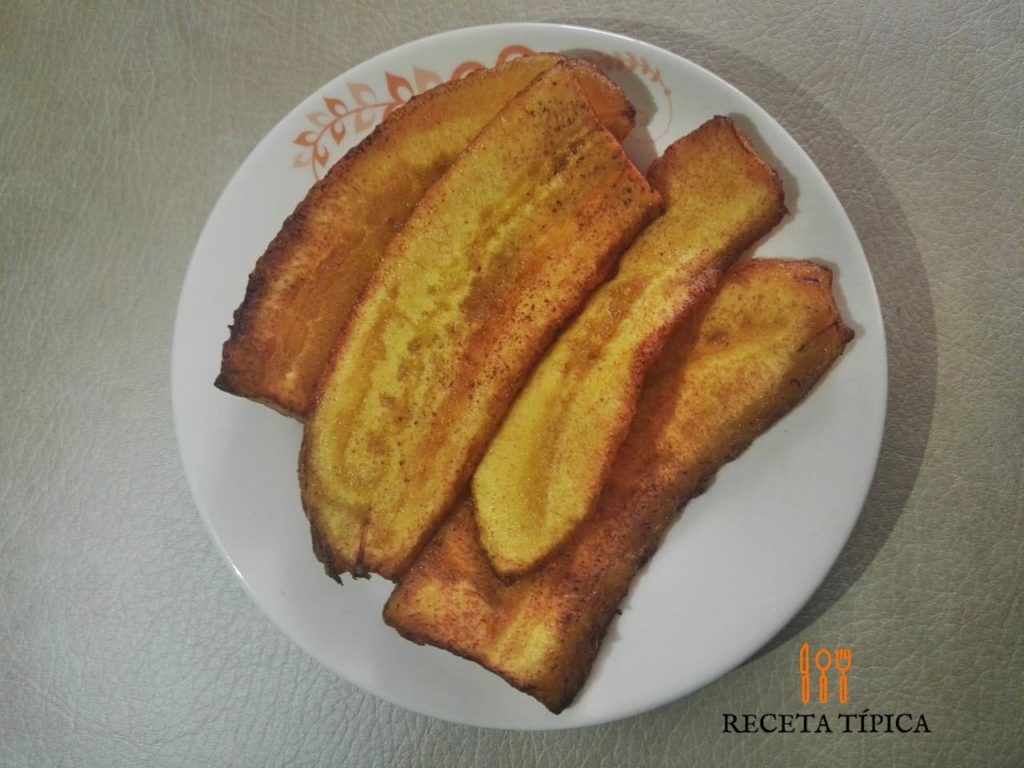
Tajadas de plátano maduro, fried ripe plantain slices

Tajadas means long slices

The first instruction said to slice the plantains horizontally, which would give rounds, and rounds are not tajadas.

A tajada is a long slice cut lengthways down the plantain, usually on a slight diagonal so the pieces are longer still. That shape is the whole identity of the dish, and it is why the Spanish name distinguishes them from rodajas, which are rounds.

Thickness is up to you. What is not up to you is the direction.

Black skins

This is the only real requirement of the recipe and it is not written down anywhere in it.

The plantain has to be properly ripe: skin mostly black, flesh soft under a thumb. At that point the starch has converted to sugar, and the slices caramelise at the edges in the pan and taste sweet.

A yellow plantain is a different ingredient. It is starchy, it does not sweeten in the oil, and it comes out leathery. Green plantain is a third thing again and belongs in patacones.

Do not crowd the pan

The third instruction says to add the slices without crowding, and it is easy to ignore when you are trying to get through two plantains quickly.

Ripe plantain holds a lot of moisture. Every slice added lowers the temperature of the oil, and a pan packed full drops below frying temperature entirely. What happens then is steaming: the slices go pale, soft and greasy instead of golden.

Two batches of two minutes a side is four minutes. It is worth it.

Two ingredients

Plantains and oil. There is no salt in this recipe and no sugar, because a properly ripe plantain needs neither.

That also means there is nothing to hide behind. Whether these are good comes down entirely to the fruit and the temperature of the pan.

More plantain

  • Cooked ripe plantains — with butter, no frying.
  • Patacones — the green plantain version.
  • Plantain canoes — baked and filled.
  • Plantain balls with cheese — mashed and fried.

Tajadas FAQ

How do I cut tajadas?

Lengthways, on the diagonal, into long slices. That is what makes them tajadas. Cut across into rounds they fry differently and are usually called something else.

How ripe should the plantain be?

Skin mostly black and the flesh soft enough to give under a thumb. That is when the starch has turned to sugar. A yellow plantain stays starchy and leathery no matter how long you fry it.

Why do mine come out soggy?

Almost always a crowded pan. Plantain releases moisture, and too many slices at once drop the oil temperature so they steam instead of frying. Two batches take four minutes instead of two.

Thick or thin slices?

Both work and they are different. Thicker slices stay soft and sweet in the middle; thin ones crisp all the way through and are closer to a chip.

Can I bake them instead?

The recipe fries them, and the caramelised edges come from contact with hot oil. Baked, they dry rather than brown.

What do you eat them with?

Beans, rice, grilled meat, or as part of a bandeja paisa. They are a side dish that turns up beside almost anything in Colombia.

📖 Recipe

Tajadas de Plátano Maduro (Fried Ripe Plantain Slices)

No ratings yet
Imprimir Pin Comentar
Prep Time: 5 minutes minutes
Cook Time: 5 minutes minutes
Total Time: 10 minutes minutes
Course: Side Dish
Cuisine: Colombian
Keyword: slices of ripe bananas
Servings: 4
Calories: 357kcal
Author: Angela Giraldo

Ingredients

  • 2 ripe plantains (peeled, skins mostly black)
  • Enough oil for frying

Notas

The plantain has to be properly ripe: skin mostly black, flesh soft enough to give under a thumb. That is when the starch has turned to sugar, and it is the whole difference between tajadas that caramelise at the edges and go sweet, and slices that stay starchy and leathery. A yellow plantain is not ready no matter how long you fry it. Long diagonal slices are what tajadas means. Cut across into rounds they fry differently and are usually called something else. Thicker slices stay soft in the middle; thin ones crisp all the way through and are closer to a chip. Do not crowd the pan. Plantain slices release moisture and a crowded skillet drops in temperature, so instead of frying they steam and go soggy. Two batches take four minutes rather than two and the difference is obvious. They are eaten alongside almost anything: beans, rice, grilled meat, or as part of a bandeja paisa.
Prevent your screen from going dark

Instructions

  • Slice the plantains lengthways on the diagonal, as thick or thin as you like. Long slices are what makes them tajadas; cut across into rounds they are something else.
  • Heat the oil in a skillet over medium heat before the slices go in.
  • Add the slices without crowding the pan and fry them for two minutes a side, until golden.
  • Lift them out onto paper towels to drain.
  • Serve them hot.

Nutrition

Calories: 357kcal | Carbohydrates: 29g | Protein: 1g | Fat: 28g | Saturated Fat: 2g | Polyunsaturated Fat: 8g | Monounsaturated Fat: 18g | Trans Fat: 1g | Sodium: 4mg | Potassium: 447mg | Fiber: 2g | Sugar: 13g | Vitamin A: 1009IU | Vitamin C: 16mg | Calcium: 3mg | Iron: 1mg
Follow us on:@recetatipica
« Pandebono: the Cassava Starch Cheese Bread
Colombian Roast Chicken (Pollo Asado al Horno) »

About Angela Giraldo

Reader Interactions

Comments

No Comments

Leave a Reply Cancel reply

Your email address will not be published. Required fields are marked *

Recipe Rating


This site uses Akismet to reduce spam. Learn how your comment data is processed.

Primary Sidebar

Featured Recipes

Caldo de Costilla: the Colombian Breakfast Broth

Colombian White Rice, in a Pot or a Rice Cooker

Scrambled Eggs, and Why the Heat Decides Everything

Sancocho Cream Soup, Two Ways

Drinks

New Recipes

Coca-Cola Rice: why the soda, and what it actually does

Sudado de Albóndigas (Colombian Meatball Stew)

Colombian Mashed Pumpkin with Hogao (Poteca de Auyama)

Perro Caliente Colombiano: the Hot Dog with Crisps on Top

Lunch Ideas

Colombian Egg and Potato Soup

Colombian Pork Tamales: wrapped in plantain leaf, not corn husk

Chocolate Pudding Set with Cornstarch (Postre de Chocolate)

Sopa de Fideos (Colombian Noodle Soup)

Footer

↑ back to top

PRIVACY POLICY
ACCESSIBILITY STATEMENT

Copyright © 2026 Receta Típica - Web Design Marketing Nativo.

Rate This Recipe

Your vote:


A rating is required
A name is required
An email is required