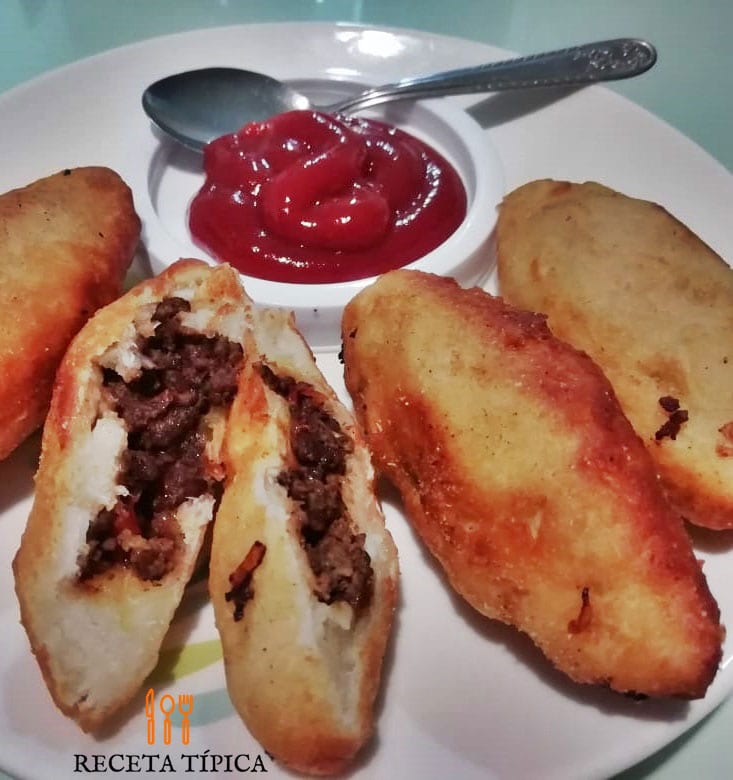
A carimañola is boiled cassava, mashed into a dough, wrapped around seasoned ground beef and deep-fried until the outside blisters and turns golden. It comes out shaped like a small torpedo, pointed at both ends, crisp on the outside and soft and faintly sweet within.
On the Caribbean coast of Colombia it is breakfast, bought from a cafeteria or a fried-food stall and eaten standing up with suero costeño.
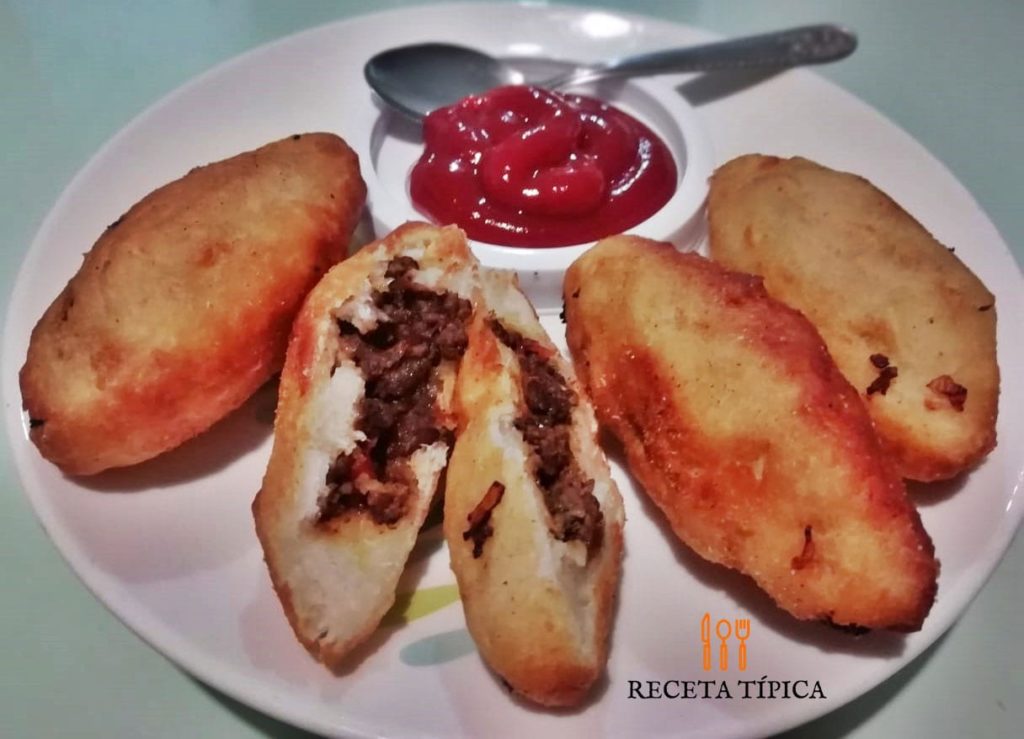
Carimañola, caribañola, caramañola, empanada de yuca
Four names, one fritter, and where you are decides which one you hear.
On the coast, in Córdoba and Atlántico where it is most eaten, it is a carimañola, sometimes spelled caribañola or caramañola. Inland, in Santander, the coffee region and the Cauca Valley, the same thing is usually called an empanada de yuca, a cassava empanada, which is a plainer description of what it is.
Panama makes them too, and claims them just as firmly. The coast that runs between the two countries has never paid much attention to the border where food is concerned.
It is an empanada with a cassava shell
The easiest way to place a carimañola is to think of an empanada where the wheat or corn dough has been replaced by cassava.
That swap changes everything about it. Cassava is starchy and slightly sweet, and when it is boiled and mashed it makes a dense, smooth dough that needs no flour, no fat and no rising. Fried, it forms a thin blistered crust with a soft, almost creamy interior, which is nothing like the flaky or crunchy shell of a wheat empanada.
It also means the whole thing is naturally gluten-free, which is incidental to its origins and useful to know.
Getting the dough right
Everything about a carimañola depends on the dough behaving, and two things decide whether it does.
Take out the fibrous core. Running down the centre of a cassava root is a woody thread that never softens no matter how long you boil it. The recipe calls for cassava sin vena, without the vein, and it means this. Split each piece and pull it out before cooking. Frozen cassava usually arrives already peeled and cored, which is the easiest route.
Mash it hot. Cassava mashes smooth while it is steaming and turns lumpy and gluey as it cools. Drain it and get straight to work. If the dough feels dry as you shape it, wet your hands rather than adding water to the bowl, which makes it sticky in patches.
Knead it more than feels necessary. A smooth dough closes around the filling without cracking; a rough one splits at the seams the moment it hits the oil.
Why they burst, and how to stop it
A carimañola that opens in the oil empties its filling into the pan and turns into a mess. There are only three causes.
- Warm filling. Heat softens the dough from the inside while you are still shaping it. The recipe says to let the beef cool and it is not being polite.
- Too much filling. One tablespoon. It looks mean and it is right: any more and the dough cannot close over it properly.
- Oil that is not hot enough. Hot oil sets the outside in seconds and holds the shape. Lukewarm oil lets the dough soften and spread before any crust forms.
Seal the seam by rolling the carimañola gently between your palms rather than pinching it, which thins the dough exactly where it needs to be thickest.
About cassava and raw cassava
Worth a short, unhysterical paragraph, because it comes up whenever cassava does.
Cassava contains cyanogenic compounds, and they sit mostly in the peel and in the layer immediately beneath it. The bitter varieties carry a lot and need long processing before they can be eaten, which is why traditional preparation in the Amazon involves grating, pressing and drying. The sweet varieties, which are what is sold for cooking in supermarkets and Latin groceries, carry very little.
Peeling it thoroughly and boiling it, which is exactly what step 1 does, is all that is required. What you should not do is eat cassava raw, in any variety.
Suero costeño, and what to do without it
The coast eats almost everything fried with suero costeño, a soured fermented cream that is thinner than American sour cream, noticeably saltier, and sharper. It cuts through fried food the way nothing sweet can.
Latin groceries in the US sell it, sometimes labelled suero atollabuey. If you cannot find it, thin crème fraîche with a little milk and salt it until it tastes assertive. Plain sour cream is the fallback, and it is sweeter and thicker than the real thing.
Failing all of that, ají or a homemade tomato and chilli sauce does the job from the other direction.
Other fillings
Ground beef is the version here. Fresh coastal cheese is just as traditional and is the one most often eaten at breakfast, since it needs no cooking at all. Shredded chicken, shredded fish and vegetables all work, and the only rule is that the filling goes in cold and in modest quantity.
More cassava, and more fried things
- Cassava croquettes — the same root, a different shape.
- Arepas de yuca — cassava on the griddle instead of in the fryer.
- Empanadas — the wheat and corn relative.
- Patacones — the other thing the coast eats with suero.
Carimañola FAQ
A fritter from the Caribbean coast of Colombia and Panama: boiled cassava mashed into a dough, wrapped around a filling of seasoned ground beef, chicken or cheese, and deep-fried into a torpedo shape with pointed ends. It is street and breakfast food, crisp outside and soft and faintly sweet inside.
All the same thing. The spelling shifts by region and so does the pronunciation. In Santander, the coffee region and the Cauca Valley the same fritter is usually called an empanada de yuca, cassava empanada, which describes it more literally. On the coast, where it belongs, it is a carimañola.
A soured, fermented cream from Colombia's Caribbean coast, thinner and saltier than American sour cream and slightly sharper. It is the standard thing to eat with carimañolas, arepas and patacones. Crème fraîche loosened with a little milk and salted gets you close if you cannot find it.
Usually one of three things. The filling went in warm, which softens the dough from the inside. They were overfilled, so the seam could not close. Or the oil was not hot enough, so the outside did not set quickly enough to hold. A tablespoon of cold filling and properly hot oil solves all three.
Not with what you buy to eat. Cassava contains cyanogenic compounds, concentrated in the peel and the layer just under it, and the sweet varieties sold for cooking contain little. Peeling it properly and boiling it, which this recipe does, deals with it. Never eat cassava raw.
Yes, about 30 minutes at 190°C (375°F). They come out drier and paler, without the blistered crust that frying gives, and the contrast between crisp shell and soft inside is most of the point of a carimañola. It works, but it is a different thing.
📖 Recipe

Carimañola (Colombian Cassava Fritter with Ground Beef)
Imprimir Pin ComentarIngredients
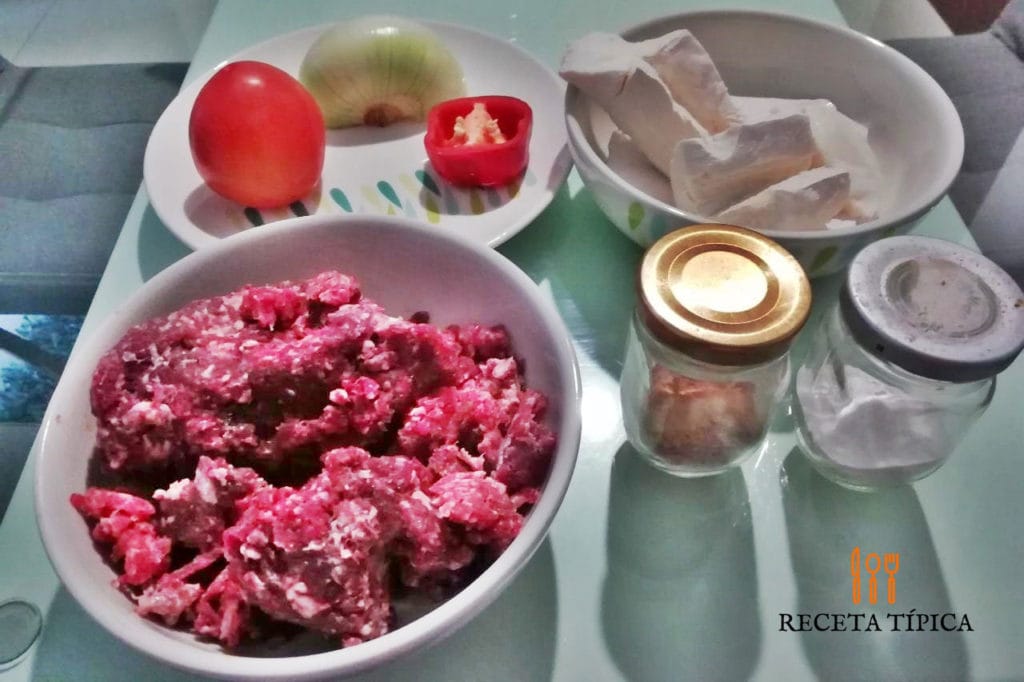
- 1000 g cassava (yuca), peeled, cut into pieces, fibrous core removed (about 2¼ lb; frozen cassava works and comes peeled and cored)
- Salt (for the cooking water)
- 6 cups water
- Vegetable oil, enough for deep frying
For the filling
- ¼ bell pepper, finely chopped (pimentón in Colombia means bell pepper, not paprika)
- 1 garlic clove, crushed
- ½ onion, finely chopped
- 250 g ground beef (about ½ lb)
- 1 tablespoon vegetable oil
- Salt, pepper and cumin, to taste
Notas
Instructions
- Put a large pot over high heat with the water, the cassava and salt. Cook for about 25 minutes, until the cassava is soft enough to fall apart under a fork.
- Drain it well and mash it in a bowl with a fork or a potato masher while it is still hot, which is when it mashes smoothest. Knead it for a while until the dough is smooth and holds together, then set it aside.

- Put a frying pan over medium heat with the tablespoon of oil, the crushed garlic, the onion and the bell pepper. Cook for two minutes, stirring constantly.
- Add the ground beef and cook for 7 minutes, stirring, until it is cooked through and mixed with the vegetables. Take it off the heat and let it cool. Do not skip the cooling: hot filling softens the dough and the carimañolas split open in the oil.
- Take a piece of dough about the size of a large egg, roughly 80 g, and roll it into a ball. Push a finger into the centre to open out a hollow, like making a small canoe.
- Put in 1 tablespoon of the beef filling and close the dough gently around it, shaping it into an oval with a point at each end.
- Lower each carimañola into hot oil and fry for about 3 minutes a side, until deep golden.
- Lift them out and drain them on kitchen paper.
- Serve them hot, with tomato sauce, sweet chilli, or suero costeño.
Comments
No Comments