
Crispetas is the Colombian word for popcorn, and the ones sold at cinemas and at fairs are sweet. The sugar goes into the pot and caramelises before the corn does, so each kernel comes out with a thin coat on it instead of having sugar sprinkled over the top afterwards.
That order is the whole recipe. Everything else is corn, oil and four minutes.
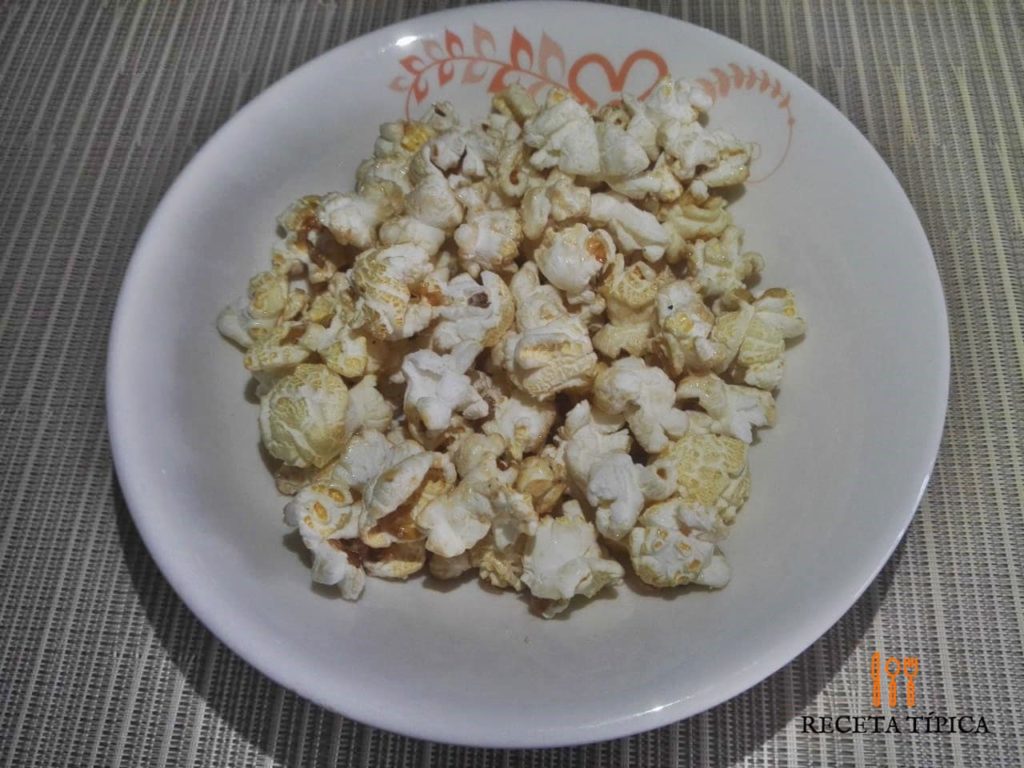
Crispetas, palomitas, cabritas, cotufas
Spanish has an unusual number of words for popcorn, and which one you use places you geographically almost immediately.
- Crispetas — Colombia. Also maíz pira, which is what the raw corn is called.
- Palomitas — Mexico and Spain, literally little doves.
- Cabritas — Chile, little goats.
- Cotufas — Venezuela. Pochoclo in Argentina, canchita in Peru.
So if you arrived here because someone said crispetas and you had no idea what they meant, that is the answer. What is worth staying for is that the Colombian ones are usually sweet.
Caramel first, corn second
Four tablespoons of water and four of sugar go into the pot on their own and cook until the mixture turns golden. Only then do the oil, the vanilla and the corn go in.
Doing it in this order is what separates crispetas from popcorn with sugar on it. As each kernel bursts open it exposes a large amount of new surface into a pot that already has hot caramel in it, and that surface gets coated. Sugar added at the end has no way in: it slides off the finished popcorn and collects in the bottom of the bowl.
Keep the corn to a single layer covering the base. Piled deeper, the kernels underneath sit in the caramel and burn while the ones on top never get hot enough.
Sugar burns in seconds
This is the one place the recipe can go wrong, and it goes wrong fast.
Caramel moves from pale gold to amber to black in well under a minute, and once sugar burns it turns bitter and there is no rescuing it. Stay at the pot while it caramelises and get the oil and corn in as soon as it is golden, which also stops the caramel cooking any further.
Shake the covered pot rather than stirring it. Lifting the lid lets steam out and lets popping corn out with it.

Knowing when to stop
Go by sound. The popping starts slowly, builds into an overlapping run where you cannot count individual pops, then thins out again. When the gaps stretch to a few seconds, take the pot off the heat.
Waiting for the final kernel costs you the batch. Those last few take a long time, and everything already popped is sitting in a hot pot with sugar in it for the duration.
The ones that never pop
A kernel pops because there is a small amount of water sealed inside a hard shell. Heat turns it to steam, pressure builds until the shell fails, and the starch inside expands instantly into the shape you recognise.
Which means the ones left at the bottom of the pot have usually dried out. Popping corn left in an opened bag loses moisture to the air over months and gradually stops working. Tip it into a jar with a lid and it keeps far longer.
Sweet or salty
Sweet is what this recipe makes and what a Colombian cinema will hand you by default. For salted crispetas, skip the sugar and the vanilla, pop the corn in oil alone, and finish with melted butter and salt.
At fairs and street stalls you will also see them dyed bright pink. They taste the same as the plain sweet ones; the colour is the entire point.
Other things to make for the film
- Cocadas — coconut sweets, no cooking skill required.
- Salchipapa — if you want something salty instead.
- Lulo juice — what to drink with either.
Crispetas FAQ
Popcorn. Crispetas is simply the Colombian word for it, used the way palomitas is used in Mexico and Spain and cabritas in Chile. What makes Colombian crispetas distinctive is not the corn but the finish: the ones sold at cinemas and fairs are usually sweet, coated in caramel rather than salted.
Both exist, and sweet is the default. Ask for crispetas at a Colombian cinema and you will most likely be handed caramel ones; salted with butter is the other option and you generally have to say so. At fairs you will also find them dyed bright pink, which tastes the same and looks alarming.
So the coating goes on as the kernels pop rather than afterwards. Corn that pops into hot caramel picks up a thin, even layer on every surface. Sugar poured over finished popcorn slides off and settles at the bottom of the bowl, which is why cinema caramel corn is made this way round.
Listen rather than look. When the popping slows to a few seconds between pops, it is done. Waiting for the very last kernel is how a batch gets burnt, and burnt sugar is worse than burnt corn because it turns bitter and coats everything.
Usually they have dried out. A kernel pops because the moisture sealed inside it turns to steam, so corn that has been open to the air too long has nothing left to make the pressure. Keep popping corn in a sealed jar rather than an opened bag, and it will keep for a long time.
You can, and the recipe gives that as an option: a minute and a half, then butter and sugar over the top. What you cannot do that way is caramelise the sugar with the corn, so you get popcorn with sugar on it rather than crispetas. It is not the same thing.
📖 Recipe

Ingredients
- ½ pound popping corn (maíz pira) (about 225 g; this is several potfuls, not one)
- 4 tablespoons water
- 4 tablespoons sugar (for the caramel in the pot)
- 1 teaspoon vanilla extract
- 4 tablespoons oil
- Melted butter, to taste (for serving, with more sugar if you want them sweeter)
Notas
Instructions
With popping corn
- In a medium pot with a lid, put the four tablespoons of water and the four tablespoons of sugar over medium heat until the mixture caramelises and turns golden.
- Add the four tablespoons of oil, the vanilla and enough popping corn to cover the bottom of the pot in a single layer. Put the lid on.
- Leave it for about 4 minutes, shaking the covered pot from time to time so nothing catches. The corn will start popping; when the pops slow to a few seconds apart, it is done. Take it off the heat rather than waiting for the last kernel, which is how a batch burns.
- How much you get depends on the size of the pot. Repeat with the rest of the corn until you have as much as you want.
- Serve, and pour over the melted butter, with a little more sugar on top if you like them sweeter.
For microwave
- Put the microwave popcorn bag in, without opening it, for a minute and a half.
- Open the bag, tip the popcorn out, and add melted butter and sugar to taste.
Comments
No Comments