
Pork leg scored into diamonds, studded with cloves, rubbed with a paste of garlic, oregano and coarse salt, and roasted slowly for about three hours while you baste it every half hour.
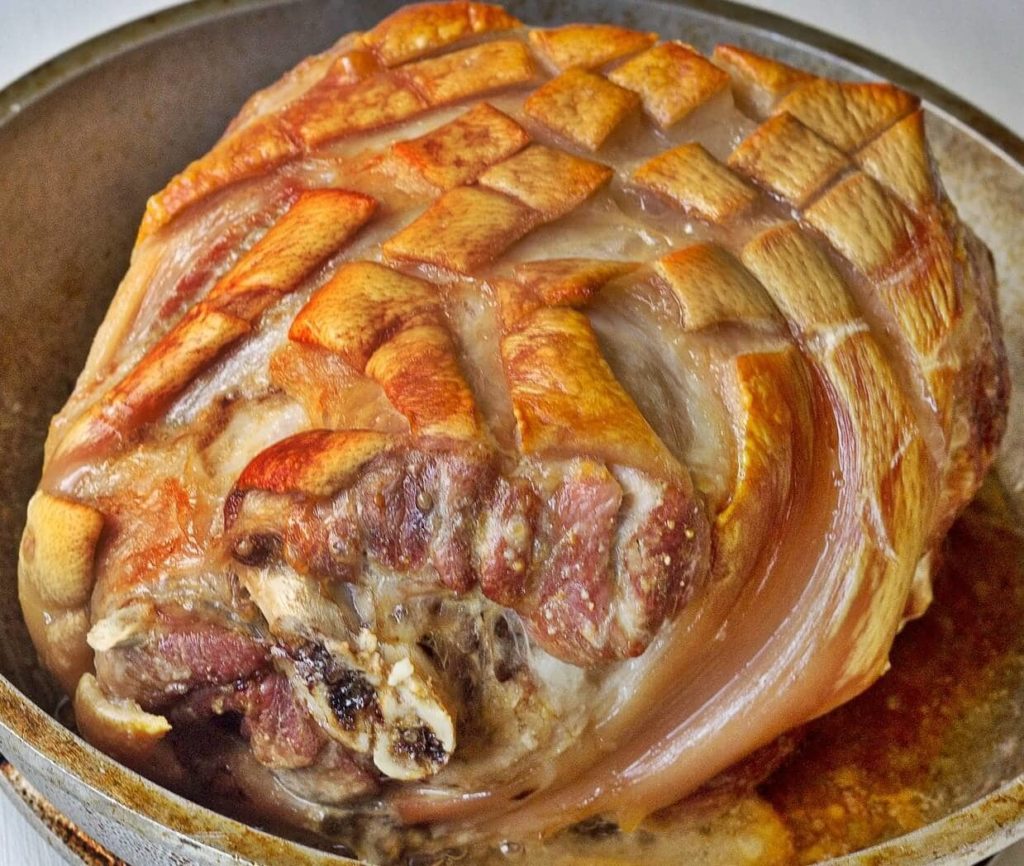
This is the Christmas roast in a great many Colombian households, and the one dish where the oven does most of the work and the cook mostly waits.
How long it actually takes
Three hours is the figure the recipe gives and it is a reasonable average, but the honest answer is that it depends on the weight of the leg. Around 40 minutes per kilo at 160°C is the usual calculation.
A thermometer settles it better than any clock. Pushed into the thickest part, away from the bone, you are looking for about 63°C if you want slices that hold together, and closer to 75°C for meat that pulls apart, which is how it is more often served in Colombia.
The scoring, and why it is not decoration
The diamonds cut through the skin and the fat underneath but stop short of the meat. That does three things: it lets the fat render out instead of sitting under the skin, it gives the salt somewhere to go, and it stops the skin from tightening and curling as it contracts.
A clove pushed into each intersection is traditional and gives the roast its smell. How many is up to you, and they are not eaten.
Basting is the whole crust
Every thirty or forty minutes, spoon the juices from the bottom of the tin back over the leg. This is not optional if you want the dark, crisp skin that makes a pernil worth the wait.
If the tin runs dry, add a splash of water or orange juice, because burnt juices at the bottom will taste of it.
Rest before carving
Twenty minutes on the board, loosely covered. A roast carved straight out of the oven loses its juices onto the board rather than keeping them in the meat, and after three hours of cooking that is a waste.
More roasts and pork
- Lechona — the whole stuffed pig, for a crowd.
- Roasted pork ribs — the quicker option.
- Chicharrón — pork belly, fried.
- Roast chicken — the same method, in an hour.
- Roasted goat — the other roast.
Roast Pork Leg FAQ
About 40 minutes per kilo at 160°C, so roughly three hours for a 4 kg leg. Weight decides it, not the clock. A thermometer in the thickest part away from the bone is more reliable: 63°C for slices, closer to 75°C for meat that pulls apart.
To let the fat render out, to give the salt somewhere to go, and to stop the skin curling as it tightens. Cut through the skin and fat but not into the meat itself.
If you want crisp dark skin, yes. Spoon the juices from the tin back over the leg every 30 to 40 minutes. If the tin goes dry, add a splash of water or orange juice so the juices do not burn.
A literal translation of sal de asar, which is coarse salt. Coarse sea salt or kosher salt does the same job. It is used in the paste because it grinds well in a mortar with the garlic.
Yes, about twenty minutes loosely covered. Carving straight from the oven lets the juices run onto the board instead of staying in the meat.
📖 Recipe

Ingredients
- 1 pork leg (about 4 kg for six people; larger legs need proportionally longer)
- Salt, to taste (rubbed into the scored skin)
- Cloves (pushed into the points of the diamonds)
- Juice of 4 oranges or lemons
- Pepper
- 1 head garlic (peeled, for the paste)
- 2 tablespoons oregano (dried)
- 1 tablespoon coarse salt (sal de asar; coarse sea salt or kosher salt)
- Oil (for the roasting tin)
Notas
Instructions
- Heat the oven to 160°C (325°F).
- Score the skin of the pork leg in diamonds, cutting through the skin and fat but not into the meat. Rub salt into the cuts.
- Push a clove into the point of each diamond, as many as you like.
- Oil a roasting tin and set the leg in it, skin side up.
- In a mortar, crush the peeled garlic with the coarse salt, pepper and oregano into a smooth paste, loosening it with the orange or lemon juice.
- Rub the paste all over the leg and put it in the oven.
- Roast slowly, about three hours. Cooking has to be long and gentle for the meat to give way.
- Every 30 to 40 minutes, spoon the juices from the bottom of the tin back over the leg. The skin should end up dark and crisp.
- Rest it before carving, and serve with rice or a salad of lettuce, tomato and onion.
Comments
No Comments