
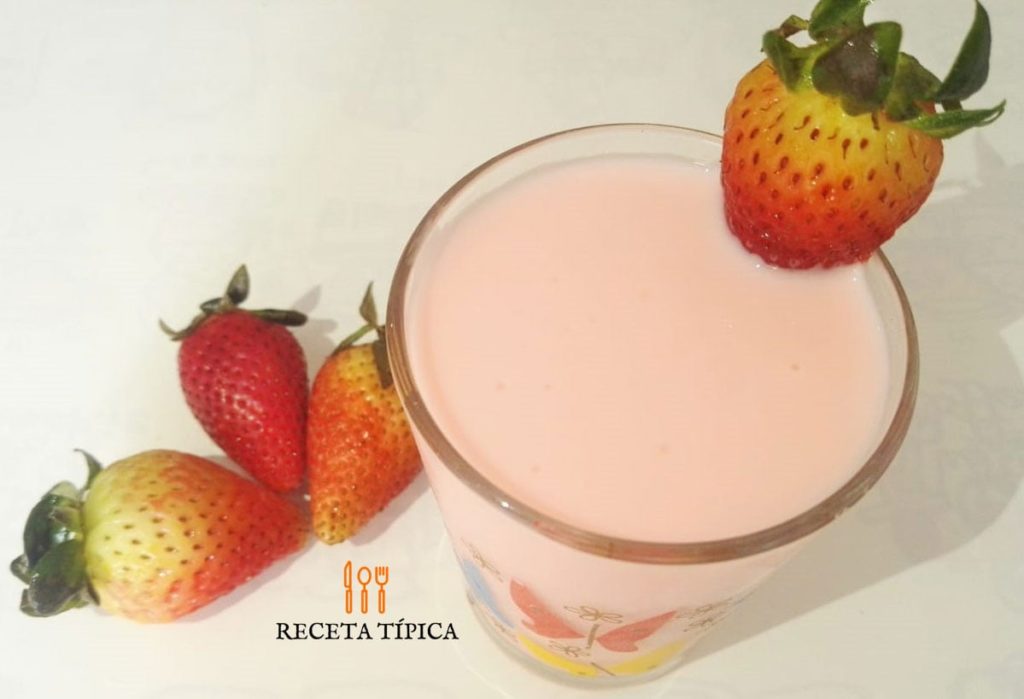
Yoghurt made at home from milk and a spoonful of shop-bought yoghurt as the starter, with strawberries folded in. The work is ten minutes; the rest is twenty-four hours of waiting.
The step that was missing
This recipe could not work as it was written, and it is worth being direct about why.
The second instruction heated the milk until it began to boil. The third poured it into a container and added the natural yoghurt immediately. But yoghurt is made by live bacteria eating the lactose in milk, and those bacteria die at temperatures far below boiling.
Anyone who followed it exactly got warm sweet milk twenty-four hours later and no idea what they had done wrong. The answer was nothing: the recipe was missing a step.
The milk has to cool to lukewarm, warm to a clean finger and no hotter, before the starter goes in. That step is now there.
Why heat it first at all
It is a fair question once you know the culture goes in cold.
Heating the milk to boiling kills off whatever else is living in it. Raw or even pasteurised milk carries other bacteria, and if they are still there they compete with the yoghurt culture for the same sugars, which gives an unpredictable set and sometimes an unpleasant taste.
So: heat to sterilise, cool to lukewarm, then inoculate. That order is the whole technique of making yoghurt anywhere.
The starter has to be alive
Two hundred and fifty grams of plain natural yoghurt is doing all the work here. It is not an ingredient in the flavour sense, it is the culture.
Look for live cultures or active cultures on the label. Most plain yoghurts have them, but anything that has been heat-treated after fermentation, which some long-life and some flavoured yoghurts are, has nothing left alive in it.
One pot makes the next batch, and the one after that, so once you have started you rarely need to buy it again.
Twenty-four hours, undisturbed
Covered, wrapped in a cloth and a plastic bag, and left somewhere with a steady temperature. Warm rather than hot, out of draughts.
The wrapping is insulation. What the culture wants is consistency, not heat, and a container that swings between warm and cold sets unevenly.
Do not move it, stir it or check it during those hours. A set that has begun to form breaks if it is disturbed and does not come back.
More dairy
- Homemade fresh cheese — the other three-ingredient one.
- Homemade buttermilk — in ten minutes.
- Fresas con crema — the same fruit, no waiting.
- Strawberry milkshake — blended with milk.
Homemade Yogurt FAQ
Almost certainly because the milk was too hot when the starter went in. Yoghurt is made by live bacteria, and they die well below boiling point. The milk has to cool to lukewarm first, and that step was missing from this recipe.
Warm to a clean finger and no more. If you cannot hold a finger in it comfortably, it is too hot.
To kill off anything else that might compete with the culture you are about to add. Then it cools and the starter goes in on its own.
A plain natural yoghurt with live or active cultures, which the label usually says. Anything heat-treated after fermentation has none left and will not work.
Twenty-four hours somewhere warm and undisturbed. The work is about ten minutes; the rest is waiting.
Half a litre of milk gives a firmer yoghurt, a litre gives something more fluid. That is the recipe's own note and it is the only variable.
Insulation. The point is a steady temperature rather than a high one, and moving the container during those hours breaks the set.
📖 Recipe

Ingredients
- ½ liter whole or skim milk (1 litre for a more fluid yoghurt)
- 250 g natural yogurt (the starter: it has to have live cultures)
- 1 pound strawberries (hulled)
- Sugar (to taste)
Notas
Instructions
- Hull the strawberries, blend them with a glass of the milk and sugar to taste, and set that aside.
- Heat the rest of the milk in a pot over medium heat until it begins to boil.
- Take it off the heat and let it cool until it is only lukewarm, warm to a clean finger and no more. This matters: the cultures in the yoghurt die in hot milk and the mixture will never set.
- Pour the lukewarm milk into a sterilised glass or plastic container, add the natural yogurt and stir until it is smooth and evenly combined.
- Stir in the blended strawberries.
- Cover the container with parchment paper or a lid, wrap it in a cloth and a plastic bag.
- Leave it for 24 hours somewhere with a steady temperature, out of draughts and dry.
- Serve.
Comments
No Comments