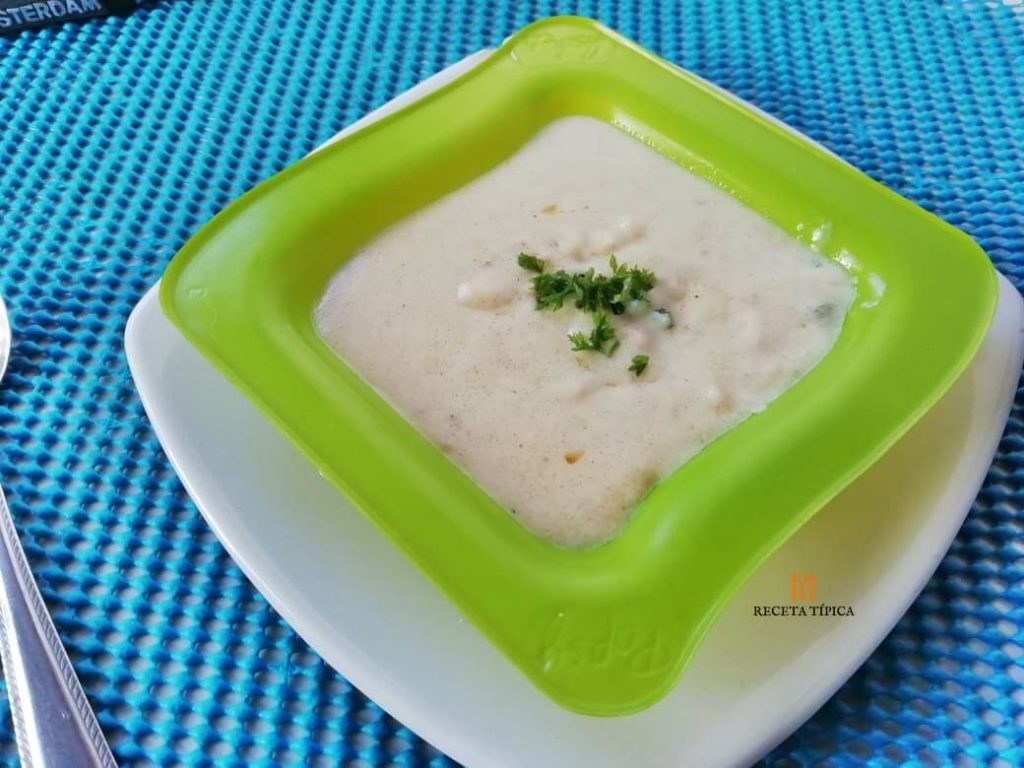
Butter and flour cooked into a roux, then milk added little by little with constant stirring, seasoned with salt and nutmeg. Ten minutes, and the stirring is the whole technique.
Two minutes of flour, then milk in stages
Butter melted over medium-low heat, flour stirred in, two minutes of cooking. That two minutes is not optional: raw flour has a pasty taste that survives salt, nutmeg, cheese and everything else you might do to the sauce afterwards.
Keep it pale. This is a white sauce and the roux should not colour, which is why the heat stays low.
Then the milk, a little at a time, stirring constantly with circular movements. Each splash is absorbed before the next one goes in. This is the only moment lumps can form and constant stirring is the whole prevention.
How thick this one is
Forty grams each of butter and flour for 600 ml of milk is a medium béchamel: it coats a spoon without being stiff. That is the ratio this recipe now uses.
What it used to say was a tablespoon of each, which is around eight grams of flour. That will not thicken 600 ml of milk however long you cook it, and anyone following it ended up with hot milk and blamed themselves.
For the thick kind that holds its shape on a lasagne, use sixty grams of each and leave the milk where it is. For a thin pouring sauce, use twenty five.
The spoon test
Time is a poor guide for a sauce, because it depends on the pan, the heat and the milk. Five to seven minutes is the figure in the recipe and the test is better.
Lift a spoon out and run a finger down the back of it. If the line stays clear, the sauce is thick enough to coat; if it closes over immediately, it needs more time.
It also thickens as it cools, so a sauce that seems very slightly loose in the pan will be right on the plate.
What it yields
The card used to say one cup, 300 ml, for a recipe with 600 ml of milk in it. A béchamel simmered for five to seven minutes does not lose half its volume, and the recipe's own note gives it away by suggesting 300 ml of milk with 300 ml of stock as an alternative.
Six hundred millilitres of liquid in, roughly two cups of sauce out.
More sauces
- Cauliflower gratin — where a thick one goes.
- Meat lasagna — the other obvious use.
- Colombian hogao — the tomato one.
- Homemade barbecue sauce — at the other end of the shelf.
Béchamel FAQ
Add the milk a little at a time and stir constantly, letting each addition be absorbed before the next. Lumps form in the moment liquid meets flour, so that is where the attention belongs.
Yes. Pass it through a strainer, which is what the recipe's note means when it says to sift it. A stick blender also works and is faster.
Thick enough to coat the back of a spoon, which is what most dishes want. Forty grams each of butter and flour for 600 ml of milk is the ratio. The recipe used to call for a single tablespoon of each, about eight grams of flour, and that does not thicken 600 ml of anything.
Draw a spoon out of the sauce and run a finger across the back of it. If the line holds and the sauce does not immediately close over it, it is there. It also thickens noticeably as it cools.
Two minutes in the butter cooks out the raw flour taste, which nothing else in the recipe covers up. It should stay pale, so keep the heat medium-low.
It is the classic seasoning for béchamel and a pinch is all it takes. Grated fresh is better than ground, which loses most of its aroma in the jar.
Yes. The recipe's own note suggests 300 ml of milk and 300 ml of chicken stock, which gives a savoury sauce closer to a velouté.
📖 Recipe

Ingredients
- 40 g butter (about 3 tablespoons)
- 40 g wheat flour (the same weight as the butter)
- 600 ml milk
- Salt (to taste)
- A pinch of nutmeg
Notas
Instructions
- Melt the butter in a skillet over medium-low heat. When it has melted, add the wheat flour and stir until the two come together into what is called a roux.
- Let it cook for about 2 minutes, stirring constantly, and take care that it does not burn.
- Once the flour and butter are well mixed, add the milk a little at a time while stirring, using circular movements.
- When all the milk is in, add a little salt and the pinch of nutmeg and carry on cooking for another 5 to 7 minutes, stirring now and then.
- Take it off the heat and use it while it is hot.
Comments
No Comments