
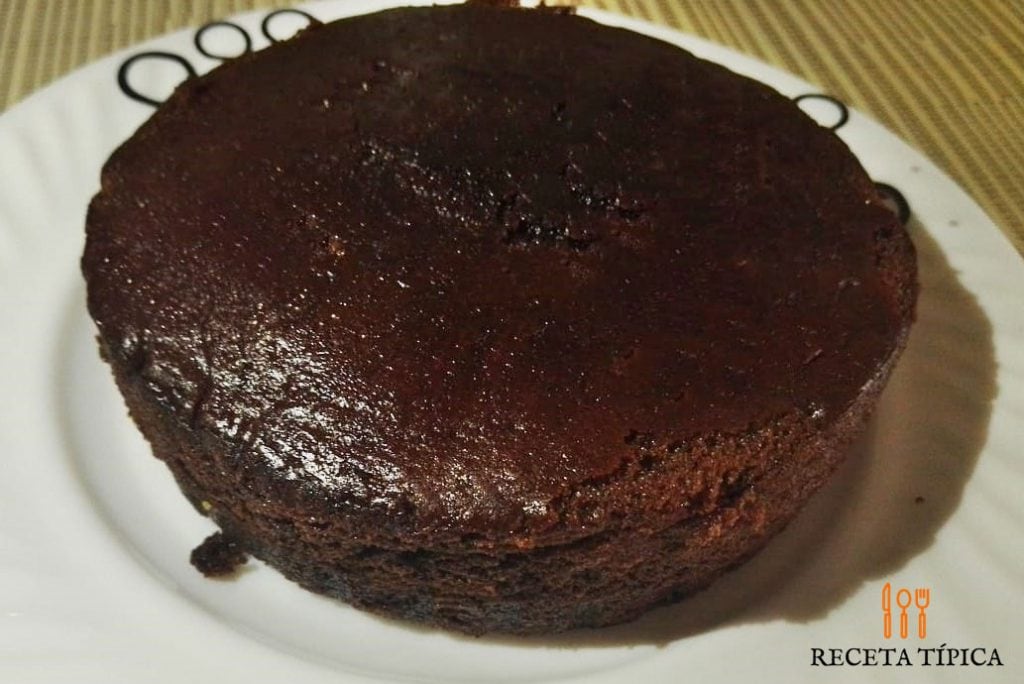
Torta negra is the cake Colombians bake for the occasions that matter: weddings, christenings, first communions, Christmas. Prunes, raisins and figs are macerated for four days in sweet wine and rum, blended into a spiced butter cake, and darkened with molasses until the crumb is almost black.
One thing to settle straight away: there is no chocolate in it. The colour comes from the molasses and from the dark, wine-soaked fruit. What it tastes of is prunes, spice and wine.

Why it is called black cake
Two things make it dark. The first is the fruit: four days in wine and rum turn prunes and raisins nearly black, and they get blended to a paste that goes through the whole batter rather than sitting in it as separate pieces. That is what distinguishes this from an ordinary fruit cake: you do not bite into raisins, you taste them everywhere.
The second is the molasses, or burnt sugar syrup, added at the very end. A tablespoon and a half is enough to take the batter from brown to black, and it brings a faint bitterness that keeps a very sweet cake from cloying. In the Caribbean the same ingredient is called browning, and it does the same job there.
Colombian torta negra and Caribbean black cake
If you have eaten black cake before, it was probably the Trinidadian, Guyanese or Jamaican one, which is much better known in the United States. They are relatives, both descend from the British plum pudding that came with colonial rule, and both are wedding and Christmas cakes.
The differences are real, though. The Caribbean version soaks its fruit in dark rum with port or cherry brandy, frequently for months and sometimes for a year, and comes out dense, sticky and unmistakably boozy. The Colombian one leads with sweet wine and uses rum in support, macerates for four days rather than months, and bakes up lighter and more like a cake than a pudding. If you want the darker, heavier one, this is not that recipe.
The four-day soak
This is the part that cannot be hurried, so plan backwards from when you need the cake. Four days before baking, the raisins, prunes and figs go into a container with half the wine and half the rum. Cover it and leave it on the counter, shaking it when you pass.
Keep the other half of the wine and rum. It does not go into the batter: it gets brushed over the cake once it is baked, which is a separate step and just as important.
All three fruits get blended together afterwards, along with the liquid they soaked in. Do not drain them: that liquid is where the four days went.
What goes into it, and where to find it
- Prunes — dried prunes, not fresh plums. Seedless, so you are not picking pits out of the blender.
- Brevas caladas — figs preserved in sugar syrup, sold in jars in Latin groceries. Drain and chop them. Candied or plain dried figs work too; dried ones drink more of the wine, so check the fruit is still covered as it soaks.
- Sweet wine — a sweet red or a moscatel. A dry wine gives a harsher, more astringent cake, because there is nothing in the soak to balance it. Cheap is fine; sweet is not optional.
- Molasses or burnt sugar syrup — the colour. Both work, and each brings a slightly different bitterness.
The rest is a plain butter cake: equal weights of butter, sugar and flour at half a pound each, six eggs, and the spices, cinnamon, nutmeg and clove.
Baking day
Cream the butter and sugar properly, eight to ten minutes, until it is pale and noticeably lighter in the bowl. This is where the cake gets its lift, and it is the step people cut short.
Add the eggs one at a time, waiting for each to disappear before the next goes in. Six eggs added together into creamed butter will curdle the mixture; added one by one they emulsify. Room-temperature eggs behave better than cold ones here.
Then the dry ingredients on low speed, the blended fruit, and the molasses last. Stop as soon as it is combined, beating flour after it is wet develops gluten, and a tough black cake is a sad thing after four days of waiting.
Forty to fifty minutes at 180°C (350°F), and start testing at forty. Ovens differ enough that the toothpick is more reliable than the clock: pushed into the middle, it should come out clean.
Feeding the cake
Ten minutes' rest, then turn it out, and while it is still warm brush it with the rum and wine you held back. Warm cake absorbs; cold cake lets it run off.
Wrapped in plastic it keeps for weeks, and it genuinely improves over the first few as the fruit and the alcohol settle into the crumb. If it is for a wedding, brush it with a little more rum and wine every few days between baking and the event: that is why the cake can be made so far in advance, and why the ones baked for a wedding taste better than the ones baked on Friday.
How it is served
For a celebration it is covered in royal icing or fondant, which is where the Colombian wedding cake gets its white-over-black look, and cut into small squares rather than wedges: it is rich enough that a large slice defeats most people.
At home it is eaten plain, in thin slices, with coffee. December is its season, and a cake baked in the first week of the month will still be good at the end of it.
More Colombian cakes
- María Luisa cake — a lighter layered sponge, the everyday counterpart to this one.
- Gloria cake — another Colombian celebration cake, less work and no waiting.
- Red wine poached pears — if it was the wine that brought you here.
- Papaya dessert — something light to follow a very rich cake.
Colombian Black Cake FAQ
No. The colour comes from molasses or burnt sugar syrup and from the dark macerated fruit, not from cocoa. It is a spiced fruit cake, and it tastes of wine, rum, prunes and warm spice. If a recipe for torta negra calls for cocoa powder, it has drifted from the traditional one.
They are cousins, both descended from British plum pudding. The Trinidadian and Guyanese version soaks its fruit in dark rum and port or cherry brandy, often for months, and is darker and denser. The Colombian one uses sweet wine with a smaller amount of rum and a four-day soak, so it is lighter and more cake-like.
Four days, for the fruit to macerate in the wine and rum. That soak is the recipe: it is where the flavour and the colour come from, and there is no way to rush it. Baking day itself takes about seventy minutes from start to finish.
Figs preserved in sugar syrup, a Colombian sweet sold in jars in Latin groceries. Drain and chop them before they go in with the other fruit. Candied figs or plain dried figs both work; if you use dried, they will drink more of the wine, so check that the fruit is still covered.
A sweet one, a sweet red or a moscatel is typical. Dry wine makes a harsher, more astringent cake, since there is no other sugar in the soak to balance it. It does not need to be expensive; it needs to be sweet.
Weeks, wrapped well, and it improves for the first few of them as the fruit and alcohol settle into the crumb. Brushing it with a little more rum and wine every few days keeps it moist and makes it stronger, which is what is done when one is baked ahead for a wedding.
📖 Recipe

Ingredients
- 1 cup seedless prunes (prunes, not fresh plums)
- 1 cup raisins
- ¾ cup sweet wine (a sweet red or a moscatel; a dry wine makes a harsher cake)
- ¼ cup rum (dark rum)
- 1 cup figs in syrup (brevas caladas), drained and chopped (sold in jars in Latin groceries; candied or dried figs also work)
- ½ lb butter, softened (2 sticks / 225 g)
- ½ lb sugar (about 1 cup plus 2 tablespoons / 225 g)
- 6 eggs (at room temperature, or they will split the batter)
- ½ lb all-purpose flour (about 1¾ cups / 225 g)
- 1 teaspoon baking powder
- ½ teaspoon ground cinnamon
- ¼ teaspoon ground nutmeg
- ¼ teaspoon ground cloves
- 1 teaspoon vanilla extract
- 1 ½ tablespoons molasses or burnt sugar syrup (this is what makes it black; the Caribbean calls it browning)
Notas
Instructions
- Four days before you bake, put the raisins, prunes and figs in a container with half the wine and half the rum. Cover and leave at room temperature, giving it a shake when you remember. Keep the other half of the wine and rum for the end.
- On the day, preheat the oven to 180°C (350°F). Grease the cake pan with oil and dust it with flour.
- Blend the macerated fruit, along with the liquid it soaked in, to a coarse paste. It does not need to be smooth; a little texture is good.
- Mix the dry ingredients together: flour, baking powder, cinnamon, cloves and nutmeg.
- Cream the butter with the sugar until pale and fluffy, 8 to 10 minutes. Then add the vanilla, and the eggs one at a time, waiting until each is absorbed before adding the next. Adding them all at once splits the mixture.
- Lower the mixer speed and add the dry ingredients gradually. Add the blended fruit, and finally the molasses. Mix only until it comes together, beating it now makes the cake tough.
- Pour into the prepared pan and bake for 40 to 50 minutes. Start testing at 40 minutes: a toothpick pushed into the middle should come out clean. Ovens vary, so trust the toothpick over the clock.
- Take it out and let it sit for about 10 minutes before turning it out of the pan.
- While it is still warm, brush it with the rum and wine you held back. Wrap it in plastic and leave it until you are ready to slice or decorate.
Comments
No Comments