
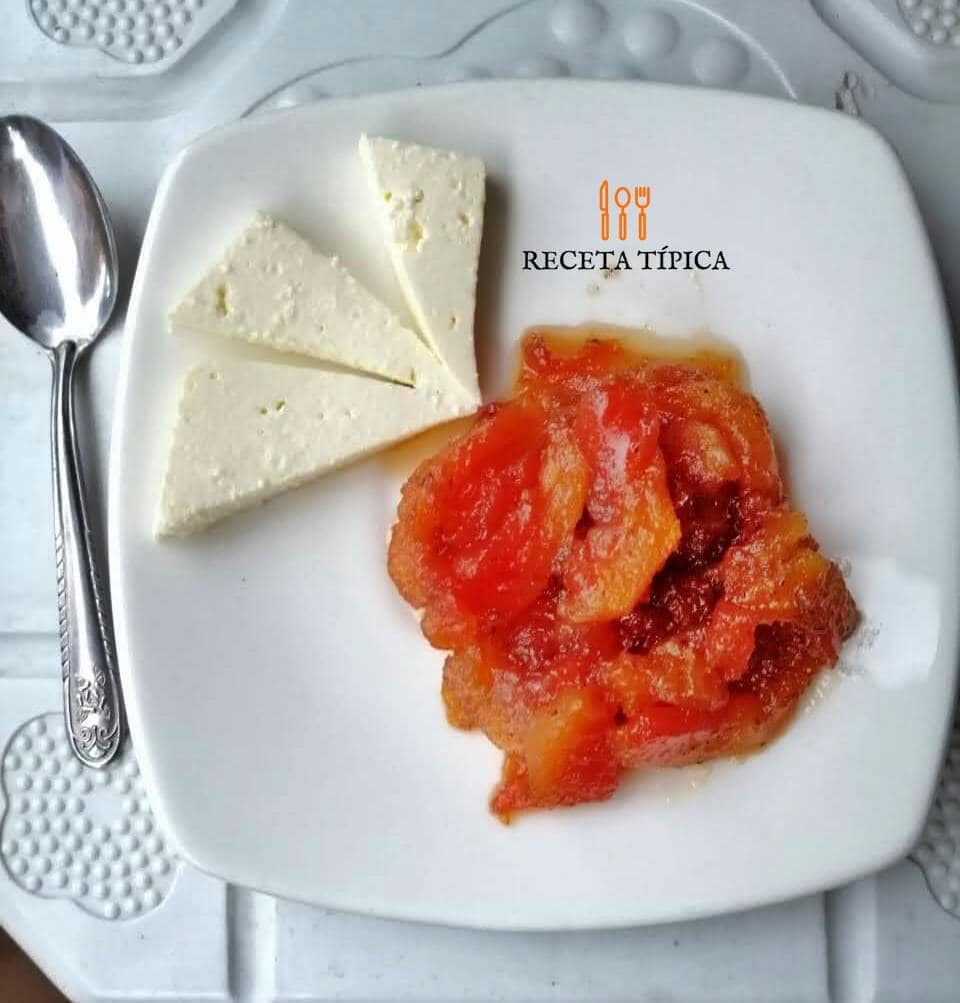
Ripe papaya simmered in a brown sugar syrup with cinnamon, lemon and vanilla until the syrup thickens around it. Fifty minutes, and it is eaten with a piece of fresh cheese.
Covered, then uncovered
Ten minutes with the lid on, then 35 with it off. Two stages doing two different things.
Covered, the papaya softens in steam and takes up the sugar syrup without losing water to the air. Uncovered, the water evaporates and the syrup concentrates around the fruit until it clings to it.
That second stage is what turns sweet cooked papaya into a dulce. Cut it short and the fruit sits in something watery.
Lemon last
The juice of half a lemon goes in at the very end, after the pot comes off the heat, and the zest goes in much earlier with the cinnamon.
The order matters. Acid interferes with a syrup thickening and it softens fruit, so lemon juice added at the start would work against both stages. Added last it lifts the whole thing and stops 100 grams of sugar tasting flat.
The zest is different: it wants the 35 minutes to give up its oils into the syrup.
Firm fruit
Papaya that is ripe enough to be sweet but still firm enough to slice is what this needs. It has to survive nearly an hour of simmering while holding its shape.
Very ripe papaya collapses. It is not inedible, but it stops being slices in syrup and becomes something closer to a jam, which is a different dish.
Cheese alongside
This is worth stating because it is easy to miss and it is how the dish is actually eaten in Colombia.
A slice of fresh, mild, slightly salty cheese next to the papaya and its syrup. Queso campesino is the usual one. The combination of sweet syrup and salty cheese is the entire tradition of dulces in Colombian cooking, and the same pairing turns up with guava, with figs and with arequipe.
More fruit desserts
- Dulce de auyama — the same treatment with pumpkin.
- Red wine poached pears — fruit in syrup again.
- Passion fruit mousse — cold and set.
- Guava paste — the other dulce eaten with cheese.
Papaya Dessert FAQ
A piece of fresh cheese, which is what the recipe suggests and what Colombia does with almost every dulce of this kind. Queso campesino or any mild fresh cheese. The salt against the syrup is the whole point.
Because acid added early would slow the syrup thickening and soften the fruit faster than you want. Added off the heat at the end, it brightens everything and cuts the sweetness.
Ripe but still firm. Very soft fruit falls apart during the 45 minutes in the pot and you end up with jam rather than slices sitting in syrup.
When it clings to the fruit rather than pooling underneath it. It thickens further as it cools, so take it off slightly before it looks right.
Yes, and it is closer to what many Colombian households would use. Break it up first so it dissolves, and expect a darker colour and a deeper molasses taste.
A week or so in the fridge in its syrup, in a covered container. The sugar is doing the preserving and it is better on the second day.
📖 Recipe

Ingredients
- 300 g ripe papaya (peeled, seeded and sliced)
- 100 g brown sugar
- 240 ml water
- ½ teaspoon ground cinnamon
- The juice of half a lemon
- The zest of half a lemon
- 1 teaspoon vanilla extract (optional)
Notas
Instructions
- Peel the papaya, cut it in half and scrape out all the seeds.
- Cut the papaya into medium slices and put them in a medium pot with the sugar.
- Add the water, bring it to a boil over medium heat, then cover the pot and let it simmer for about 10 minutes.
- Uncover it and add the lemon zest, the cinnamon and the vanilla extract.
- Let it boil over low heat for about 35 minutes, until the syrup has thickened around the fruit.
- Add the lemon juice, take it off the heat and let it stand a few minutes before serving.
Comments
No Comments