
Blood sausage is one of the most typical sausages of Colombian, a trendy and delicious meal.

What is blood sausage?
If you visit us from other places outside the country, and you still don't know what a blood sausage I will explain; This dish is a sausage that is made with pork blood, seasoned with various spices and mixed with other ingredients, rice being the main one, and others like onion, peas, etc.,
All these ingredients put in a gut of pork or cow, and then it is cooked in boiling water for a good time.
At the time of imagining that brief description, it usually sounds like a dish not very fancy, and a bit unpleasant, but believe me that this dish, once cooked in water, is unimaginable, and that is why we Colombians enjoy it so much eat it
Its preparation can be a bit complicated and more at the time of putting the filling in the gut, but if you do it with great care and caution, the procedure will not be complicated.
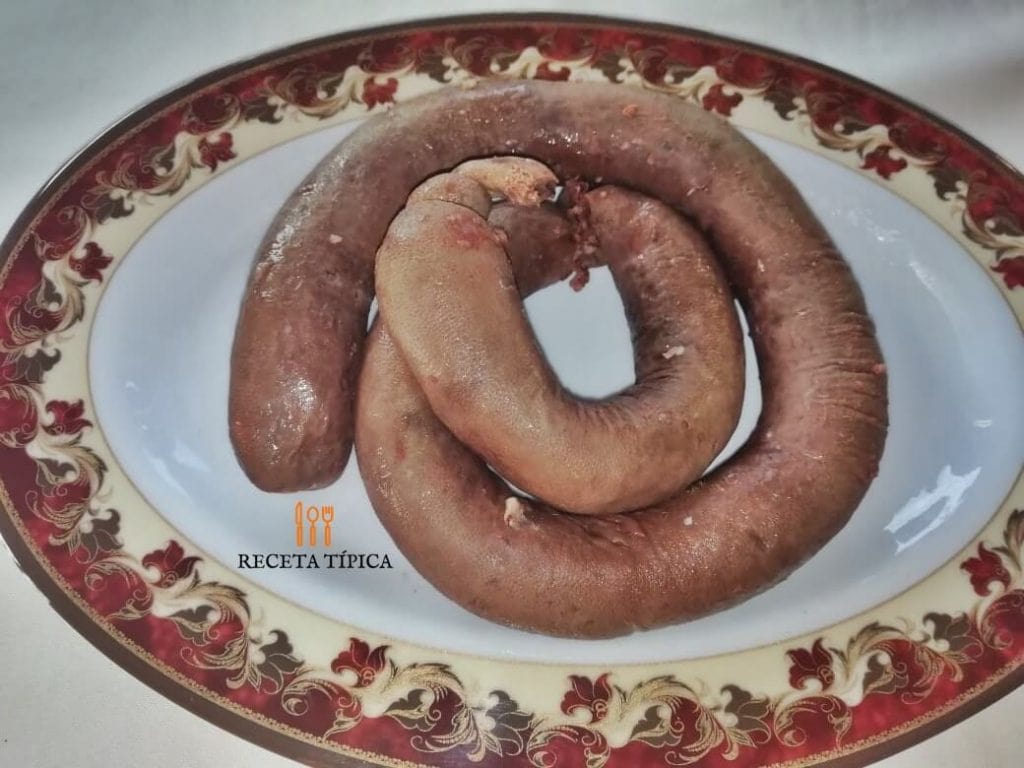
This recipe is where the famous blood sausage broth is derived, which is what remains after cooking all the blood sausage we make, and in the water is the substance, both are a delicacy and a delight.
You can accompany the blood sausage with corn arepas, with some good yellow potatoes. Because not, with patacones, the important thing is to enjoy it as it should, I assure you that its flavor is very delicious and that you unquestionably did not imagine it. So go ahead and prepare this recipe with us.
Recipes recommended: Boronia, Ají or avocado salsa.
Original recipe in SpanishRellena FAQ
More sausage
- Botifarras — the Santander sausage.
Blood sausage made with rice, peas and fresh herbs alongside the pork blood and fat, stuffed into casings and boiled. The rice is what sets it apart from European blood sausages, which are mostly blood, fat and grain meal. In Colombia it is sold at street stalls and eaten as part of a fritanga.
In Colombia the two names are used for the same thing, with rellena more common in some regions and morcilla in others. It is not the same as Spanish morcilla, which usually uses onion or rice in different proportions and is seasoned quite differently.
From a butcher rather than a supermarket. Latin, Asian and halal butchers often carry both, and fresh blood usually has to be ordered ahead. Casings also sell online, salted or in brine. Blood must be fresh and kept cold: it is a highly perishable ingredient.
To stop it curdling. Blood coagulates quickly on its own, and a teaspoon of white vinegar with a little salt keeps it liquid enough to mix evenly with the rice and seasonings. Without it you get lumps of set blood through the sausage instead of an even mixture.
Loosely: about three quarters full. The rice swells as it cooks, and a tightly packed casing splits in the pot, which empties the sausage into the water. Tie it off every 15 to 20 cm and leave it slack enough to feel soft when pressed.
Push a needle or skewer into the sausage: when it comes out clean, with no liquid or blood following it, it is done. That takes about 30 to 45 minutes at a gentle simmer. Do not let the water boil hard, because that is what bursts the casings.
Boiled first, then usually fried or grilled just before serving, which crisps the outside. It is a fritanga staple, served alongside chicharrón, potatoes and arepa. It keeps a few days in the fridge once boiled.
📖 Recipe

Ingredients
- 1 liter fresh pork blood (about 4¼ cups; order from a butcher, keep it cold, use it fresh)
- 1½ pounds fatback, chopped (about 680 g)
- ½ cup scallions, chopped
- ½ tablespoon garlic powder
- 1 tablespoon dried oregano
- 4 tablespoons fresh cilantro or parsley, finely chopped (cilantro leaf, not coriander seed)
- 2 tablespoons fresh mint, chopped
- 4 tablespoons cornmeal
- 2 tablespoons black pepper
- 2 tablespoons ground cumin
- 500 g rice (about 2½ cups, cooked and cooled)
- 400 g peas, cooked (about 2¾ cups)
- 2 tablespoons salt
- 1 teaspoon white vinegar (keeps the blood from curdling)
- 5 meters pork casings (about 16 ft; soak overnight in water with lemon)
- Kitchen twine, for tying
Notas
Instructions
- Cook the rice as usual and let it cool completely. Once cold, transfer it to a large bowl and stir it to separate the grains.
- Put the blood in a bowl with a tablespoon of the salt and the teaspoon of white vinegar, and stir. This is what stops it curdling before you mix it with everything else.
- Wash the casings thoroughly under plenty of running water and tie off one end with twine.
- In a large container, combine everything: the rice, the blood, the fatback, the scallions, the garlic powder, the oregano, the cilantro, the mint, the cornmeal, the pepper, the cumin, the peas and the remaining salt. Stir until the mixture is even.
- Start filling the casings by hand, using a wide-mouthed funnel. If you do not have one, cut a plastic bottle in half and use the neck.
- Fill the casing loosely, about three quarters full. The rice swells as it cooks, and a tightly packed sausage bursts in the pot.
- Tie off firmly with twine every 15 to 20 cm so the sausage holds its shape.
- Bring a large pot of water to a gentle simmer and add the sausages. You can season the water with bay leaf, thyme or other aromatics.
- Simmer for 30 to 45 minutes. Keep the water at a gentle simmer rather than a hard boil, which splits the casings. It is done when a needle pushed into the sausage comes out clean, with no liquid or blood following it.
- Lift them out, drain, and they are ready to eat.
Comments
No Comments