
A whole fish scored on both sides, seasoned, floured and fried five to seven minutes a side. Fifteen minutes for two, and the three cuts are what let the heat reach the middle.
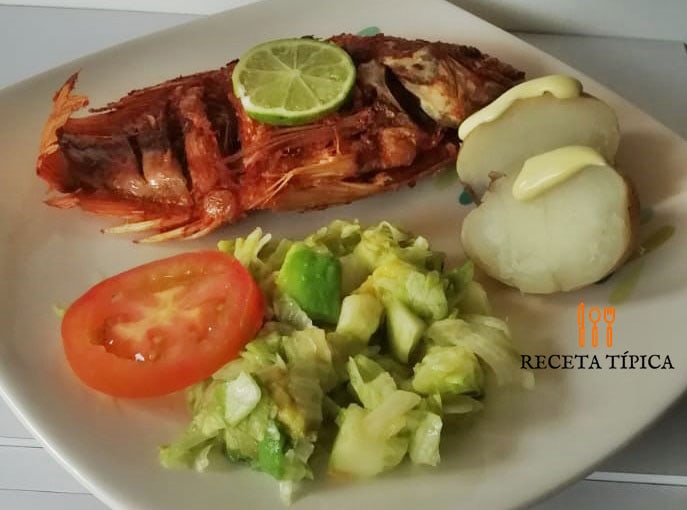
The three cuts
This is the technique of the entire recipe and it is easy to skip.
A whole fish is not the same thickness anywhere. The section around the spine can be three or four times deeper than the tail, so by the time the middle is cooked the ends are dry and the skin is burnt.
Three cuts on each side, made with a sharp knife and going down to the bone, open the thick part to the heat. The fish then cooks at roughly the same rate from head to tail. It also gives the seasoning somewhere to go.
Dry it, then flour it
Rinse the fish and dry it properly with paper towels, inside the cavity as well as on the skin.
Water on the surface does three things wrong: it turns the flour to a paste that will not brown, it makes hot oil spit, and it steams the skin instead of frying it. A fish that sticks to the pan almost always went in wet.
The flour is a thin coating, not a batter. A quarter of a cup covers two fish and most of it ends up in the pan.
Hot oil, then lower it
The oil goes to medium-high heat, and the moment the fish is in, the heat comes down to medium.
Hot oil at the start seals the surface immediately, which is what stops it sticking. Keeping it that high for the full ten minutes would burn the skin before the middle cooked, which is why the recipe drops it straight away.
Five to seven minutes a side. Turn it once and only once, using a wide spatula, so the skin stays on the fish.
Where to check it
Behind the head, at the thickest point, and right down to the bone. When the flesh there has turned from translucent to opaque and separates into flakes under gentle pressure, the fish is done.
Anywhere thinner will be cooked long before that, so checking the tail tells you nothing useful.
More fish
- Bagre en salsa — the same fish, in sauce.
- Coconut rice — what goes beside it.
- Patacones — the other thing on the plate.
- Fish sancocho — when the pan is too small.
- Octopus with plantain purée — when the fish is not fish.
Fried Fish FAQ
Because a whole fish is far thicker at the spine than at the tail. Three cuts on each side, down to the bone, let the heat into the thick part so the whole fish cooks evenly instead of the thin ends drying out.
Usually because it went in wet, or because the oil was not hot enough. Dry the fish thoroughly with paper towels, flour it, and wait until the oil is properly hot before it goes in.
A thin coating that browns and keeps the skin from welding to the pan. It is not a batter, which is why a quarter of a cup is enough for two fish.
Check at the thickest part, just behind the head. When the flesh there is opaque all the way to the bone and flakes under a fork, it is ready.
Snapper, tilapia or mojarra, which is what the recipe suggests. Any whole fish of a size that fits the pan works, as long as it can be scored.
Yes. That is how it is served in Colombia and it is part of the dish. The head keeps the flesh around it moist and it is the best eating on the fish.
Coconut rice, patacones, avocado, a salad or slices of lemon. On the coast it is almost always coconut rice and patacones.
📖 Recipe

Ingredients
- 2 whole fish (snapper, tilapia or mojarra)
- The juice of one lemon (optional)
- Salt and pepper
- ¼ cup flour
- Vegetable oil (for frying)
Notas
Instructions
- Rinse the fish in cold water and dry them with paper towels. With a sharp knife, make three cuts on each side of each fish, down to the bone.
- Season the fish inside and out with salt and pepper. If you like, marinate them with a little lemon juice first. Set them aside.
- Coat the fish with flour. Heat the oil in a large skillet over medium-high heat.
- When it is hot, lower the fish carefully into the oil and turn the heat down to medium.
- Fry for 5 to 7 minutes. Turn each fish over and fry for another 5 to 7 minutes, until the skin is crisp and the flesh at the thickest part is opaque.
- Lift the fish out of the oil and put them on kitchen paper to drain.
- Serve with a salad, coconut rice, patacones, avocado or slices of lemon.
Comments
No Comments