
Four mangos blended with two cups of water and sugar to taste. Thirty seconds in the blender, two glasses, and how much water goes in decides whether it is a juice or a smoothie.
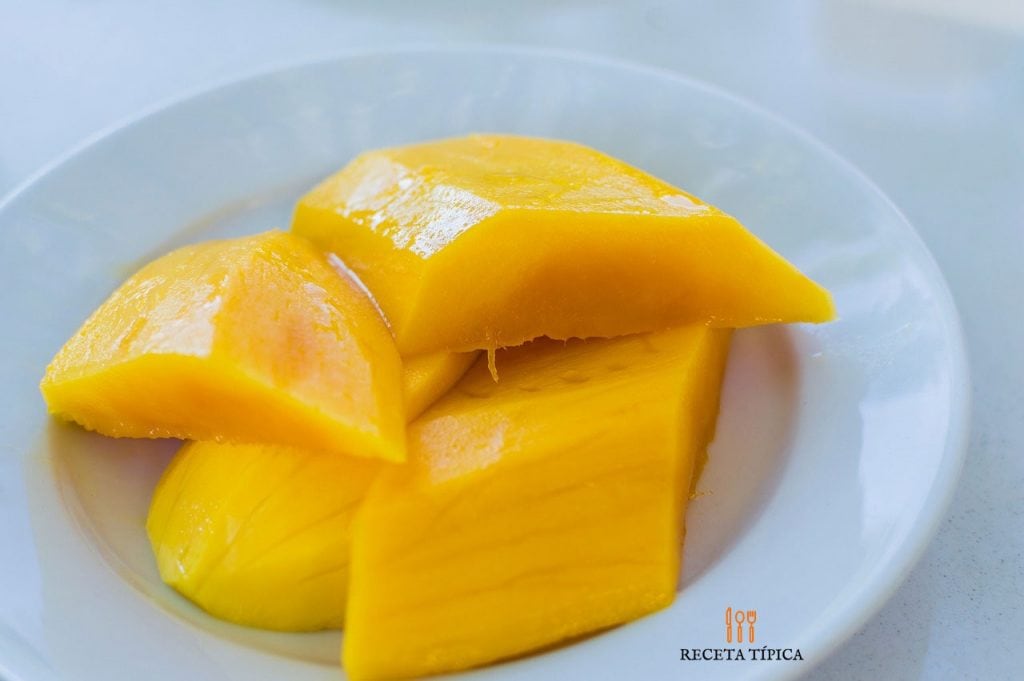
Water is the only decision
Four mangos, two cups of water, sugar to taste. There is nothing to time and nothing to watch, so the entire character of the drink comes down to the ratio.
Two cups gives a juice you can drink from a glass. One cup gives something closer to a smoothie, thick enough that a spoon stands up in it. Three or four cups stretches four mangos across a jug for a table.
None of those is wrong. It is worth deciding before you start rather than after.
Ripe mango, or nothing
There is no cooking here and no other flavour to hide behind, so the fruit is the recipe.
A ripe mango gives under a thumb near the stem and smells sweet there. Colour is a poor guide: some varieties are green when ripe and some are red when they are not.
An underripe mango gives a juice that tastes green and faintly turpentine-like, and no amount of sugar covers it.
Pulp stays in
Colombian fruit juices are blended rather than squeezed, and the pulp is part of them. That is why they have body and why they are usually drunk with a straw wide enough to take it.
Straining is possible and it gives a thinner, clearer drink. It also throws away a good deal of the mango.
Thirty seconds
Long enough to break the fruit down completely, short enough that the blender has not started whipping air into it.
Over-blended juice goes pale and develops a foam on top that separates within minutes.
More juices
- Papaya smoothie — the same method, different fruit.
- Guava juice — this one needs straining.
- Orange juice — blended, not squeezed.
- Soursop juice — guanábana.
Mango Juice FAQ
Two cups makes a drinkable juice from four mangos. Less gives something thick enough to eat with a spoon; more stretches it further. It is the only decision in this recipe.
The skin gives under a thumb and it smells of mango at the stem end. Colour is unreliable: some varieties stay green when ripe.
Not usually. Colombian juices are made this way with the pulp left in, which is what gives them body. Strain it if you want something thinner.
Longer whips air into it and the juice turns pale and foamy. Thirty seconds is enough to break up ripe mango completely.
Yes, and it makes a colder, thicker drink. Use a little more water, since frozen fruit thickens as it blends.
Taste first. A properly ripe mango often needs none at all.
📖 Recipe

Ingredients
- 4 medium-sized mangos (peeled and cut)
- 2 cups water (less for a thicker juice)
- Sugar (to taste)
Notas
Instructions
- Put the mango, the water and sugar to taste in the blender and blend for about 30 seconds.
- Serve, with ice cubes if you want it colder.
Teegal
I was searching for a site to get the guidelines on how to make mango juice for my family and me when I came across yours. Your guidelines are easy and simple. Thanks for creating this site.