
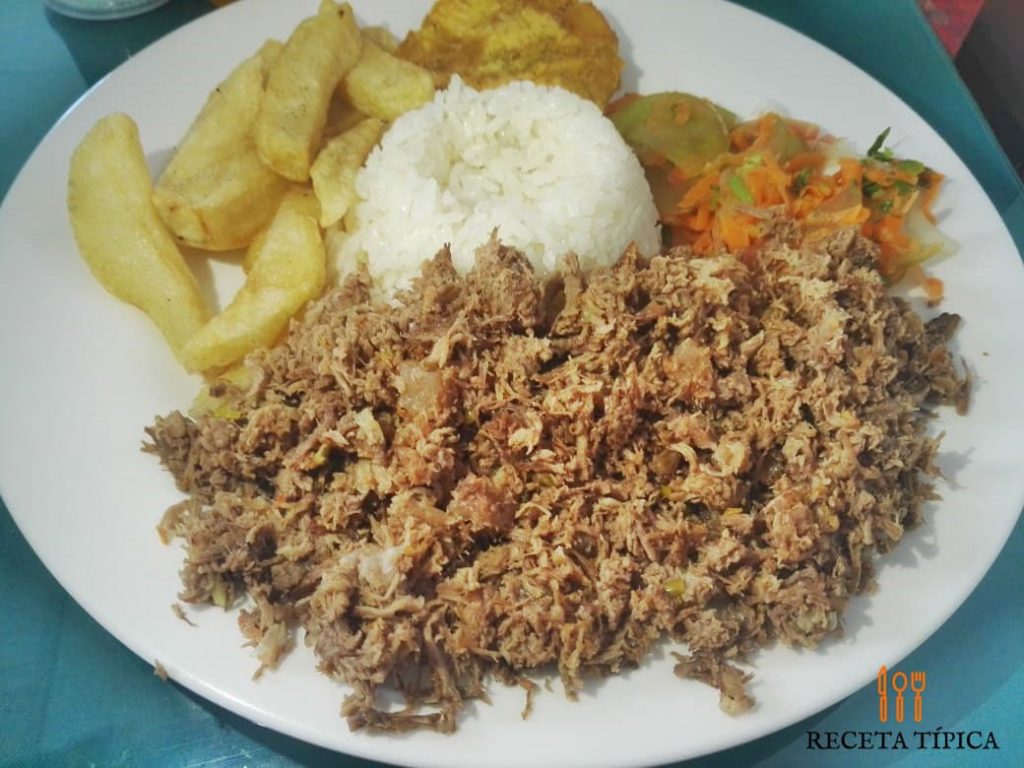
Skirt steak simmered until it falls apart, shredded, and then cooked again with hogao and tomato paste. It goes with rice, patacones or arepas, and it fills empanadas.
Thirty minutes was never going to work
The recipe card on this page promised shredded beef in forty minutes, and the instruction said only to cook the meat until it was cooked.
Skirt steak is a working muscle laced with connective tissue. Cooked to medium it is a steak; cooked for hours, that tissue melts into gelatine and the fibres separate. There is no shortcut between those two states.
An hour and a half in an ordinary pot. Forty minutes in a pressure cooker from the moment it whistles. Anything less and you are trying to pull apart something that is still holding on.
The fork test
Times are a guide and the meat is the answer. Lift a piece out, put it on a plate and press it with a fork.
Ready meat falls into strands under almost no pressure. Meat that needs longer resists, and you can feel it. Put it back and give it another twenty minutes.
This is worth doing rather than trusting the clock, because two pounds of skirt steak from two different animals can differ by half an hour.
Keep a cup of the broth
The second step says to reserve a cup and it is easy to pour away nine cups of liquid without thinking.
That cup is the only liquid in the final stage. Shredded meat with a cup of hogao and a teaspoon of tomato paste and nothing else is a dry mixture that catches on the pan.
The other eight cups are a decent beef broth. They belong in a soup rather than the sink.
Hogao by the cup
A whole cup of hogao goes in, which makes this a dish built on it rather than one seasoned with it.
It is worth making it fresh: tomato and scallion cooked down in oil until the tomato collapses, twelve minutes. Jarred sauce is thinner and sweeter and the difference shows in something this simple.
Six to eight minutes at the end is all the second cooking needs. Long enough for the meat to take up the sauce and the broth, short enough that it does not dry out.
More beef
- Colombian hogao — a cup of it goes in here.
- Muchacho relleno — the other long simmer.
- Beef stew — in pieces rather than shredded.
- Colombian empanadas — where the leftovers go.
Shredded Beef FAQ
About an hour and a half in an ordinary pot, or 40 minutes in a pressure cooker from the moment it whistles. The card used to say thirty minutes, which is nowhere near enough to shred two pounds of skirt steak.
Press a piece with a fork. It should come apart into strands with no resistance. If it holds together, it needs longer, and nothing you do afterwards will fix it.
Because the third step needs it. The shredded meat, the hogao and the tomato paste would be dry without it, and it is the only liquid in that final stage.
The Colombian sofrito of tomato and scallion cooked down in oil. A cup of it goes in here, so it is the base of the dish rather than a garnish, and it is worth making fresh.
Any cut that shreds: flank, brisket, chuck. What they have in common is connective tissue that breaks down into gelatine over a long simmer. A lean quick-cooking steak will not shred.
White rice, patacones or corn arepas, which is what the recipe says. It also fills empanadas and arepas.
Yes, several days in the fridge, and it is better the next day. It freezes well too.
📖 Recipe

Ingredients
- 2 Lb skirt steak
- 9 cups water
- 1 teaspoon salt
- ¼ teaspoon ground pepper
- 1 cup hogao (the Colombian tomato and scallion sofrito)
- 1 bay leaf
- ½ onion
- A bit of thyme
- 1 teaspoon tomato paste
Notas
Instructions
- Put the meat, the water, the thyme, the bay leaf, the onion, the salt and the pepper in a pot. Simmer until the meat pulls apart easily with a fork: about an hour and a half in an ordinary pot, or 40 minutes in a pressure cooker from the moment it whistles.
- Lift the meat out and keep a cup of the broth. Let the meat cool and shred it with a fork or with your hands.
- In a pot, put the shredded meat, the hogao, the tomato paste and that cup of broth, and cook for 6 to 8 minutes, stirring now and then.
- Serve hot. It goes with white rice, with patacones or with corn arepas.
Comments
No Comments